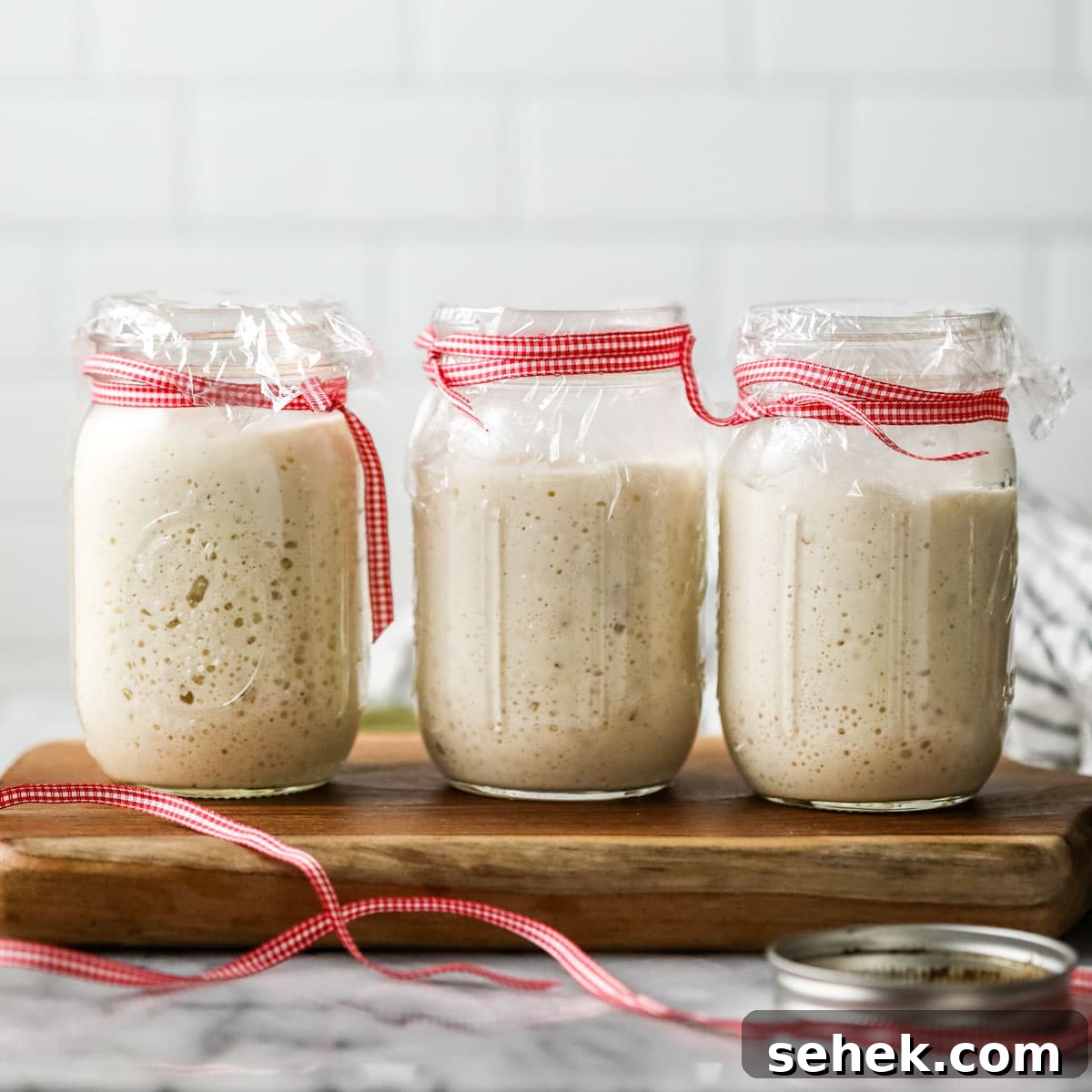
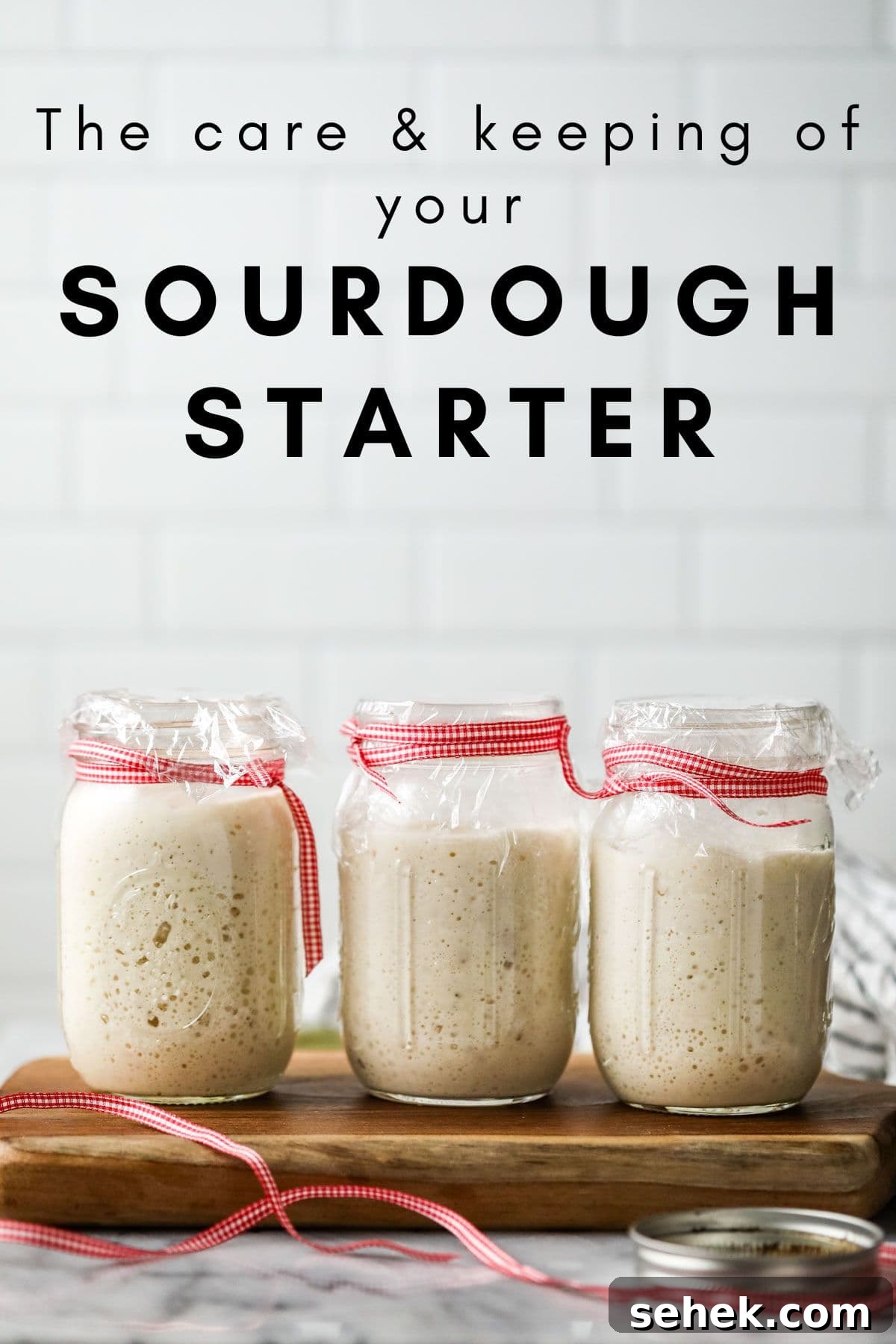
Congratulations — you now have a sourdough starter! Whether you created it from scratch, received it as a gift, or purchased one online, this guide explains how to care for an established starter and how to handle common issues you may encounter in the kitchen.
I’ve organized the essentials so you can quickly find what you need. Let’s dive in.
Table of Contents
- How to Take Care of an Established Sourdough Starter
- How much and when do I feed my starter?
- How much to feed my starter
- When do I feed my starter?
- When to use your starter
- When can I use it if I’m feeding daily?
- When can I use it if I’m feeding weekly (or less often)?
- What kind of flour should I feed my starter (and can I change it up)?
- Why isn’t my starter growing (even after I fed it)
- How do I know when my starter’s gone bad?
- Help! I missed a feeding (or two… or more…) and now it’s not growing
- Why is there a watery layer on my starter? Is it bad?
- What if I need to store my starter for a long time (more than a week)
- Do I need to keep my container covered?
- How often should I change the jar?
- Do I really need to name my starter?
- What can I do with my discard?
- When and how can I give someone else some of my starter?
- Help! I have another question you didn’t cover here!
How to Take Care of an Established Sourdough Starter
This guide focuses on maintenance for an established starter — one that’s already active and ready to use. If you’re still creating a starter from scratch, follow a dedicated “how to make a starter” process until you have a stable culture.
Caring for a starter is straightforward. Choose daily room-temperature maintenance if you bake frequently, or refrigerate and feed weekly if you bake less often. You can switch between methods as your baking schedule changes.
How much and when do I feed my starter?
How much to feed my starter
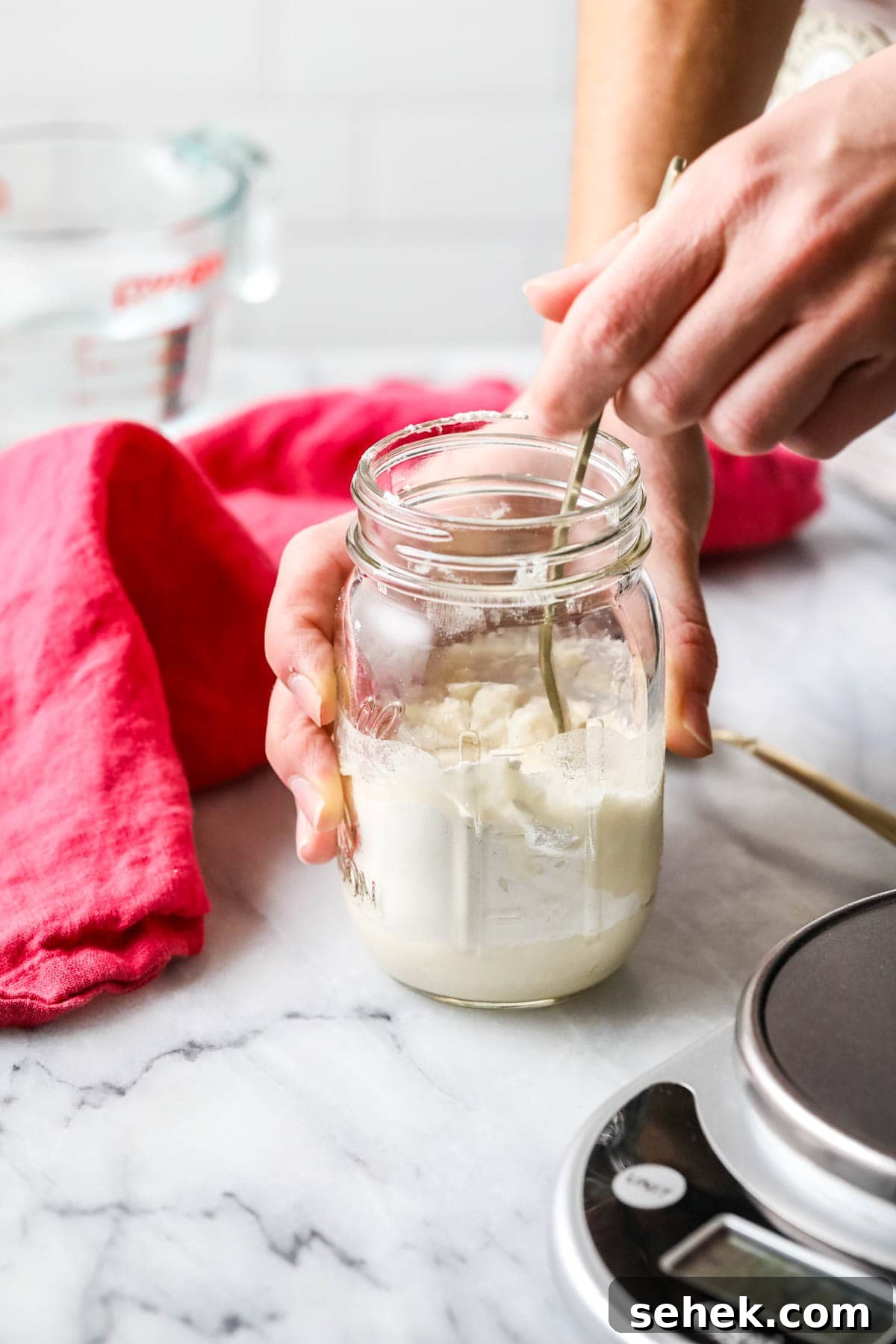
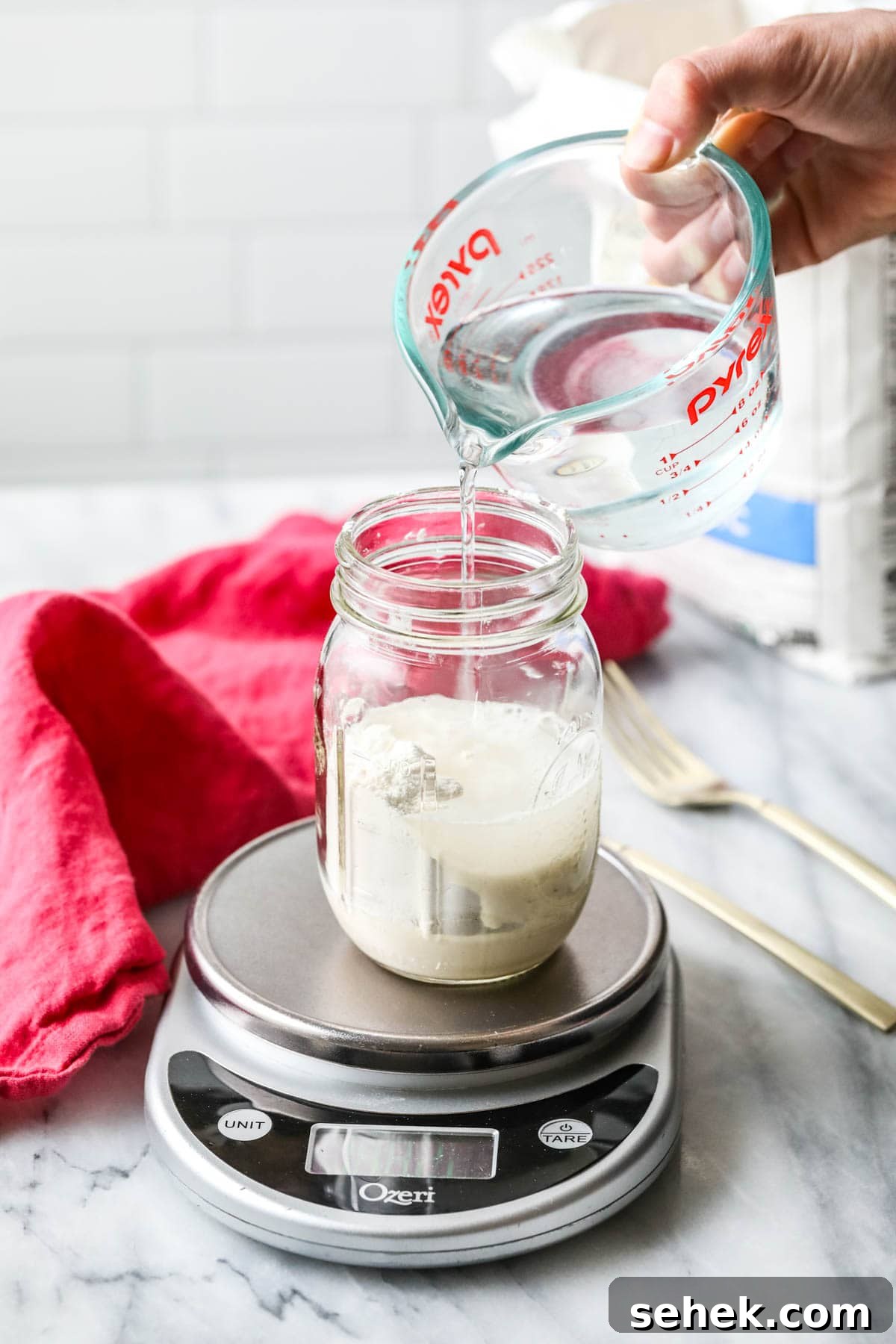
A 1:1:1 ratio by weight (starter:water:flour) is a reliable rule. Weighing ingredients with a kitchen scale gives the most consistent results, because cup measures vary between flour and water. If you must use cups, a close approximation is: a scant 1/2 cup starter, 2/3 cup flour, and 1/3 cup water.
When do I feed my starter?
Feed when the starter has risen and fallen back toward its original level. Mark the jar with a rubber band or a line so you can see the full rise-and-fall cycle. A starter is ready for the next feeding after it has deflated and smells less sharp, and its texture has thinned slightly.
At room temperature, feed daily at roughly the same time. If refrigerated, a weekly feeding is usually sufficient. If you use starter for a bake, feeding it right after use is a convenient way to restore strength.
When to use your starter
When can I use it if I’m feeding daily?
Use active starter at its peak — when it has doubled in volume and is bubbly. Peak time varies with temperature: a warm kitchen might produce a peak in under five hours; a cool one may take 10–12 hours. Learn your starter’s timing over several feed cycles.
When can I use it if I’m feeding weekly (or less often)?
The same rule applies: use it when it’s doubled and bubbly. If the starter has been dormant for a week or more and is completely deflated, feed it a couple of times (allowing it to rise and fall) before relying on it for a major bake — this strengthens the culture and improves results.
What kind of flour should I feed my starter (and can I change it up)?
Feed your starter the type of flour you plan to use most often. If you bake with bread flour, feed bread flour; if you bake mostly with all-purpose, feed that. Starters tolerate many flours, including rye and whole grains, which can change flavor and activity. Beginners may prefer to stick to bread or all-purpose flour until comfortable experimenting.
Why isn’t my starter growing (even after I fed it)
Common reasons for slow growth include:
- Cold environment: Starters prefer warmth. Move the jar to a warmer spot if your kitchen is cool or drafty.
- Incorrect feeding: Ensure you’re discarding enough and feeding with the proper ratio. Overly large quantities of old starter reduce the effectiveness of feeding.
- Water quality: Strongly chlorinated water can inhibit activity. Use filtered or dechlorinated water at a warm, not hot, temperature.
- Neglect: Missed feedings slow a starter. Revive with regular feedings and a warm resting place (see revival section below).
How do I know when my starter’s gone bad?
Starters are resilient, but mold is a clear sign of spoilage — look for black, green, pink, or orange spots, usually on the surface. A tangy or sour smell is normal, but a rotten or putrid smell is not. If frequent feedings (twice daily for several days) don’t restore activity and mold or foul odors persist, it’s best to discard and start anew.
Help! I missed a feeding (or two… or more…) and now it’s not growing
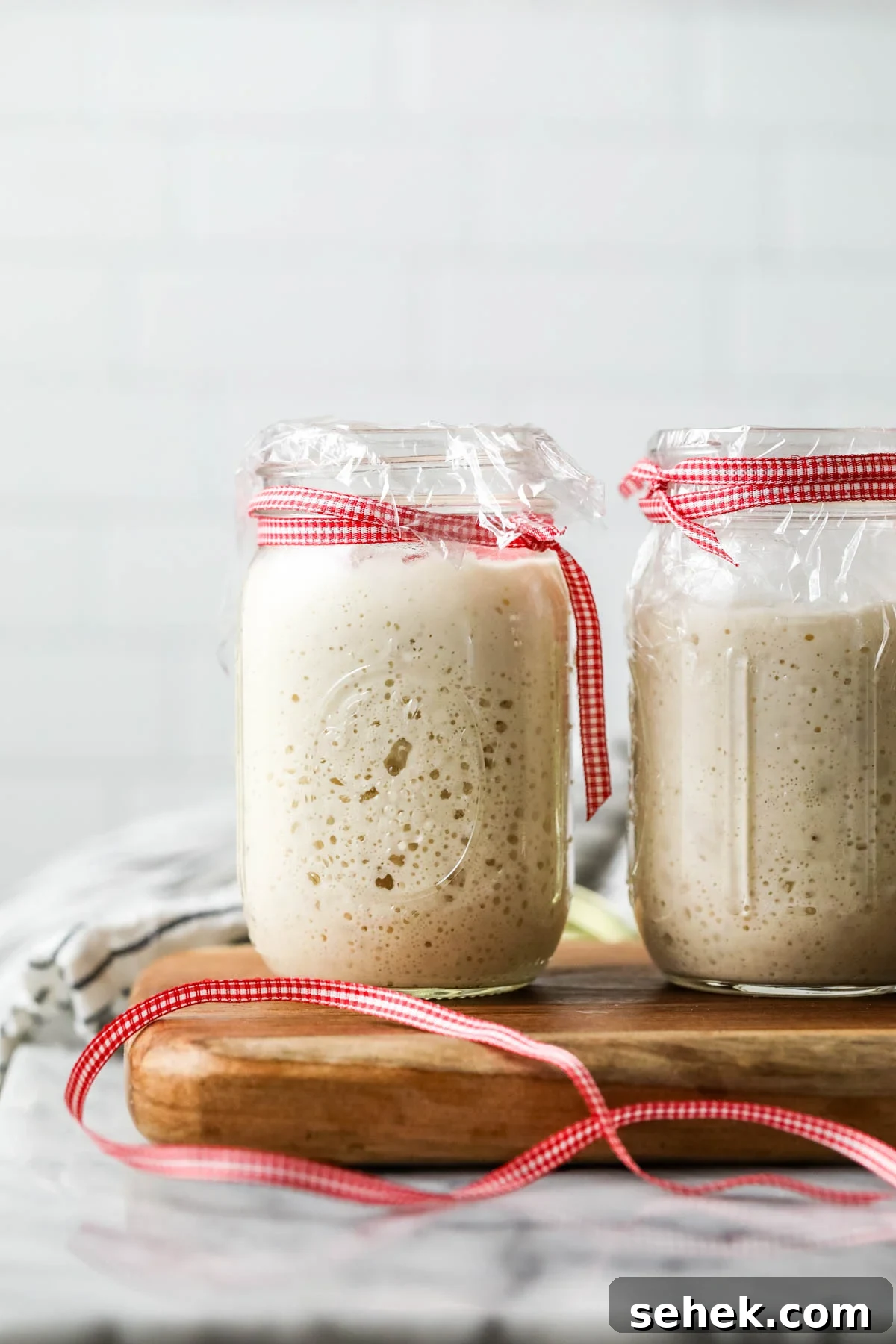
First, inspect for mold. If there’s none, you can probably revive it. Pour off any liquid on top, transfer the starter to a clean jar, and feed at a 1:1:1 ratio. Keep it in a consistently warm spot and feed every 12 hours until it resumes regular rise and fall; revival may take several days.
Why is there a watery layer on my starter? Is it bad?
The watery layer, called “hooch,” is an alcoholic byproduct of fermentation and usually smells sharp or vinegary. Hooch signals your starter is hungry. You can pour it off or stir it back in — stirring increases tang, while pouring off reduces acidity. Avoid hooch by feeding more frequently.
What if I need to store my starter for a long time (more than a week)
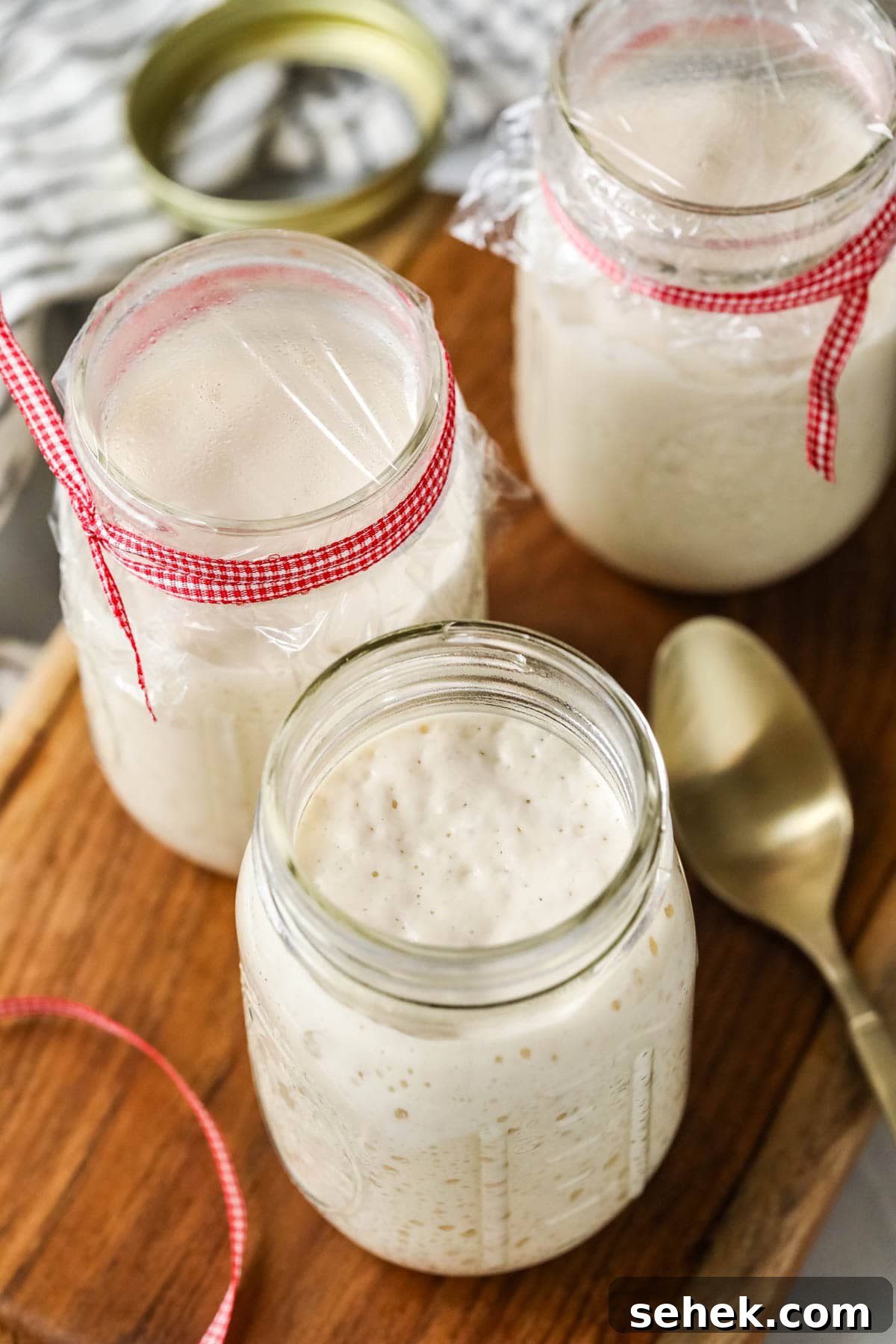
Refrigerated starter is fine for one to two weeks, and it’s best to feed an hour or two before chilling. For much longer storage (months), consider drying your starter for long-term preservation. Drying involves spreading a thin layer on parchment, letting it fully dry, then storing the flakes in an airtight container — follow a trusted drying method when you choose to preserve it this way.
Do I need to keep my container covered?
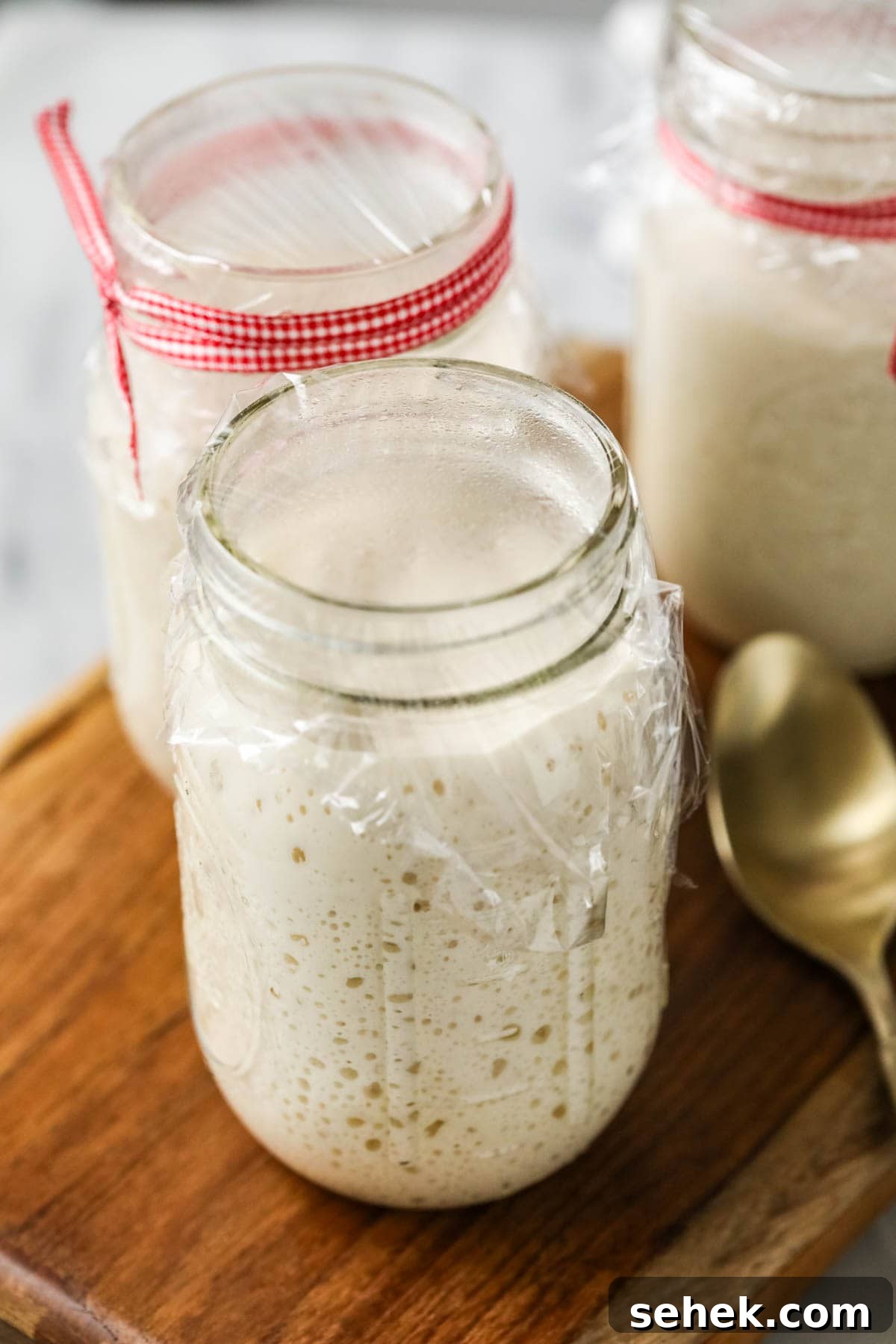
Yes. Covering prevents drying and keeps out dust and insects. Don’t seal the jar airtight; the starter needs to breathe. Use plastic wrap, a breathable cloth secured with a rubber band, or a loosely placed lid. Avoid tightly screwed lids that block airflow.
How often should I change the jar?
If your starter lives at room temperature, clean and refresh its jar weekly. If refrigerated, you can go longer between jar changes — monthly is a reasonable interval to keep the container clean and avoid buildup.
Do I really need to name my starter?
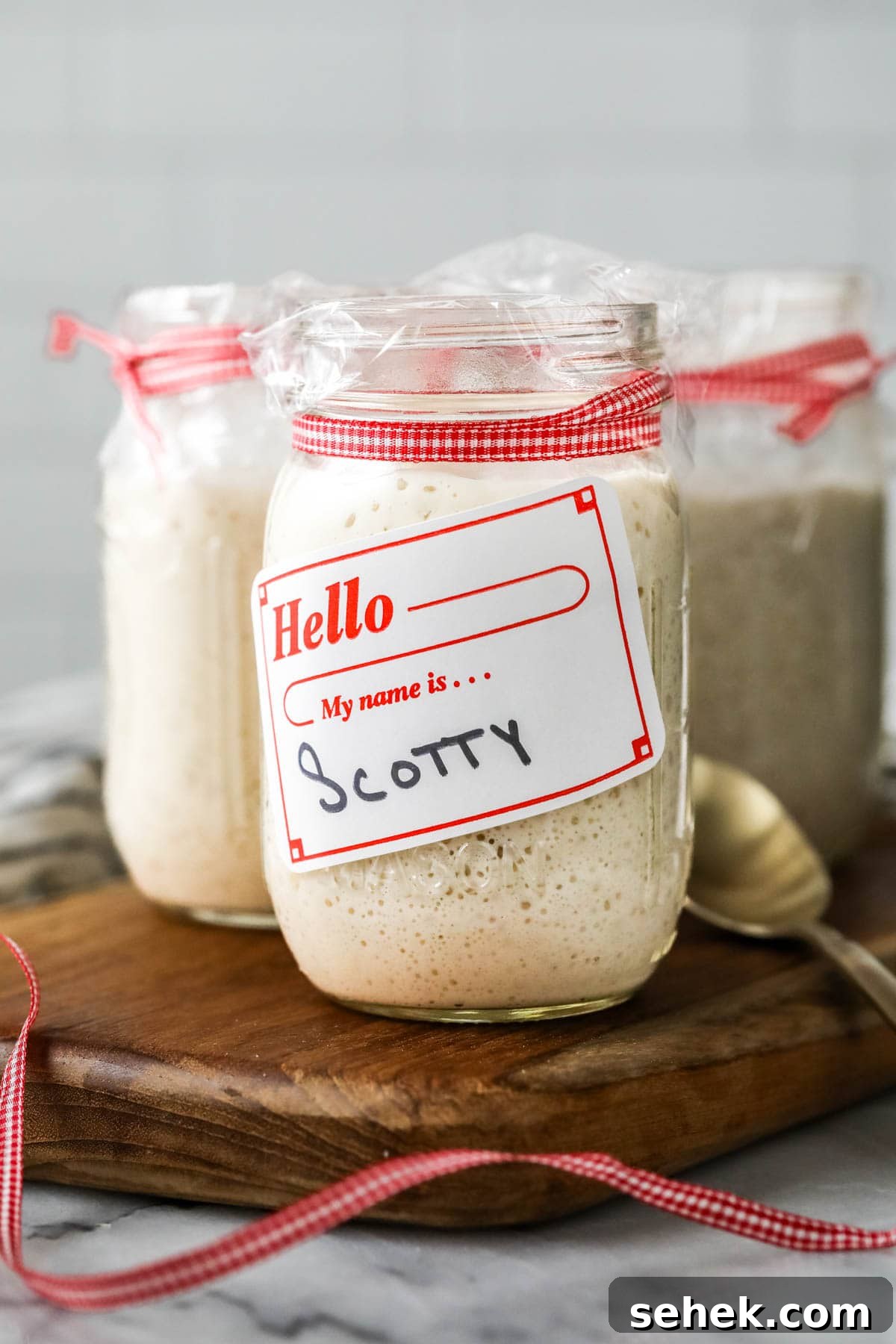
Naming a starter is a fun tradition and can help you remember to care for it. Many bakers treat starters like small kitchen pets — a name can increase the chances you’ll feed and maintain it. Whether you name it or not is up to you, but it does add personality to your baking routine.
What can I do with my discard?
Discarded starter can feel wasteful, but it’s necessary to maintain a healthy culture. Instead of throwing it away, use discard in recipes like pancakes, muffins, cookies, biscuits, or other baked goods that accept a tangy starter flavor. Regularly using discard in recipes reduces waste and yields delicious results.
When and how can I give someone else some of my starter?
Once your starter is established, it’s easy to share. Spoon some discard into a clean jar, feed it so it’s active, and include simple care instructions. A fed starter in a jar makes a thoughtful gift for fellow bakers.
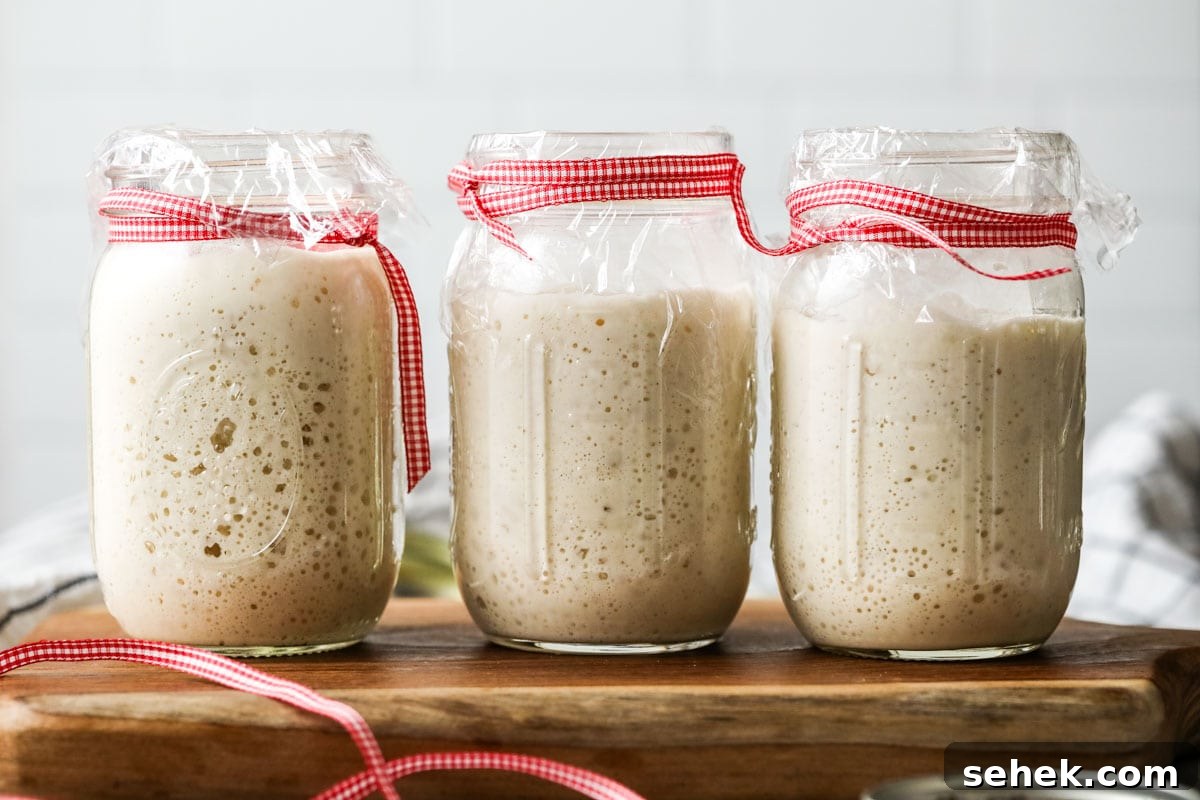
Help! I have another question you didn’t cover here!
If you have more questions, note them where you keep your starter or in your favorite recipe notebook. Observing your starter over a few feed cycles will answer many practical questions, and experimenting carefully will build confidence. Good luck — enjoy your baking!