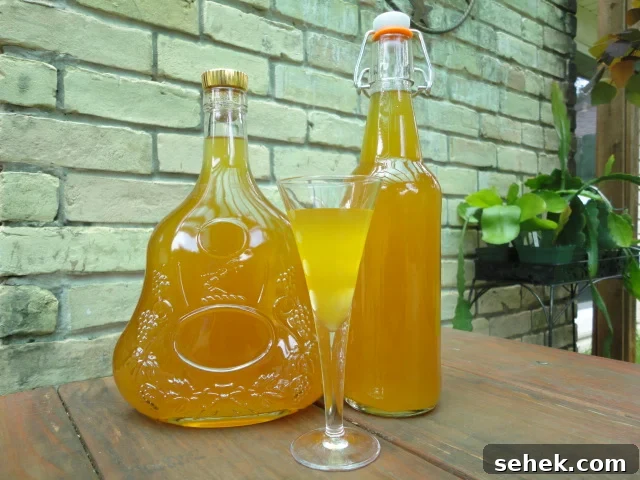
The third homemade liqueur I ever made used dried apricots. At that point I was eager to experiment with any kitchen cordial I could find, and fresh fruit wasn’t in season nearby. The result turned out to be a bright, sun-kissed liqueur with a rich apricot character—sweet, rounded, and remarkably concentrated.
Homemade Dried Apricot Liqueur in Bottles and Cordial Glass
Perfectly ripe fresh apricots are a seasonal delight, but they can be hard to find. Dried apricots are an excellent, widely available alternative that concentrates the fruit’s sweetness and flavor. When chopped dried apricots are steeped in alcohol with a simple syrup for several weeks or months, the infusion develops a deep, fruity aroma and an intense apricot flavor that outshines many commercial liqueurs.
Homemade Dried Apricot Liqueur Steeping in a Large Jar
Cheese Cloth Secured To Glass Jar to Filter the Homemade Dried Apricot Liqueur
Homemade Dried Apricot Liqueur Filtering Through a Cheese Cloth
For my first batch I followed a trusted recipe from a cordial cookbook. The method is simple and reliable, producing a liqueur that is deep amber in color with a bold dried-apricot flavor.
Ingredients
- 1 cup water
- 2 cups sugar
- 1 pound dried apricots, chopped
- ¾ cup 100-proof vodka
- ¾ cup brandy
- 1 teaspoon orange zest
- 1 tablespoon fruit protector (optional)
- Food coloring (optional): a few drops if you want a more vivid hue
Instructions
- Make a simple syrup by dissolving the sugar in the water over low heat; allow to cool completely.
- Place the chopped dried apricots into a clean 2-quart jar, then pour the cooled syrup over the fruit.
- Add the vodka, brandy, orange zest, and fruit protector if using. Stir to combine, seal the jar, and store it in a dark place.
- Allow the mixture to steep for at least one month. After steeping, strain out solids and filter the liquid through wetted coffee filters or cheesecloth to remove fine particles. Bottle in a glass bottle with a tight-fitting cap.
- Expect some small particles or slight haze; repeated filtration can clarify it further, but a perfectly clear finish is not essential to the flavor.
For my second batch I experimented: I doubled the apricots and syrup and increased the alcohol, substituting higher-proof neutral grain spirit for some of the vodka and adjusting the brandy. I skipped added color and fruit protector and extended the steeping to about four months simply because I was busy. The result remained intensely flavored, a bit lighter in color, and noticeably stronger in alcohol without being harsh. The extra steeping time pulled more sweetness and depth from the fruit, producing a richer cordial.
Homemade Dried Apricot Liqueur in a Cordial Glass (1st Batch, Spring 2011)
Tips and serving suggestions:
- Use good-quality dried apricots for the best flavor—sulphured or unsulphured will both work but may affect color and aroma slightly.
- Adjust the alcohol base to suit your taste: more brandy gives warmth and depth, while neutral spirits preserve a cleaner fruit-forward profile.
- Longer steeping extracts more flavor and sweetness, but check periodically and taste to avoid over-extraction.
- Store bottled liqueur in a cool, dark place. It keeps well and makes a thoughtful gift when decanted into pretty bottles.
- Serve chilled in small glasses, use as a dessert digestif, or add a splash to sparkling wine or cocktails for an apricot boost.
Dried apricot liqueur is an easy, rewarding project for home distillers and cordial makers. Because dried apricots are available year-round, you can make this fragrant, sun-kissed liqueur whenever you like. If you enjoy apricot flavor, this cordial will likely become a favorite—rich, sweet, and full of concentrated fruit character.