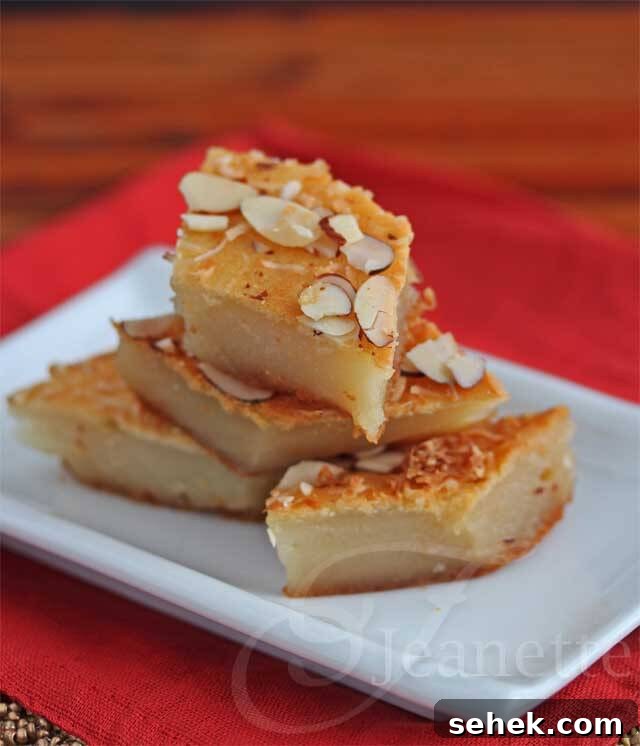
Baked Coconut Sticky Rice Cake is simple to prepare and a delightful variation on the traditional Chinese sticky rice cake. This sweet, mochi-like treat is perfect for Chinese New Year or as a year-round dessert.
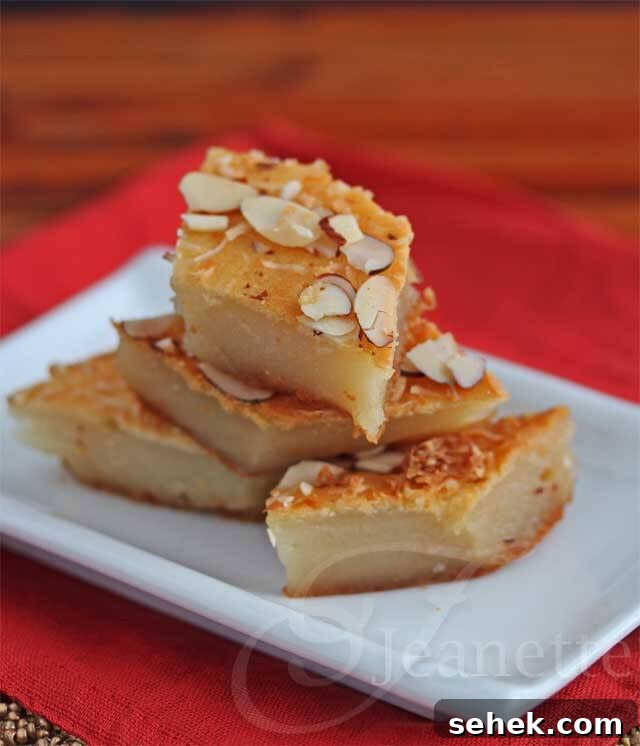
This year, to celebrate Chinese New Year, I’m sharing a cherished family recipe — my Auntie Florence’s Coconut Sticky Rice Cake. Auntie Florence remained active and spirited well into her 90s and lived to 97. She authored several Chinese cookbooks, and this particular recipe was passed to me by phone in 2012 when I asked for guidance recreating a favorite. It’s not found in her books, which makes it extra special.
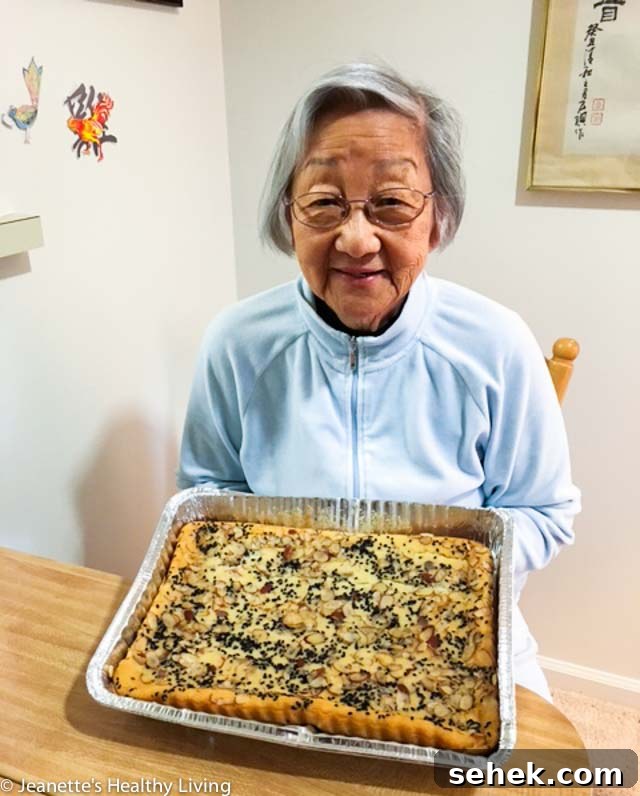
Below is a photo of my aunt with a Coconut Sticky Rice Cake I sent her some years ago (topped with black sesame seeds and almonds).
Before the recipe, a brief note about Chinese New Year food traditions: many dishes served during the holiday are chosen for their symbolic meanings. Foods often symbolize prosperity, luck, unity, longevity or wealth, whether through their names, shapes or colors.
Common New Year dishes include a whole chicken (family unity), a whole fish (surplus), duck (happiness), lobster (vitality), Buddha’s Delight (a vegetarian dish of symbolic ingredients), shrimp (wealth and abundance), oysters (good fortune), scallops (resembling ancient coins), tea eggs (fertility), and noodles (longevity). Fried items like spring rolls resemble gold bars and symbolize prosperity. Fresh tofu is typically avoided because its white color can symbolize death, while tangerines, oranges and pomelos are exchanged for good luck.
Now, about this Coconut Sticky Rice Cake. Known in Chinese as “nian gao,” sticky rice cake represents family unity and the wish for increasing prosperity year after year. Traditionally steamed, this version was adapted by my aunt into a baked form for ease and flavor. The texture is sticky and chewy — similar to mochi — and the recipe is naturally gluten-free when made with glutinous rice flour.
I prefer this baked version to the steamed one. The first time I made it, I split the cake and sent half to my parents while keeping the rest for our family. It keeps well and is especially good the next day.
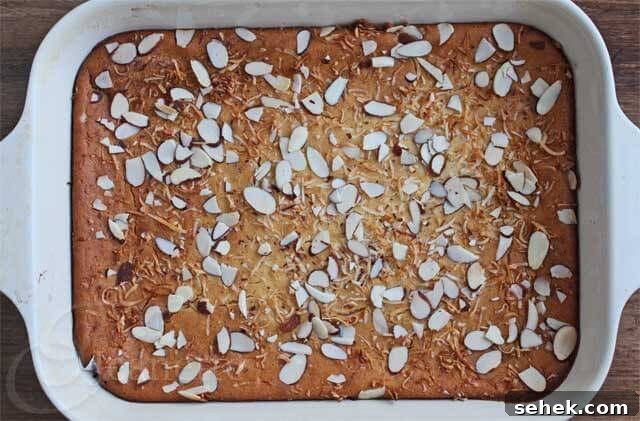
If you enjoy this recipe, there are many other traditional and modern dishes for the Lunar New Year to explore. Below is the recipe for my aunt’s baked coconut sticky rice cake, followed by a few notes.
Coconut Sticky Rice Cake Recipe for Chinese New Year
Ingredients
-
1
pound
Mochiko (sweet glutinous rice) flour -
1 1/2
cups
coconut milk -
1 1/2
cups
low-fat milk (or additional regular milk to reach 3 cups total liquid) -
1 1/4
cup
organic sugar -
1
teaspoon
baking powder -
1/2
teaspoon
baking soda -
1/2
cup
olive oil -
1
teaspoon
almond extract -
1
cup
chopped nuts or seeds
almonds, walnuts, or untoasted black and white sesame seeds
Instructions
-
Preheat the oven to 325°F (165°C).
-
In a large mixing bowl, combine coconut milk, regular or low-fat milk, sugar, baking powder, baking soda, olive oil, and almond extract. Whisk until sugar dissolves and ingredients are well blended.
-
Gradually add the mochiko (sweet rice) flour while stirring to create a smooth batter. Stir in chopped nuts or seeds, or reserve them to sprinkle on top. Line a 13x9x2-inch pan with parchment paper and pour in the batter.
-
Bake for about 1 hour, until the cake is set and lightly golden. Remove from the oven and allow to cool completely.
-
Once cool, cut the cake into diamond shapes or squares and serve. The cake is often best after resting overnight.
Recipe Notes
This baked version of nian gao was shared with me by my Aunt Florence. The texture is sticky and chewy, and the cake keeps well refrigerated for several days.
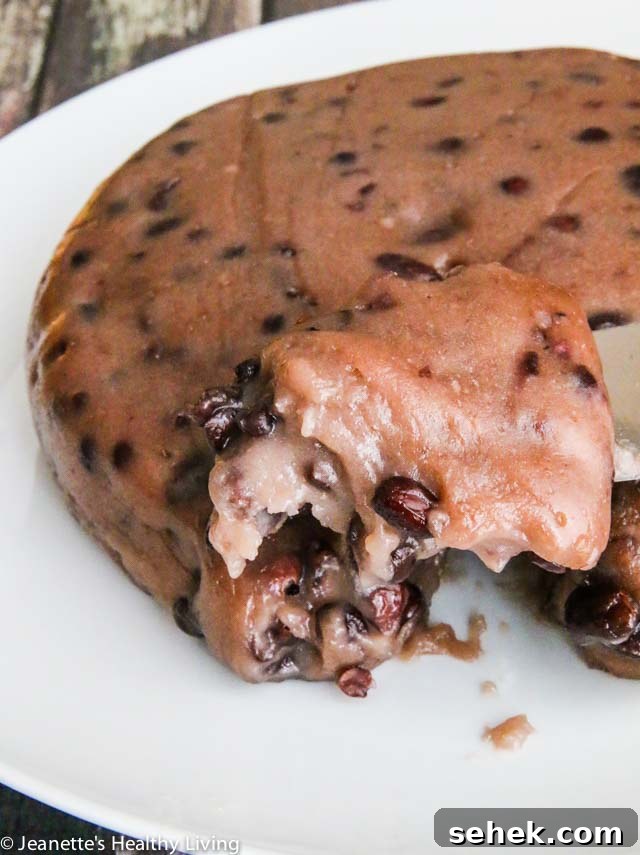
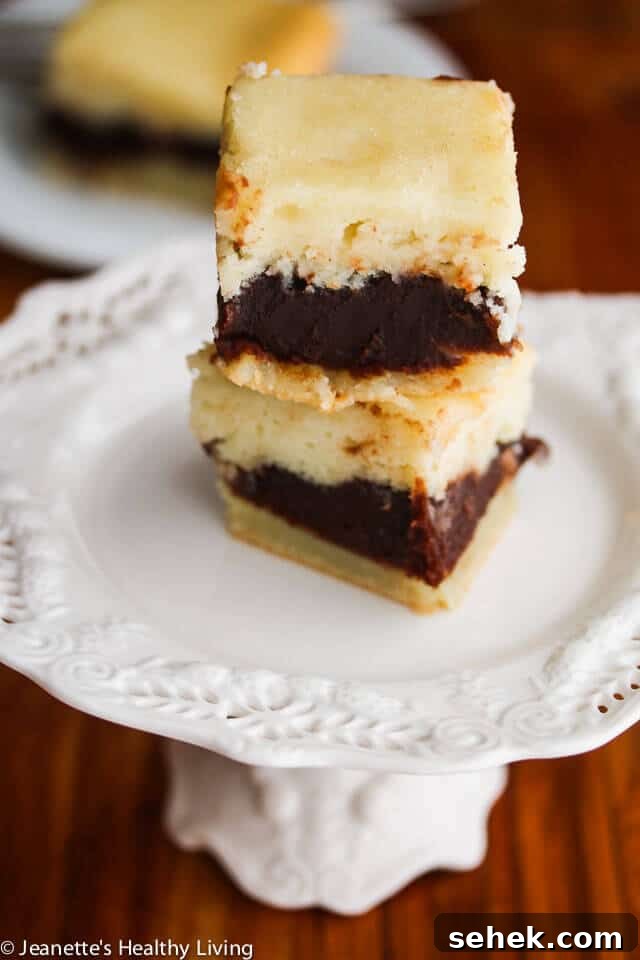
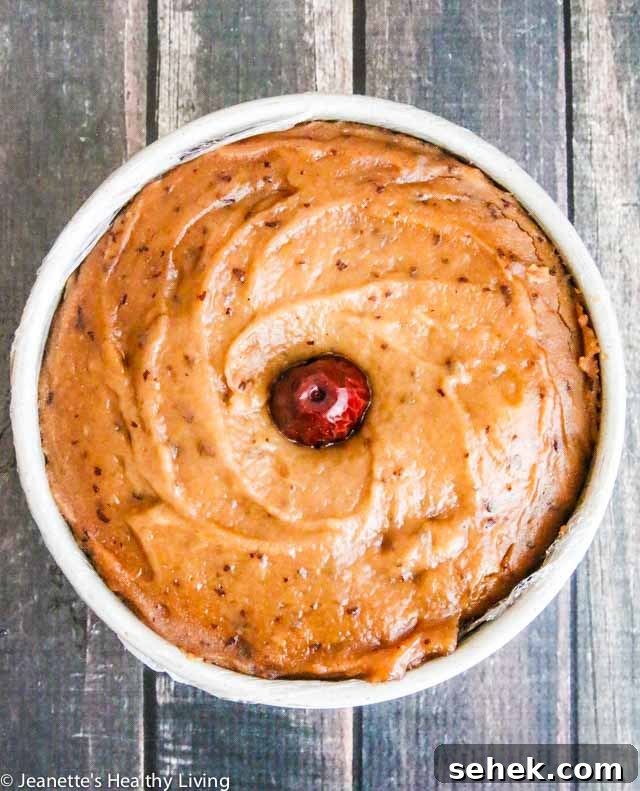
If you enjoy this sticky rice cake, you might also like other variations such as baked sticky rice with red bean paste, jujube (date) sticky rice cake, or traditional red bean sticky rice cake. Below are a few related images for inspiration.
Mom’s Baked Coconut Sticky Rice Red Bean Paste Cake
Chinese Jujube Date Sticky Rice Cake
Red Bean Sticky Rice Cake