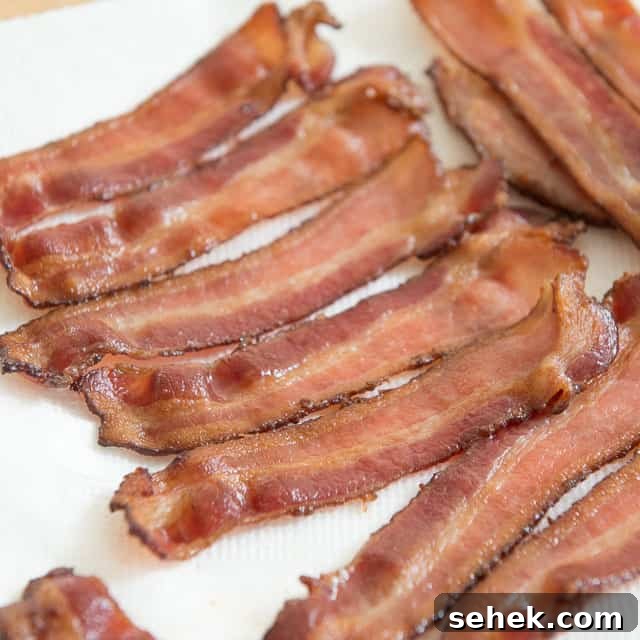
Cook perfect bacon in the oven every time: 400°F for 15–20 minutes, no flipping required. You’ll get consistent, evenly crisp slices with minimal effort. This technique has become my go-to on weekend mornings, especially when I serve it alongside whole wheat pancakes.
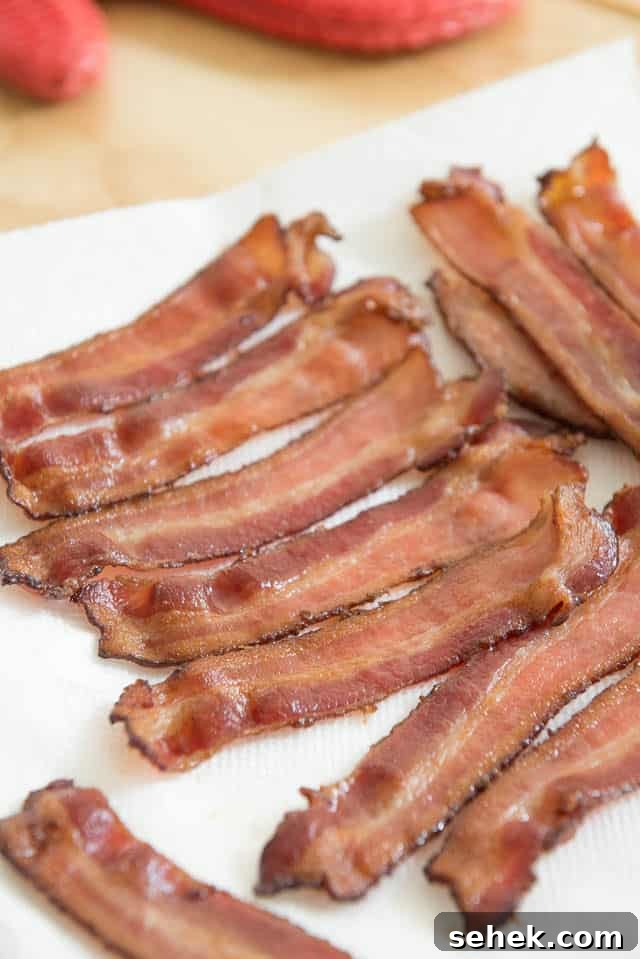
Baking bacon in the oven is far superior to pan-frying for home cooks who want clean, predictable results. Skillet cooking can lead to splattered grease, unevenly cooked strips, and the hassle of running multiple batches when your pan can’t hold an entire package at once. The oven eliminates most of that frustration and produces reliably crisp bacon.
I’ve prepared more bacon than I can count, and making it in the oven has become a simple way for my family to enjoy a relaxed Saturday morning together. The method is straightforward, scaleable, and delivers results every time.
Why this method is superior
More even cooking – In a skillet, heat comes only from below and bacon often curls, which creates hot spots and undercooked sections. Roasting in an oven surrounds the slices with hot air so they brown and crisp uniformly across the entire strip.
Better crispiness – The oven allows the fat to render slowly while the meat crisps evenly. Thin-cut bacon crisps especially well this way. You can achieve deep, consistent crispness without burning.
Less hands-on time – A typical package contains ten to twelve strips. Pan-frying a whole pack means several batches and constant attention. The oven lets you cook a full package—or multiple pans—at once, saving time and effort.
Easier batch cooking – Because you can use multiple sheet pans and bake them together, this method is perfect for feeding a crowd or prepping bacon for recipes and leftovers.
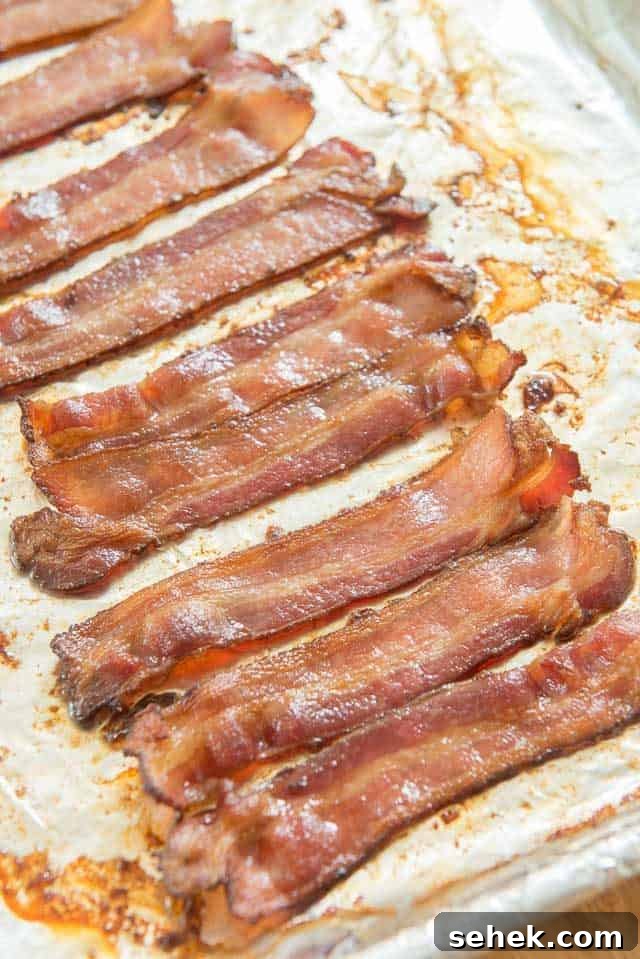
Tips for best results
Use convection if available – Convection mode circulates hot air and promotes even browning, often trimming a few minutes from the cook time and producing crispier bacon.
Choose thinner bacon for maximum crisp – Thin or center-cut slices will crisp up faster and more evenly. Thick-cut bacon will still be delicious but will retain a meatier bite in the center.
Drain and blot before serving – Transfer finished strips to a paper-towel-lined plate and blot gently to remove excess grease. For the crispiest texture, place the bacon on a wire rack over a baking sheet and let the fat drip away before serving.
Step-by-step overview
- Preheat your oven to 400°F.
Although a higher temperature might seem faster, 400°F strikes the best balance: it lets the fat render while the meat crisps instead of burning. Start checking at about 15 minutes to avoid overcooking.
Optional: line the pan for easy cleanup
Lining a rimmed sheet pan with aluminum foil makes cleanup much simpler. Once the bacon is done, allow the pan to cool a little, then gather the foil and discard it with the cooled fat inside. This avoids pouring grease down the sink or dealing with greasy towels.
Avoid using parchment for this purpose; fat can seep through. Foil provides the best barrier for easy disposal.
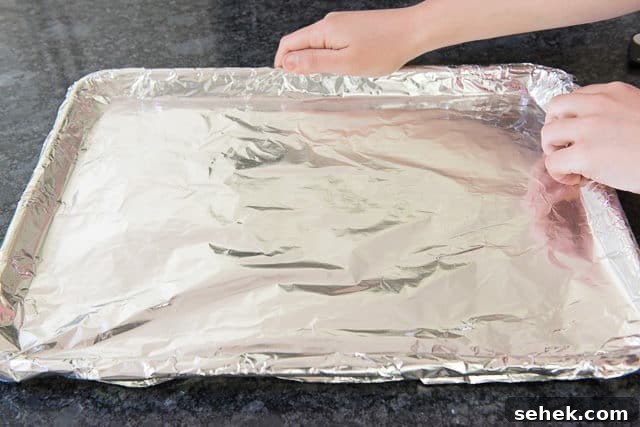
- Lay the bacon slices side by side on a large rimmed baking sheet, without overlapping.
- They may touch slightly because they will shrink as they cook, but do not stack or overlap them.
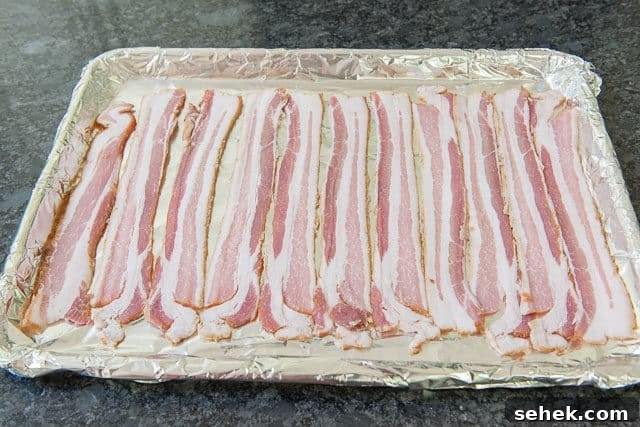
- Place the tray on the middle rack in the preheated oven.
- Bake at 400°F for 15–20 minutes, depending on thickness and desired crispness.
- Keep an eye on the bacon near the end; thickness and oven hot spots can affect timing.
- Rotate the pan if one side of the oven cooks faster than the other.
- Expect the bacon to shrink; this is normal as the fat renders away.
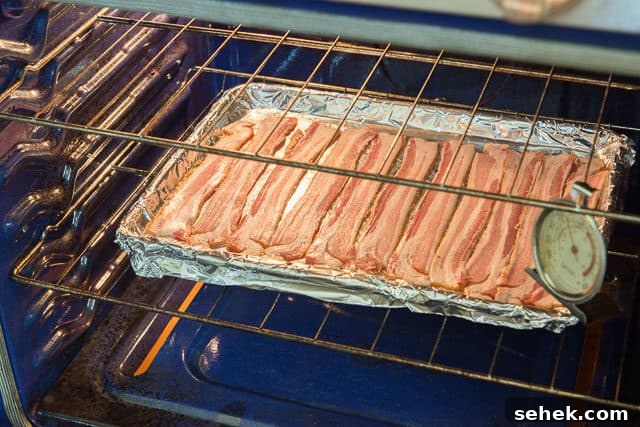
- When the bacon reaches your preferred doneness, transfer it to a paper-towel-lined plate and blot away excess fat.
- This step helps preserve crispness and prevents a greasy mouthfeel.
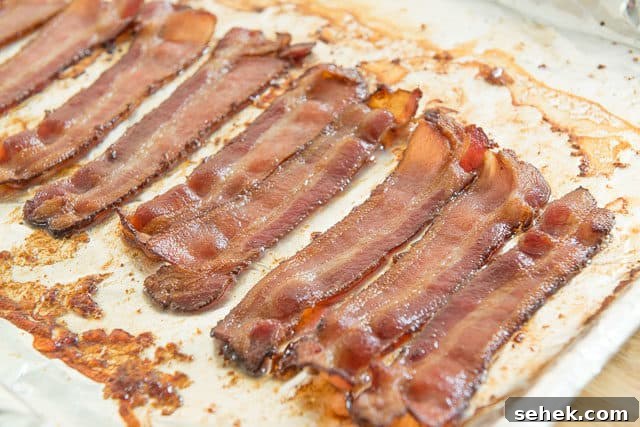
- Serve immediately for the best texture, or use the bacon in recipes once cooled.
Variations and flavor ideas
Bacon is delicious plain, but the oven makes it easy to add glazes or spices before baking since the strips stay put. Try these ideas to switch things up:
Praline-style – Coat the strips with brown sugar and chopped pecans before baking for a sweet, crunchy finish inspired by Southern pralines.
Maple-glazed – Drizzle a tablespoon or two of pure maple syrup over the strips before roasting for a subtle caramelized sweetness. Honey or agave also work well.
Spicy kick – Sprinkle a light dusting of cayenne, chili powder, or ground chipotle on the slices before baking to add heat and depth.
How to serve
Serve oven bacon right away while it’s still warm and crisp. It pairs beautifully with breakfast sides such as hash browns or hard-boiled eggs, or you can chop it and add it to salads, egg salad, stuffed vegetables, casseroles, or baked goods like scones. Leftovers keep well and are convenient for quick breakfasts, sandwiches, or recipes that call for cooked bacon.
Recipe FAQ and tips

How to Cook Bacon in the Oven
Ingredients
For the oven-cooked bacon:
- One 12-ounce package bacon
- Aluminum foil (optional, for lining the pan)
Instructions
- Preheat the oven to 400°F.
- Line a rimmed sheet pan with aluminum foil if you want easier cleanup.
- Lay the bacon strips side by side on the pan without overlapping; they may touch slightly.
- Roast for 15–20 minutes, until they are done to your preferred level of crispiness. Start checking at 15 minutes.
- Transfer the bacon to a paper-towel-lined plate to drain and blot excess fat. Serve warm.
Notes
*Cooking time varies by brand and thickness. Many thin-cut brands reach crispness in about 15 minutes; some thicker varieties can take longer. Use visual cues and smell—remove when crisp and golden to your liking.
Storing leftovers: Airtight container in the fridge up to 7 days.
Freezing: Freeze in a sealed container up to 3 months.
Reheating: Microwave at 50% power in short intervals or warm in a 350°F oven for about 10 minutes.
Scaling: Cook single layers only; use multiple trays and rotate if necessary for even results.
Convection: Convection ovens can shorten cooking time and improve browning—check a few minutes earlier than the listed time.