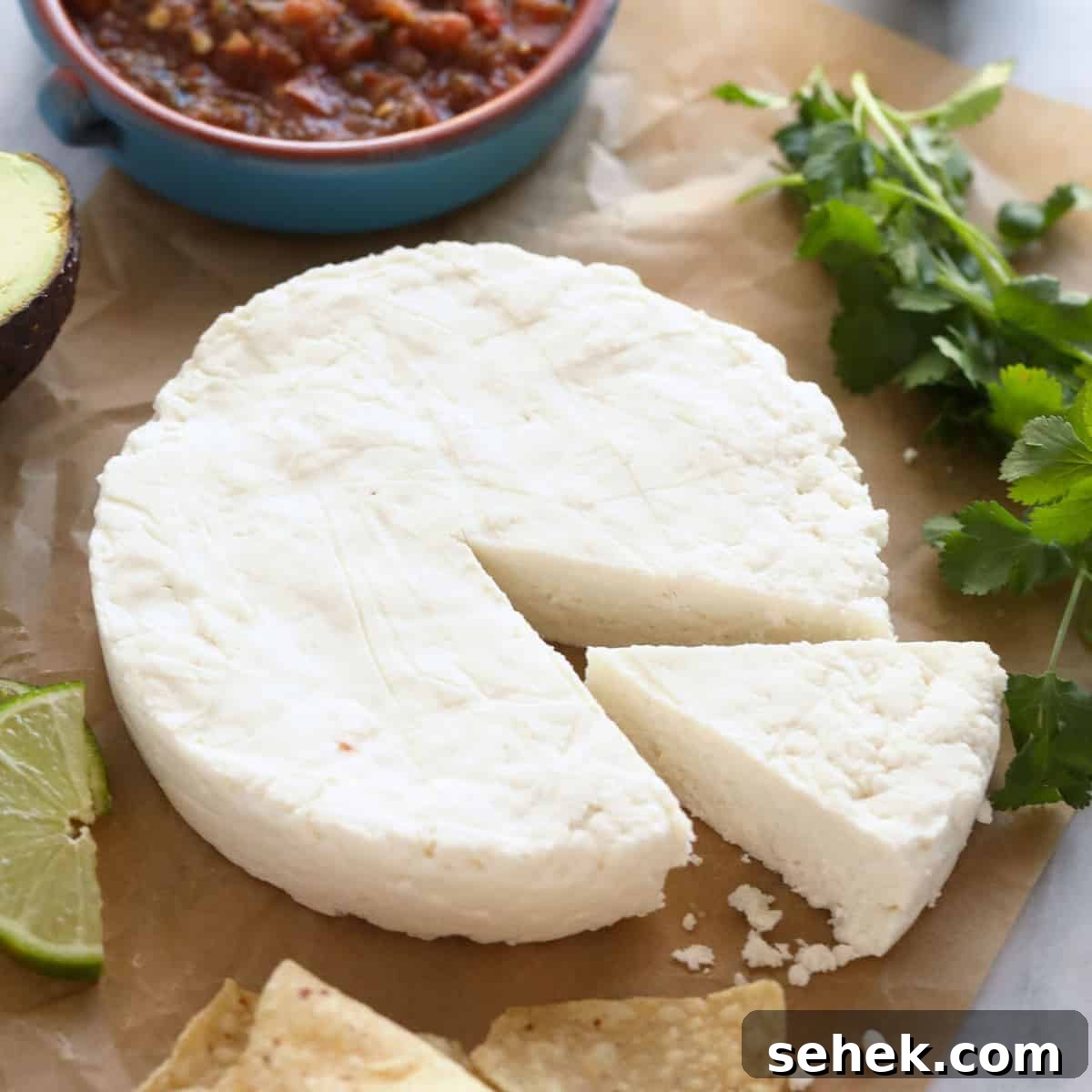
Cotija cheese is a white, crumbly Mexican cheese made from cow’s milk and named for the town of Cotija, Mexico. We frequently use cotija in many of our Mexican-inspired recipes at The Cheese Knees.
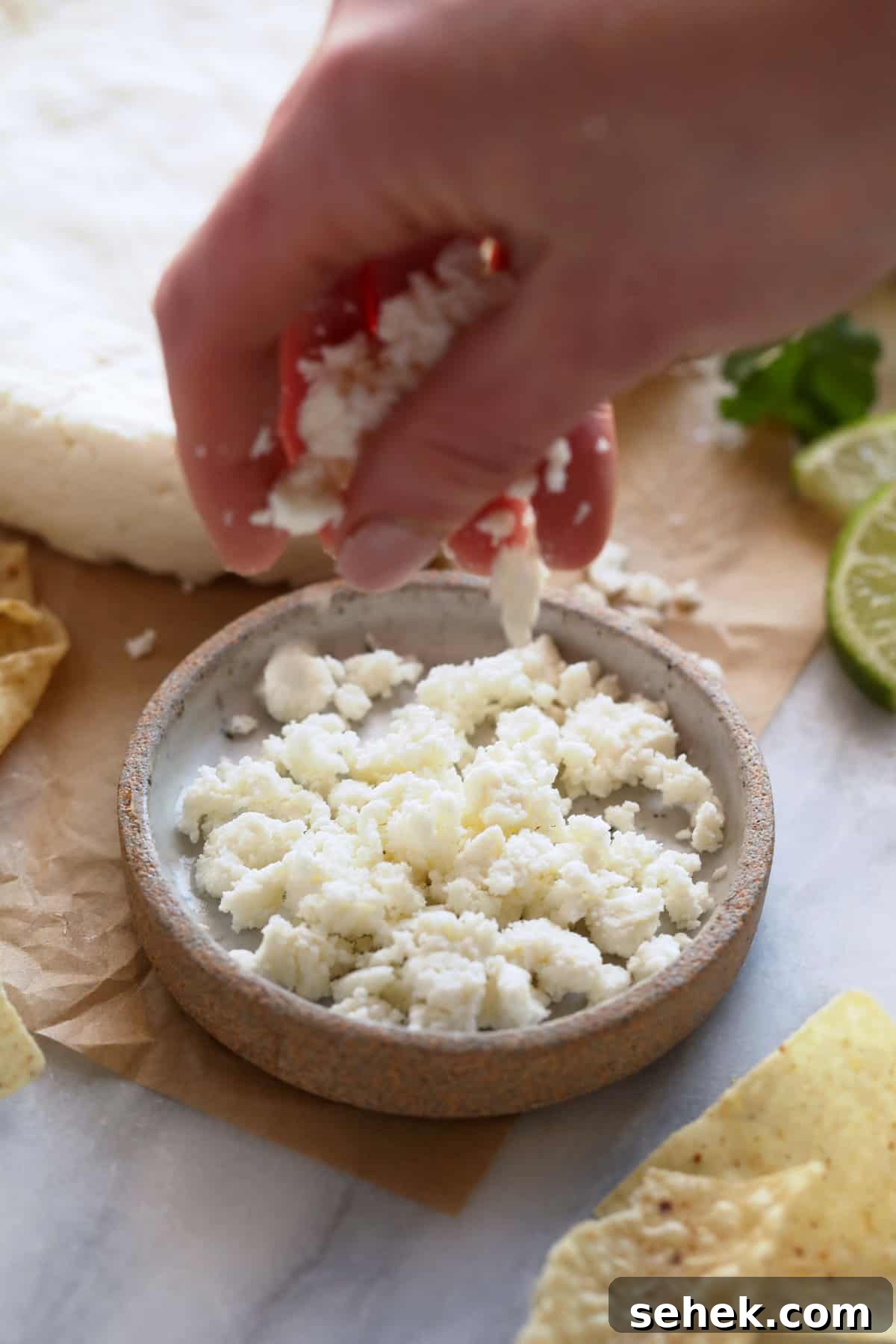
All Things Cotija Cheese
Cotija appears often in our recipes, but what exactly is it? Below we explain what cotija cheese is, how it tastes, how to pronounce it, and practical tips for using and storing it.
What is cotija cheese?
Cotija is a white, crumbly Mexican cheese made from cow’s milk and named after the town of Cotija in the Mexican state of Michoacán. It is commonly sold either fresh and crumbly or aged and firmer.
What does cotija taste like?
Fresh cotija is crumbly with a bright, salty flavor similar to a mild feta. Aged cotija becomes drier, saltier, and more intensely flavored, resembling aged cheeses such as Parmesan.
How do I say cotija?
Cotija is a Spanish word pronounced koh·tee·hah.
Substitutes for Cotija Cheese
If you don’t have cotija on hand, crumbled feta is a good stand-in for fresh cotija. For aged cotija, grated Parmesan or Romano work well to mimic the salty, savory notes.
Can you substitute queso fresco? Yes. Queso fresco is milder and less salty than cotija, so you may want to adjust seasoning in your recipe to compensate.
Cotija Cheese vs. Queso Fresco
Cotija is generally bolder and saltier than queso fresco. Queso fresco is softer and milder, while cotija’s flavor can range from delicate to robust depending on aging.
Cotija Cheese Recipes
Cotija is most often crumbled over dishes, making it an excellent topping for salads, tacos, street corn, and dips. Its salty, tangy character enhances many Mexican-inspired dishes. Some favorite uses include:
- Mexican Street Corn Casserole
- Grilled Mexican Street Corn
- Easy Steak Tacos
- Slow Cooker Taco Soup
Cotija Cheese FAQs
Cotija softens when heated but does not melt into a gooey texture like some cheeses.
Shelf life depends on the type: aged cotija can keep in the refrigerator for up to a few months, while fresh cotija has a shorter refrigerated life and should be used sooner.
Aged cotija is often compared to Parmesan because of its salty, savory profile, though the texture and production methods differ.
Traditional cotija is made with raw milk, but commercially available cotija in the United States is typically pasteurized to meet food-safety regulations.
Yes. Cotija freezes well if tightly wrapped, though its texture may become slightly crumblier after thawing.
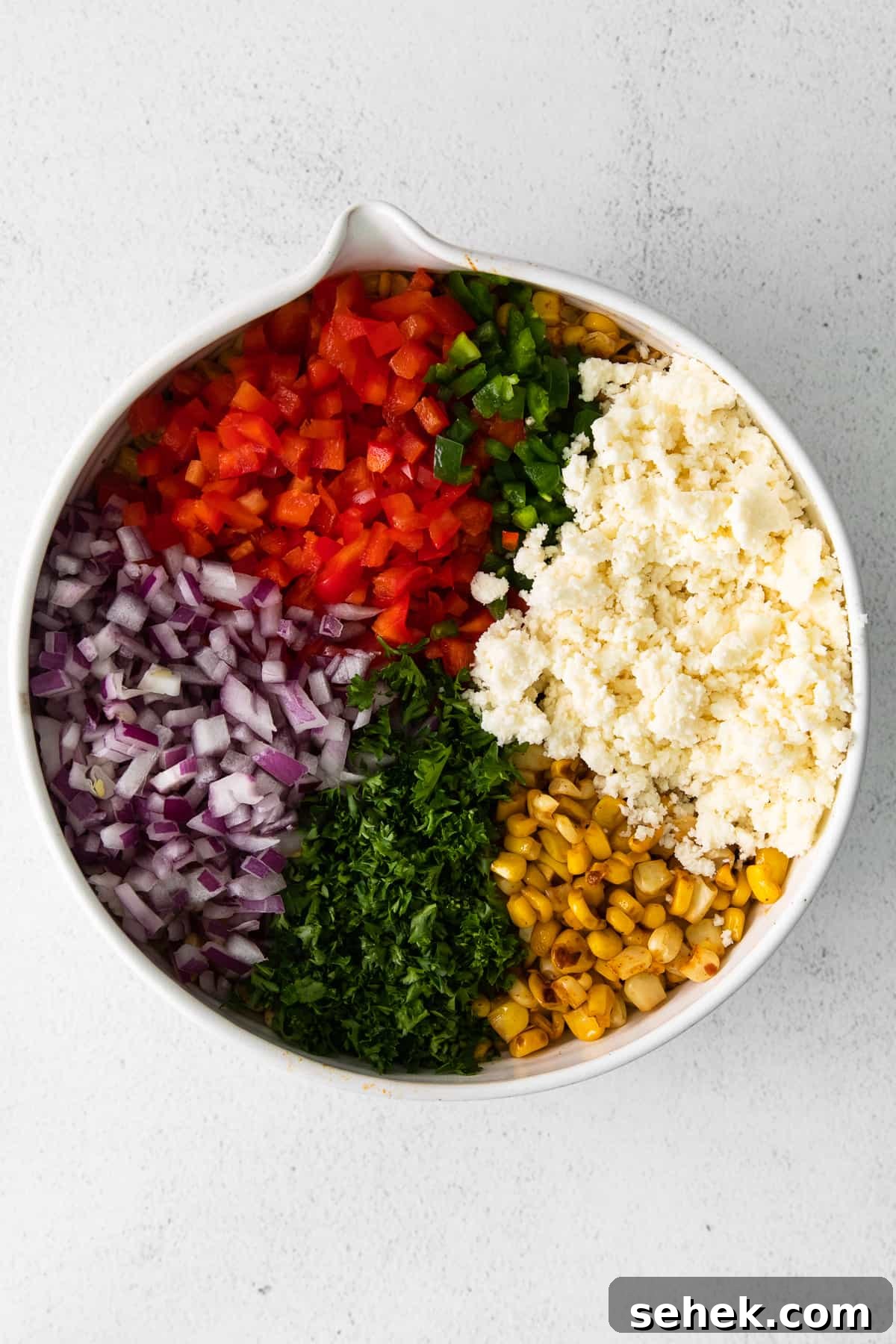
More of our Favorite…
Recipes with Cotija Cheese
- Mexican Street Corn Casserole
- Grilled Mexican Street Corn
- Easy Steak Tacos
- Cheese Enchiladas
- Easy Corn Salad