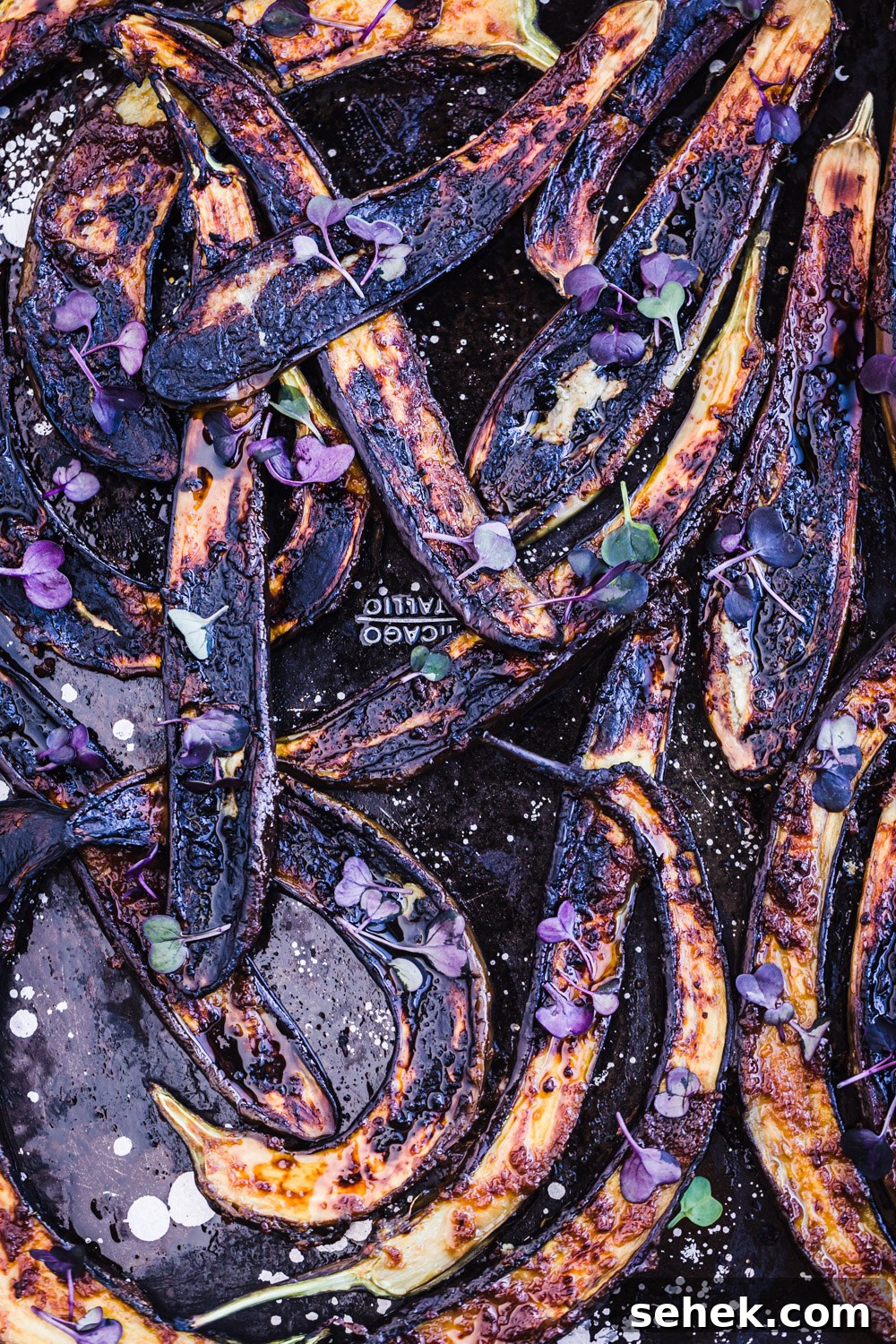
Miso-ginger marinated eggplant bursting with rich umami flavor—savory, smoky, and addictive with every bite.
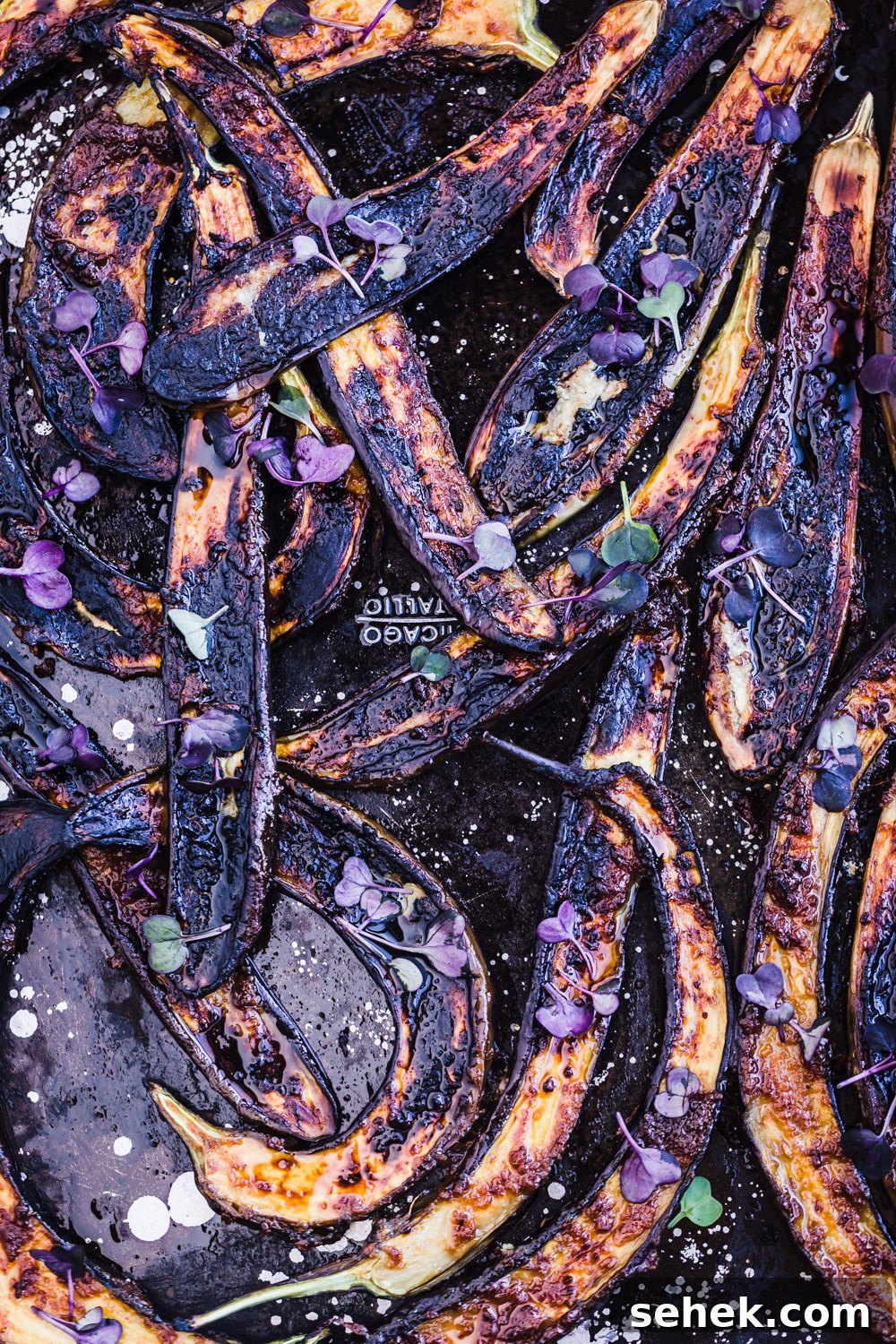
Eggplants are technically fruits, though we often treat them as vegetables. Their sponge-like flesh soaks up flavors beautifully, making them a perfect canvas for bold sauces and glazes.
Why this Ginger-Miso Glazed Eggplant Works
- Umami-forward glaze: The miso-ginger coating delivers deep savory notes that keep you coming back for more.
- High oven temperature: Roasting at high heat evaporates excess moisture quickly so the flesh becomes tender without getting soggy.
- Finishing under the broiler: A quick broil caramelizes and chars the glaze for a smoky, complex finish.
Any eggplant variety will work, but Japanese eggplants are a favorite for their texture and mild flavor.
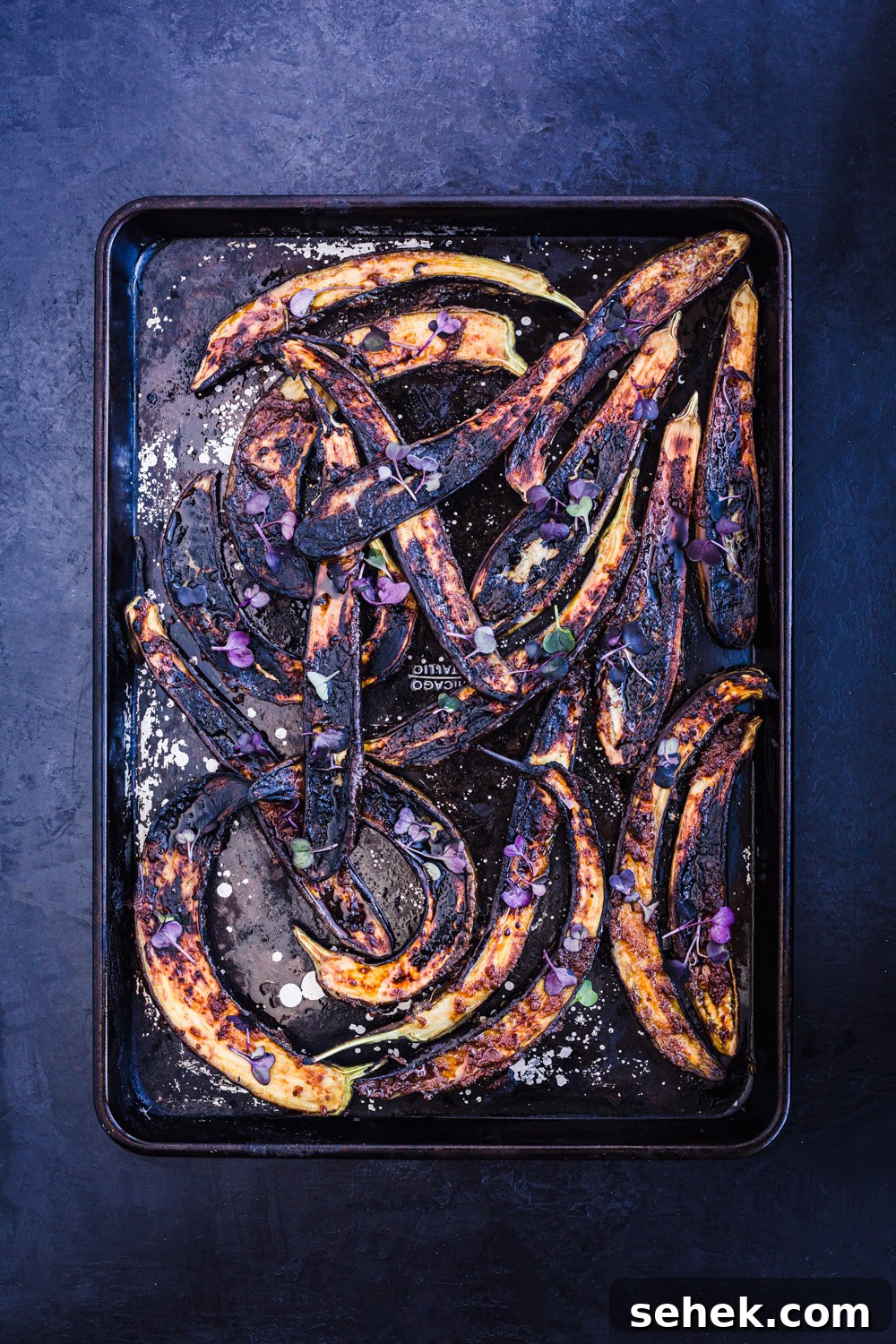
Japanese Eggplants
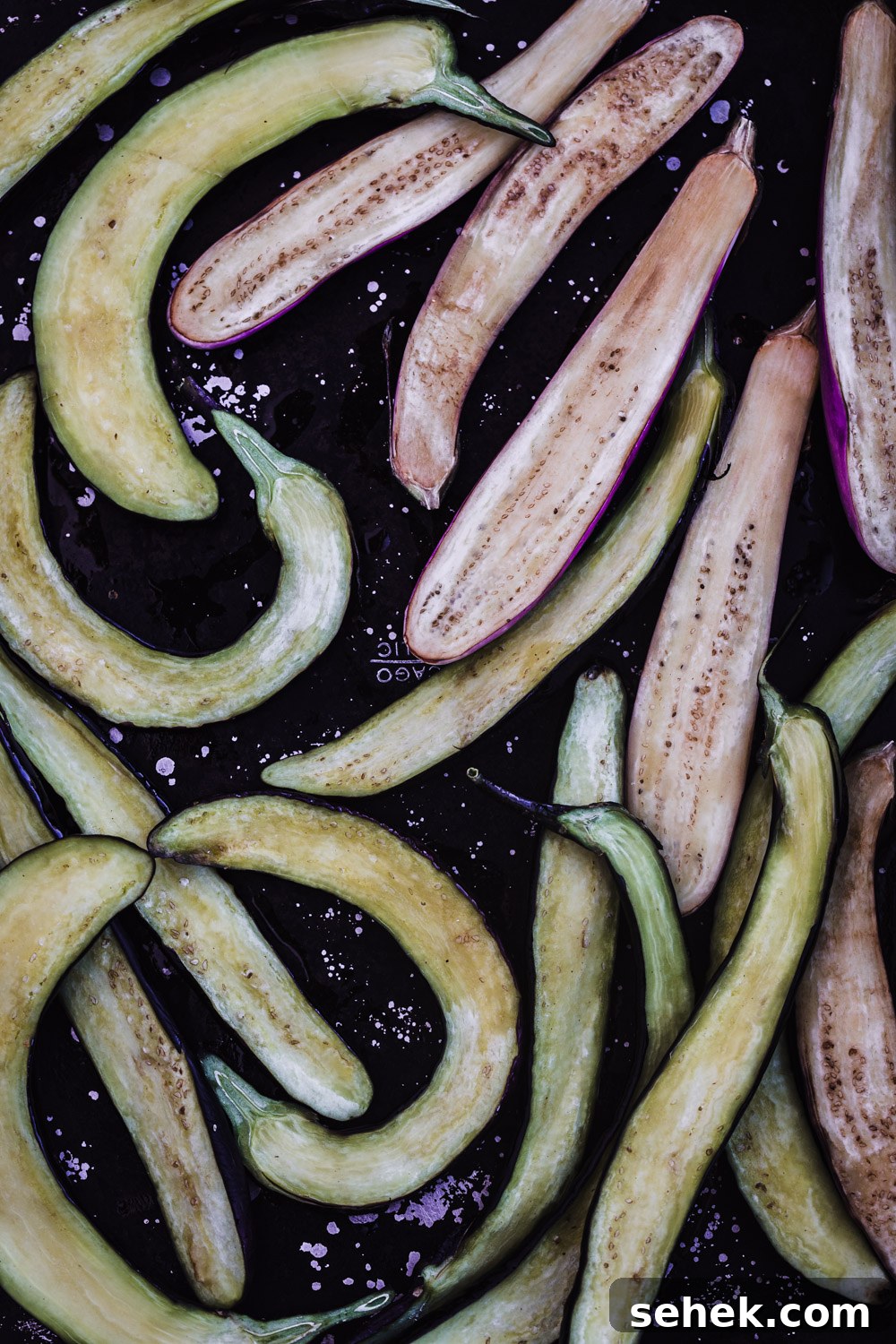
Japanese eggplants are long and narrow with thin skin, few seeds, and a deep purple color. They tend to be milder and less bitter than globe varieties. When cooked they develop a creamy texture that works well in this glaze-focused preparation.
Because their flesh is especially absorbent, use the marinade sparingly—a little goes a long way.
What is umami?
Umami is one of the five basic tastes—alongside sweet, sour, bitter, and salty—and translates roughly to “pleasant savory taste.” Foods high in umami stimulate salivation and make you crave another bite. Common umami-rich ingredients include mushrooms, tomatoes, soy sauce and aged cheeses.
Layering Japanese eggplant with a glossy miso-ginger glaze and charring it under the broiler creates a deceptively simple dish with incredible flavor.
How to Make the Ginger-Miso Marinated Eggplant
The method is straightforward: roast the eggplant, prepare the glaze, brush it on, then broil until caramelized. Finish with garnishes and serve.
Cooks Tips
- Any eggplant variety works: Globe, Japanese, or Italian eggplants will all yield tasty results.
- Choose firm, shiny eggplants: Avoid soft or blemished fruit for the best texture.
- Gluten-free option: Substitute tamari for soy sauce to make the dish gluten-free.
- Storage: Store leftovers in an airtight container in the refrigerator for up to 4 days.
Have you tried this recipe? I’d love to hear about it—leave a comment and share a photo on social media using #chefdanielagerson. Follow for more colorful, flavorful recipes and kitchen adventures.
Let’s make waves in the kitchen!

Print Recipe
Ginger-Miso Marinated Eggplant
10 minutes
25 minutes
Ingredients
- 6 Japanese eggplants 1 1/2 lb. total, cut on a diagonal into 1-inch-thick slices
Ginger-Miso Marinade
- 1 tablespoon sesame oil
- 1/4 cup white miso fermented soybean paste
- 1/4 cup mirin
- 2 tablespoons unseasoned rice vinegar
- 2-3 tablespoons soy sauce
- 1 tablespoon sugar
- 1 ½ tablespoons finely grated peeled ginger
- 2 teaspoons toasted sesame oil
- 1 teaspoon reduced-sodium soy sauce
Toppings
- 2 teaspoons sesame seeds divided
- 2 tablespoons thinly sliced scallions divided
- Handful of microgreens
- Flaky sea salt
Instructions
-
Preheat oven to 425°F (220°C). Cut eggplant in half lengthwise to expose the flesh. Score the cut surface in a crosshatch pattern and coat completely with sesame oil. Roast the eggplant on a baking sheet cut-side down until very tender and the skin begins to shrivel, about 15–20 minutes. Remove from the oven, carefully turn the eggplant over, and preheat the broiler.
-
While the eggplant is roasting, make the ginger-miso glaze. In a small saucepan over very low heat, whisk together the miso, mirin, rice vinegar, soy sauce, sugar, grated ginger, sesame oil, and reduced-sodium soy sauce just until combined and warmed through.
-
Brush the miso glaze over the cut surface of the roasted eggplant. Broil on the same sheet until the glaze is golden and slightly charred, about 4–5 minutes—watch closely to prevent burning.
-
Remove from the oven and sprinkle with sesame seeds, sliced scallions, microgreens, and flaky sea salt. Serve warm.
Notes
- Any eggplant variety works: globe, Japanese or Italian varieties are all suitable.
- Choose firm, shiny eggplants: avoid soft or bruised fruit for the best texture.
- Gluten-free: use tamari instead of soy sauce.
- Storage: refrigerate leftovers in an airtight container for up to 4 days.