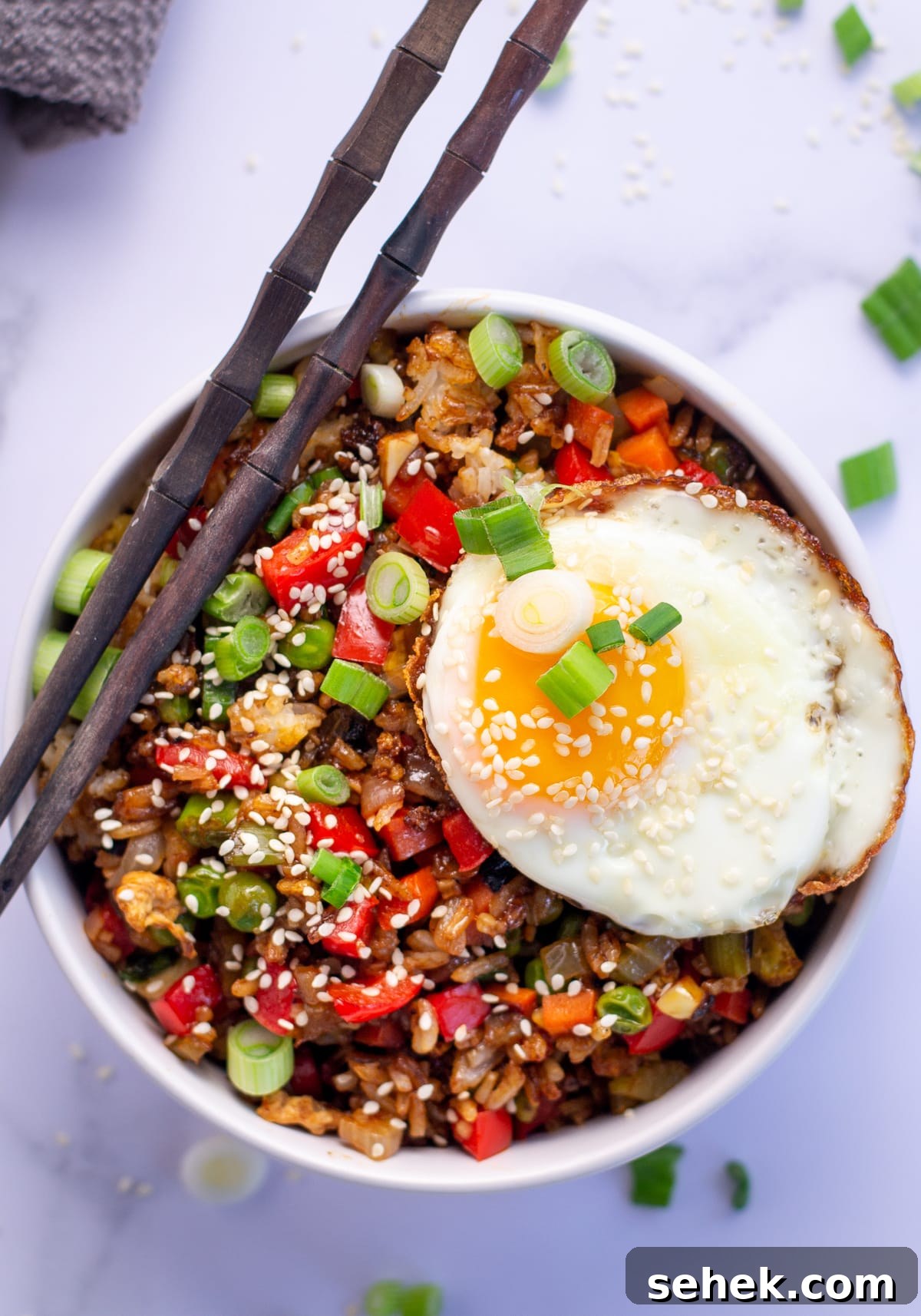
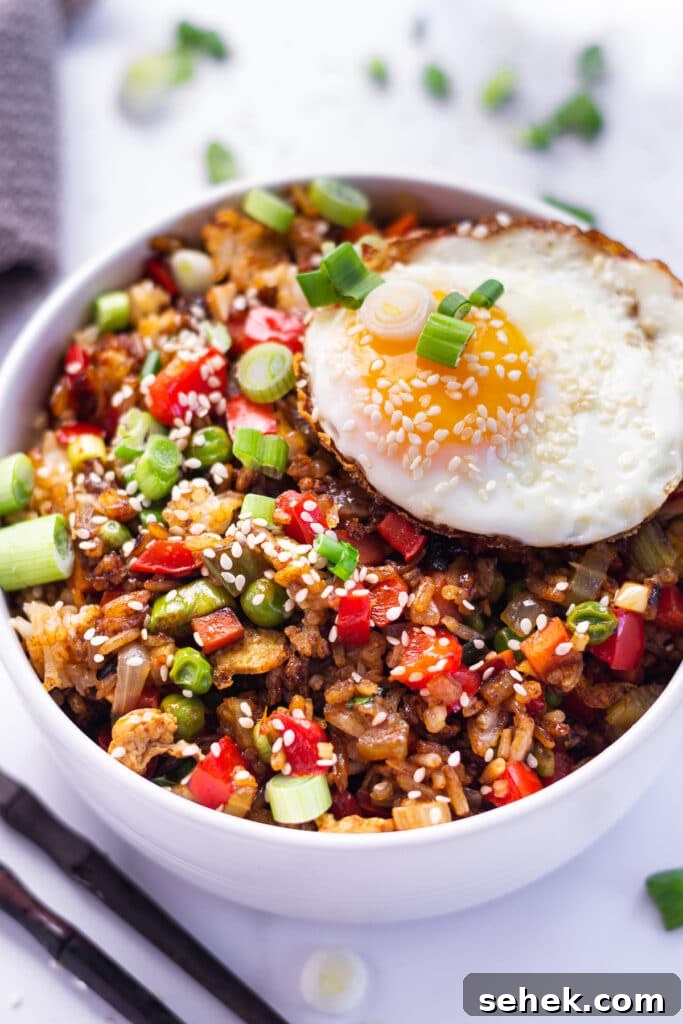
Use up that leftover rice in the fridge and any odds-and-ends vegetables to make a satisfying, slightly spicy gochujang fried rice that’s quick, economical, and full of flavor.
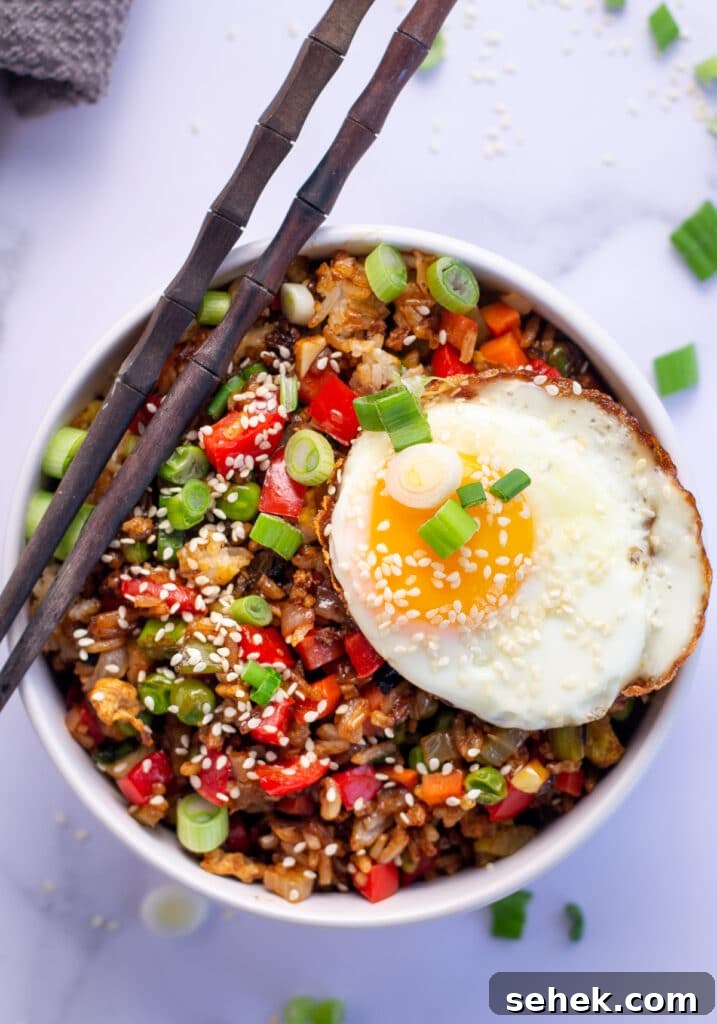
Why I’m obsessed with fried rice
Fried rice is my go-to for cleaning out the fridge. At the end of the week, when creativity is low but there’s a little rice tucked away and a handful of vegetables starting to wilt, fried rice saves the day. It stretches small amounts of leftovers into a complete, comforting meal with minimal effort.
Fried rice is:
- Inexpensive
- Easy
- Quick
- Full of flavor
- Versatile
All the things you want from a reliable weeknight meal.
In this version we boost the flavor with gochujang, a Korean chili-based condiment that adds depth, heat, and a touch of sweetness. Gochujang fried rice is a simple way to transform humble ingredients into something exciting.
About gochujang
What is gochujang?
Gochujang is a Korean ingredient made from red chili peppers, fermented soybeans, rice, and salt. It has a deep savory quality with a fermented tang and balanced heat.
Paste vs. sauce
There are both gochujang paste and gochujang sauce. Paste is the traditional, concentrated form and is commonly found in Asian markets. The sauce is a diluted, milder version often blended with vinegar, soy sauce, sesame oil, and a sweetener, so it’s easier to find in mainstream grocery stores and is less spicy. Use whichever is available; adjust quantities to suit your spice preference.
Flavor profile
Expect a spicy, umami-forward taste with a subtle fermented note that keeps you reaching for another bite. It’s savory, slightly sweet, and pleasantly complex.
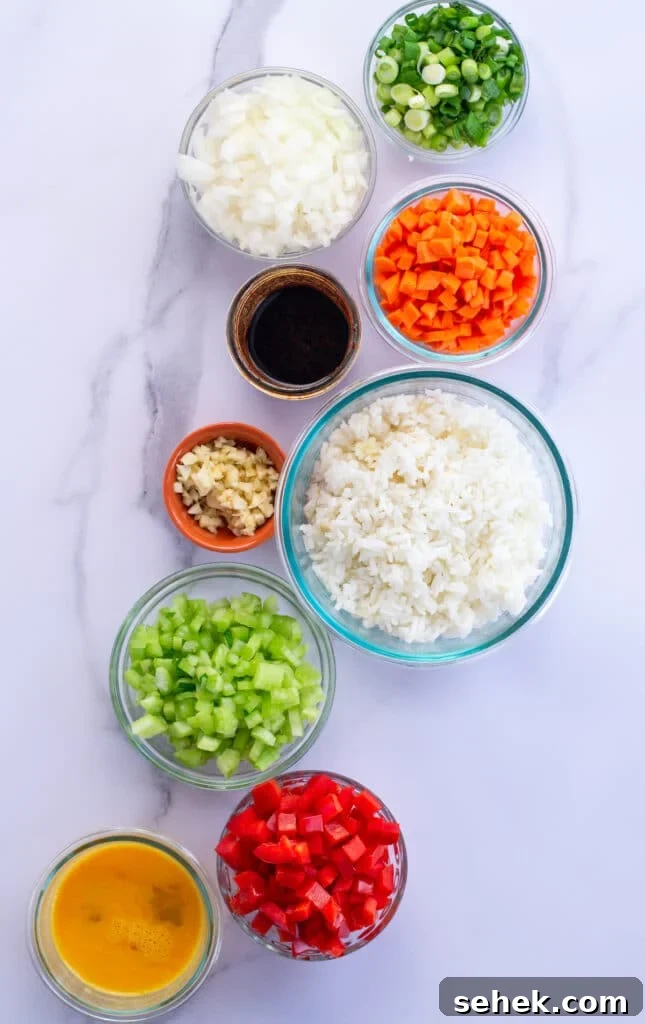
What you’ll need
Leftover rice: Day-old or cooled rice works best because it holds its shape and fries up without getting mushy. If you must cook rice fresh, spread it on a sheet pan and cool it in the fridge to dry slightly before frying.
Vegetables: Use whatever you have. Carrots, celery, onion, frozen peas, and bell pepper are great options. Green onions and garlic add a lot of flavor if available.
Sauce: A simple sauce of gochujang (sauce or paste adjusted for heat), soy sauce, toasted sesame oil, and honey or another sweetener balances heat, salt, and richness.
Protein: Eggs are classic—scrambled into the rice or fried and served on top. You can also add tofu, chicken, shrimp, ground pork, or beef for a heartier meal.
Finishing touches: Sesame seeds, chopped cashews, sliced green onions, and a drizzle of sriracha mayo or kimchi on the side elevate the dish.
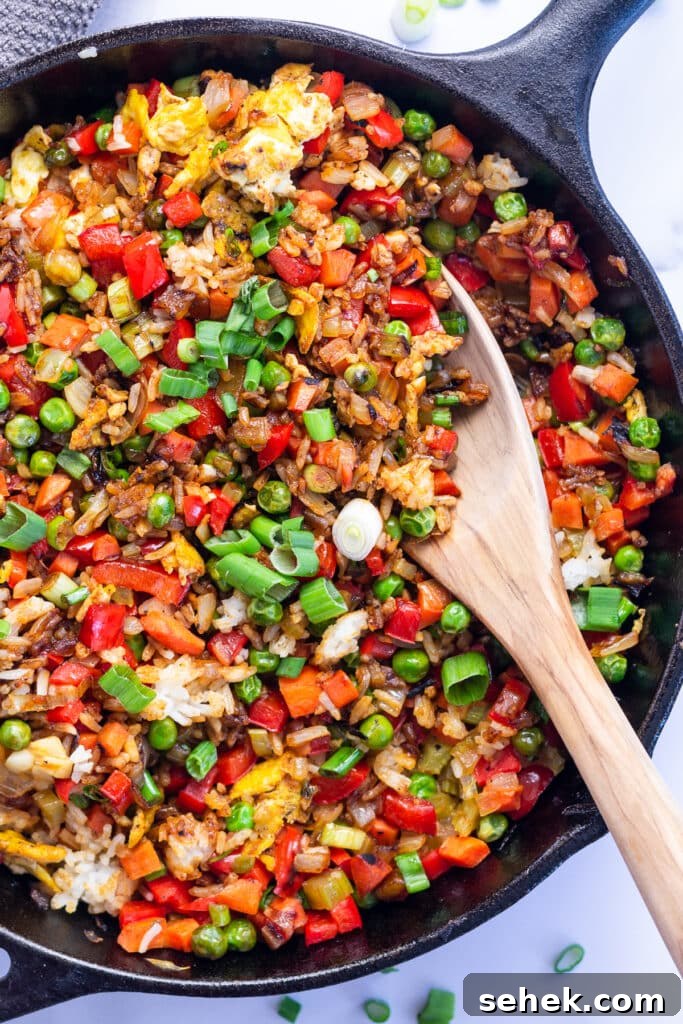
How to make it
- Chop your vegetables. In a small jar or bowl whisk together gochujang, soy sauce, toasted sesame oil, and honey. Taste and adjust the gochujang to reach your preferred spice level.
- Heat one tablespoon of a neutral, high-heat oil (avocado, vegetable, or canola) in a large skillet over medium-high heat. Add onion, carrots, celery, and bell pepper. Sauté until softened, about 4–6 minutes. Add minced garlic and cook for 30 seconds, then stir in frozen peas.
- Remove the vegetables to a bowl. Add a little more oil to the pan and crack in an egg. Let it cook undisturbed until set, then chop it into pieces with a spatula. Transfer the egg to the bowl with the vegetables.
- Add another splash of oil and add the cooked, cooled rice. Stir and toss so each grain gets coated with oil and separated. Return the vegetables and egg to the pan. Drizzle in the sauce and toss everything until evenly coated and heated through. Season with freshly ground black pepper.
- Serve with extra protein if desired, and top with sliced green onions, sesame seeds, a drizzle of sriracha mayo, or chopped cashews. Serve hot.
Serving suggestions
Meal prep: Make a big batch, portion into airtight containers, and you’ll have ready lunches for the week. Reheat in a skillet to restore texture and top with a freshly cooked egg if desired.
Main dish: This fried rice is a simple, satisfying weeknight main that uses leftovers smartly.
Side dish: Serve it alongside other Asian-inspired mains or dumplings for a complete meal.
FAQ
Substitutes include sambal oelek, chili garlic sauce, or sriracha—use less of those as they can be spicier. If you find gochujang paste, dilute it slightly with a little soy sauce, oil, and a touch of vinegar or sweetener to approximate the sauce.
What type of rice works best?
Any rice will work—jasmine, long grain, short grain, or brown rice. Day-old or cooled rice is ideal to prevent sogginess.
Can I use fresh rice?
Yes. After cooking, spread the rice on a baking sheet and chill for at least 30 minutes to remove steam and excess moisture.
How do I store leftovers?
Keep fried rice in an airtight container in the refrigerator for up to four days. If you top servings with a fried egg, consider cooking the egg fresh when reheating.
Notes
- To make this gluten-free, substitute soy sauce with tamari or coconut aminos.
- Adjust gochujang to control spice—this recipe is moderate unless you increase the paste.
- Nutrition information varies by ingredients and serving size; listed values are estimates.
Easy Korean Gochujang Fried Rice (15 minutes!)
Author: Erica
Prep Time: 5 minutes | Cook Time: 10 minutes | Total Time: 15 minutes | Yields: 4 servings
Category: Main Dish | Method: Stir-fry | Cuisine: Korean | Diet: Vegetarian (adjust protein to suit)
Description
This gochujang fried rice is a flavorful, fast solution for using leftover rice and assorted vegetables. It’s customizable, quick to make, and packed with savory, spicy, and slightly sweet notes.
Ingredients
- 2 tablespoons gochujang sauce (or to taste)
- 2 tablespoons soy sauce (or tamari)
- 2 teaspoons honey (or sweetener of choice)
- 1 teaspoon toasted sesame oil
- 2 tablespoons avocado or neutral oil
- 4 cloves garlic, minced
- 2 carrots, chopped
- 1 red bell pepper, chopped
- 2 stalks celery, chopped
- 1 sweet onion, chopped
- 1/2 cup frozen peas
- 2 large eggs
- 2 cups cooked and cooled rice
- 4 green onions, chopped
- Protein of choice: shrimp, tofu, edamame, chicken, pork, beef, or extra eggs
- Toppings: sriracha mayo, sesame seeds, roasted cashews, kimchi (optional)
Instructions
- Chop vegetables. Whisk gochujang, soy sauce, sesame oil, and honey in a small bowl.
- Heat oil in a large skillet over medium-high heat. Sauté onion, carrots, celery, and bell pepper until softened, about 5 minutes. Add garlic and cook 30 seconds, then stir in peas.
- Transfer vegetables to a bowl. Add a little oil to the pan and cook an egg until set; chop and add to the vegetables.
- Add rice to the pan with another splash of oil, toss to separate grains, then return vegetables and egg. Pour in sauce and toss until evenly coated. Season with black pepper.
- Top with extra protein and garnishes as desired and serve hot.
Nutrition (estimate per serving)
- Calories: 327
- Sugar: 13 g
- Sodium: 470.5 mg
- Fat: 11.2 g
- Carbohydrates: 48.1 g
- Protein: 8.8 g
- Cholesterol: 93 mg