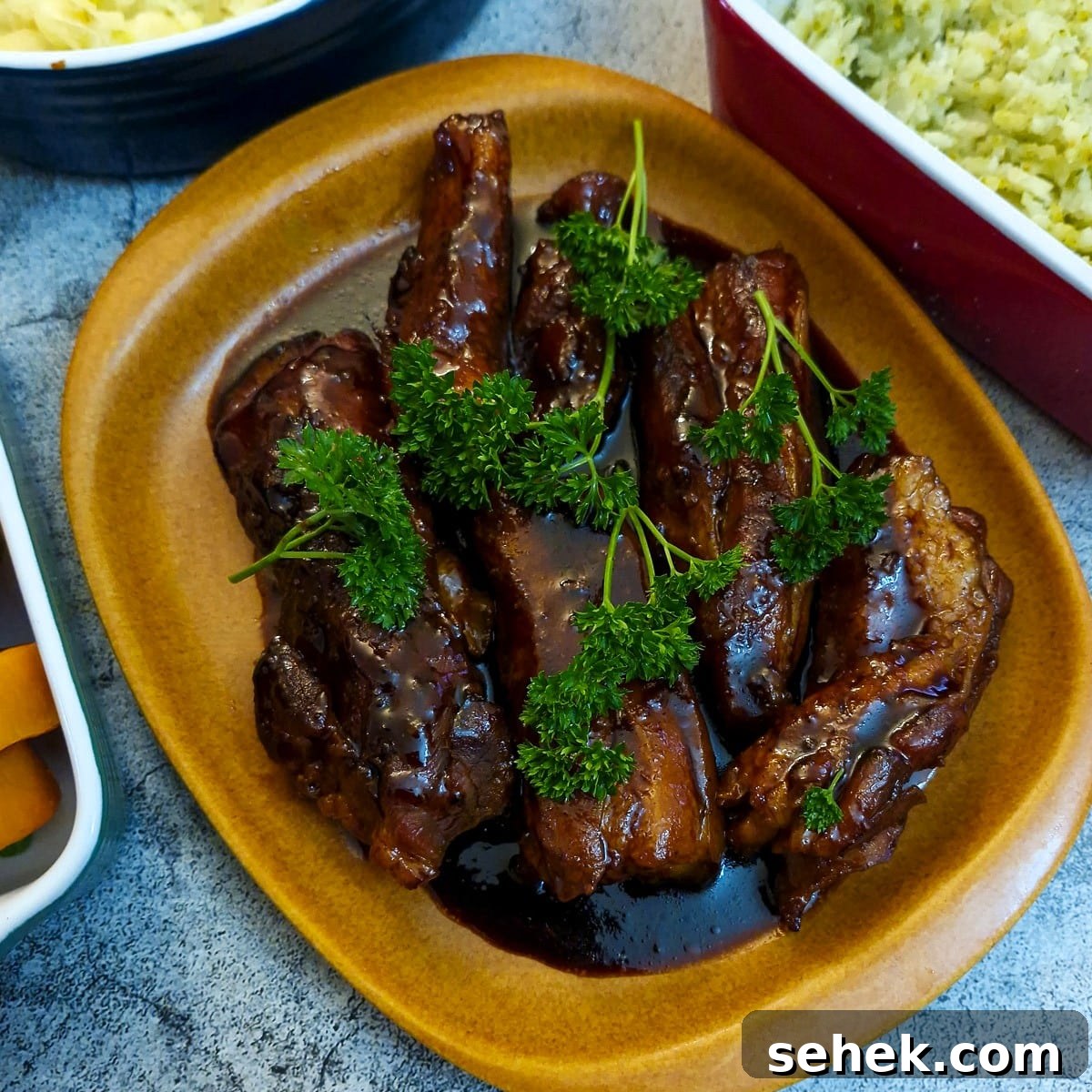
Slow-roasted until meltingly tender, these sticky pork belly slices are finished with a sweet-and-savoury maple glaze that becomes delectably sticky in the oven. Serve them with creamy mashed potatoes and seasonal vegetables for an easy, mostly hands-off family supper that delivers impressive results.
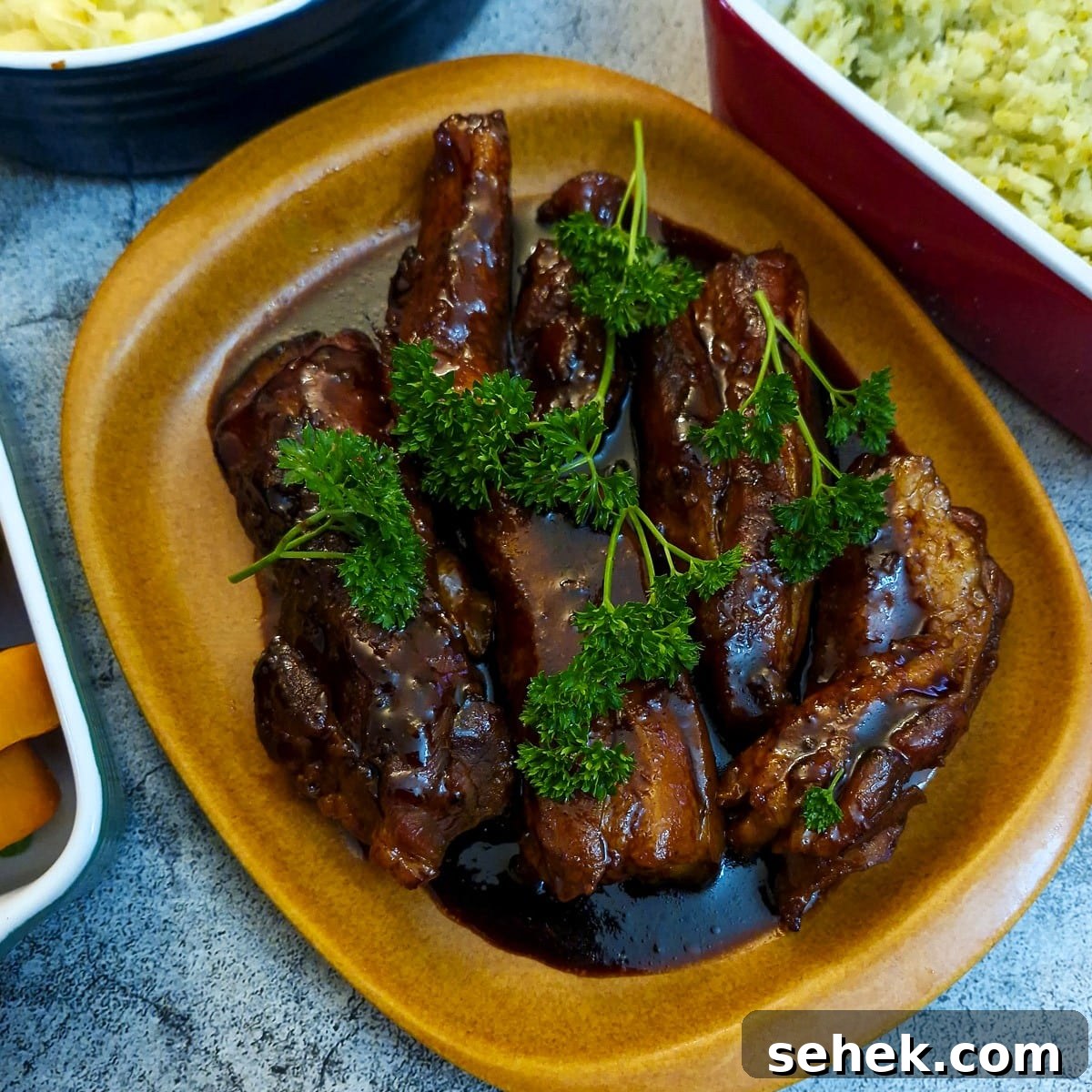
The pork belly slices — sometimes called rashers — are gently braised in apple juice to tenderise the meat and add a subtle fruity note. As the pork cooks low and slow, the fat renders and the flesh becomes soft and succulent.
When the pork is tender, it’s brushed with a generous maple glaze that clings to the slices. A final blast in a hot oven caramelises the glaze into a sticky, glossy coating that balances sweet and savoury in every bite.
Maple-glazed pork belly at a glance
- Recipe overview: Pork belly slices are slow-braised in apple juice until tender, then glazed with a maple–soy mixture that caramelises into a sticky finish.
- Main ingredients: Pork belly slices, apple juice, maple syrup, soy sauce, mustard
- Prep time: 5 minutes
- Cooking time: About 2 hours (1 hour 45 minutes braising, plus 15 minutes to brown and caramelise)
- Yield: Serves 4
- Difficulty: Easy
Why you’ll love this recipe
- Incredibly succulent pork. Apple juice braising keeps the meat moist and adds a gentle sweetness.
- Caramelised glaze. The maple-and-soy glaze thickens and clings to the pork for a glossy, sticky finish.
- Mostly hands-off. Most of the cook time is unattended while the oven does the work.
- Simple ingredients. Minimal pantry staples create a flavour-packed result.
- Make-ahead friendly. You can braise the pork ahead, chill it, then glaze and finish in the oven when ready to serve.
Ingredients
Note: This section explains the ingredients. Exact measurements are listed in the printable recipe card at the end of the post.
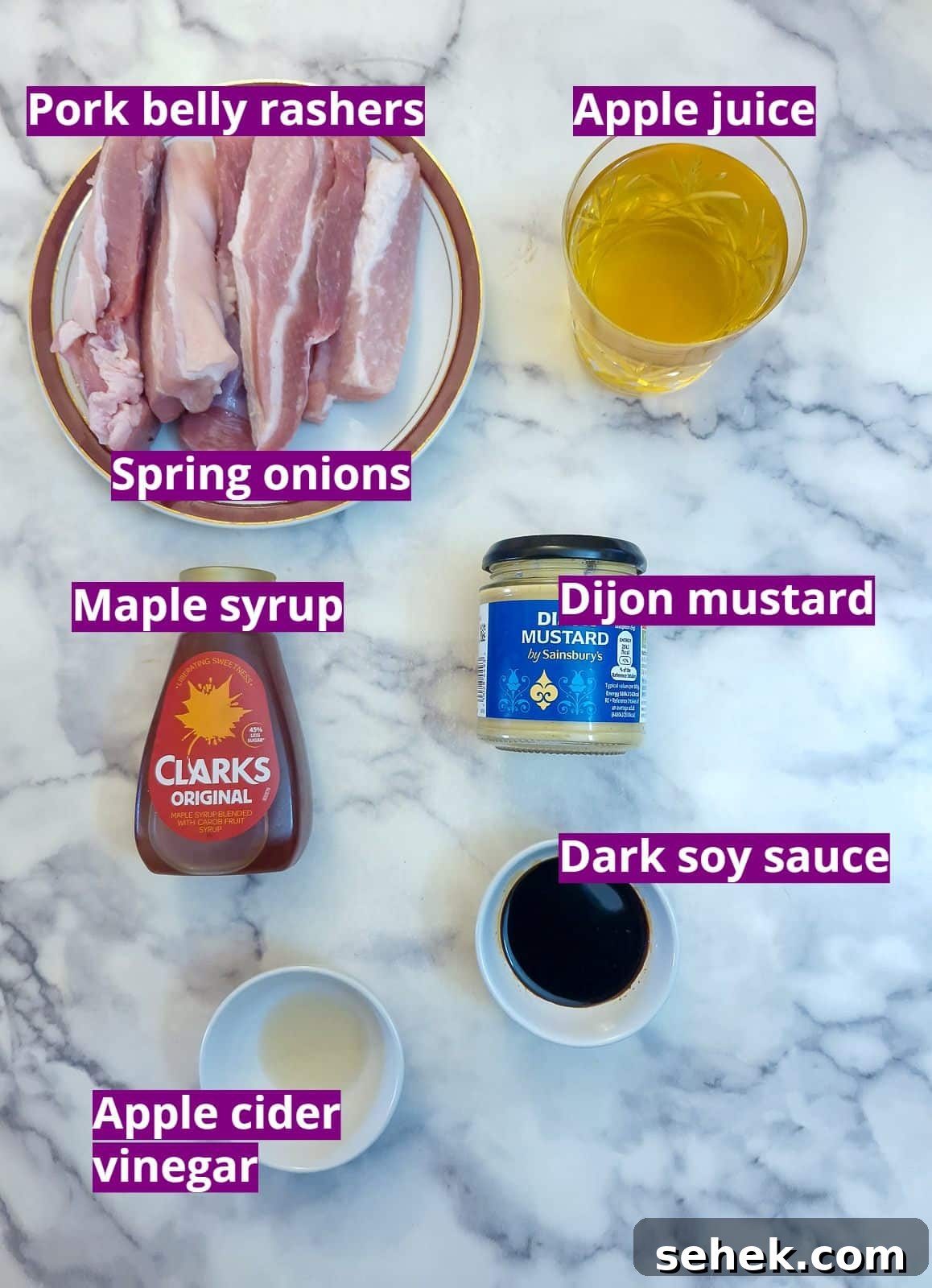
- Pork belly slices: About 1-inch-thick rashers with meat and fat. You can trim the rind or some fat if you prefer, but leaving it on adds richness as it softens during slow cooking.
- Apple juice: Plain bottled apple juice gently braises the pork and adds a mild sweetness. Chicken stock is an alternative if you want a less fruity flavour.
- Maple syrup: Provides the glaze’s sweetness and helps create the sticky, caramelised finish.
- Dijon mustard: Balances the sweetness with a sharp, savory note. Wholegrain mustard works well if you prefer texture and seeds.
- Dark soy sauce: Adds saltiness and depth — use sparingly to avoid overpowering the glaze.
- Apple cider vinegar: A little acidity cuts through the richness and brightens the glaze.
- Salt: Season the pork at the start to build flavour throughout the cooking process.
How to cook sticky pork belly strips
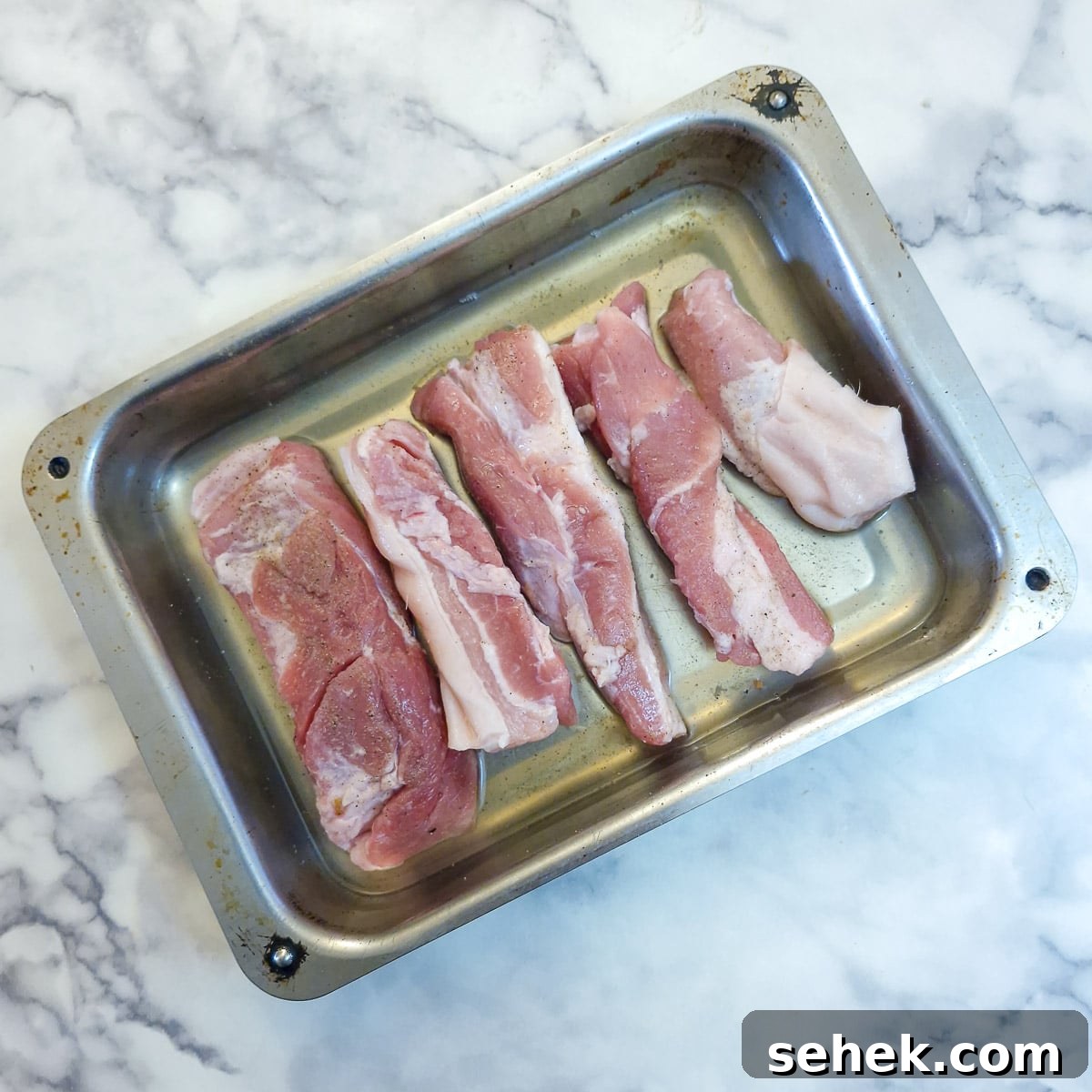
Step 1: Lightly season the pork belly strips with salt and arrange them in a single layer in a deep roasting pan. Pour in enough apple juice to reach about 1/4 inch depth — the goal is to braise, not submerge.
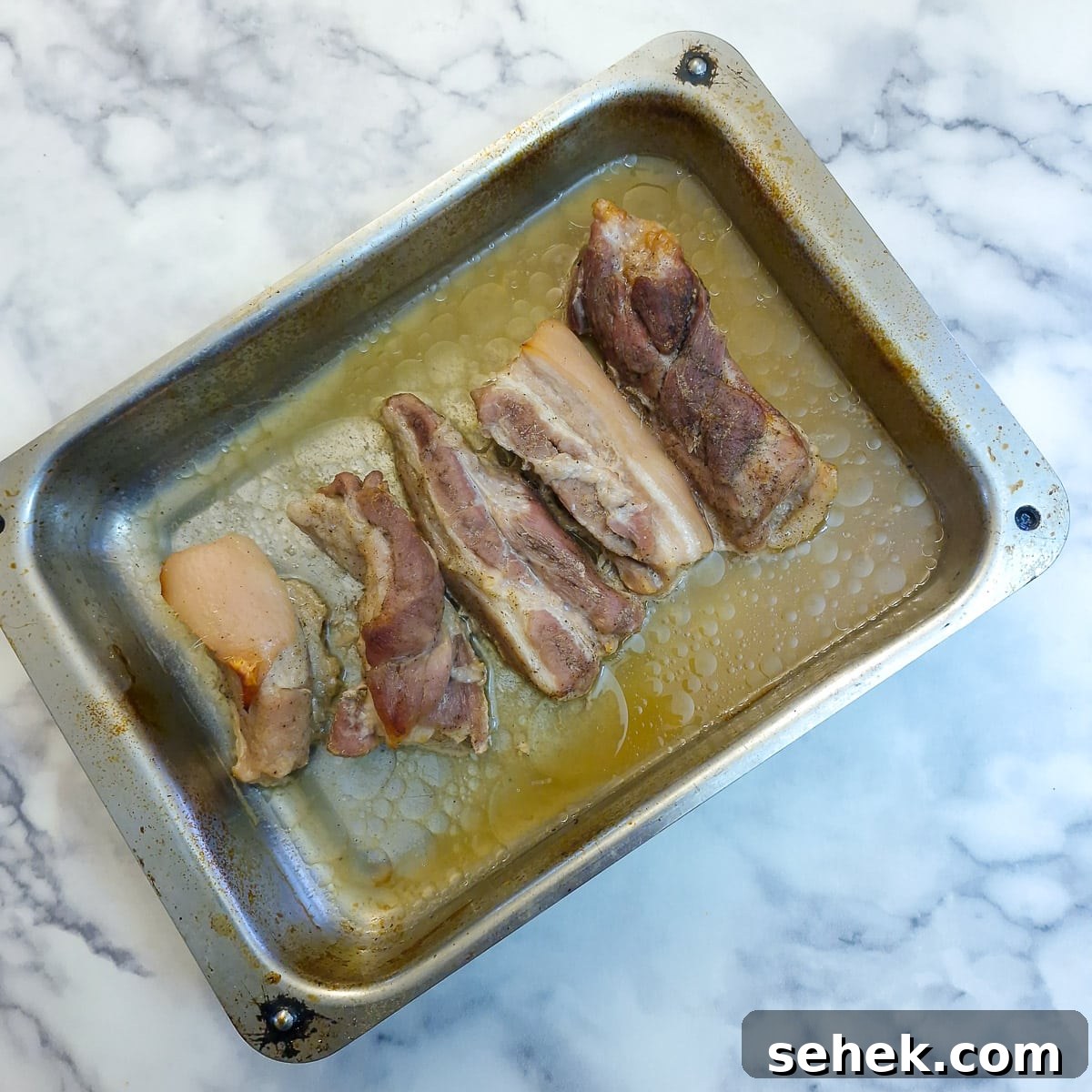
Step 2: Seal the pan tightly with foil or use a pan with a lid. Bake in a preheated oven at 170°C (150°C fan) / 340°F (300°F fan) for 1.5–2 hours, depending on thickness. Drain and reserve the cooking juices for gravy or other uses.
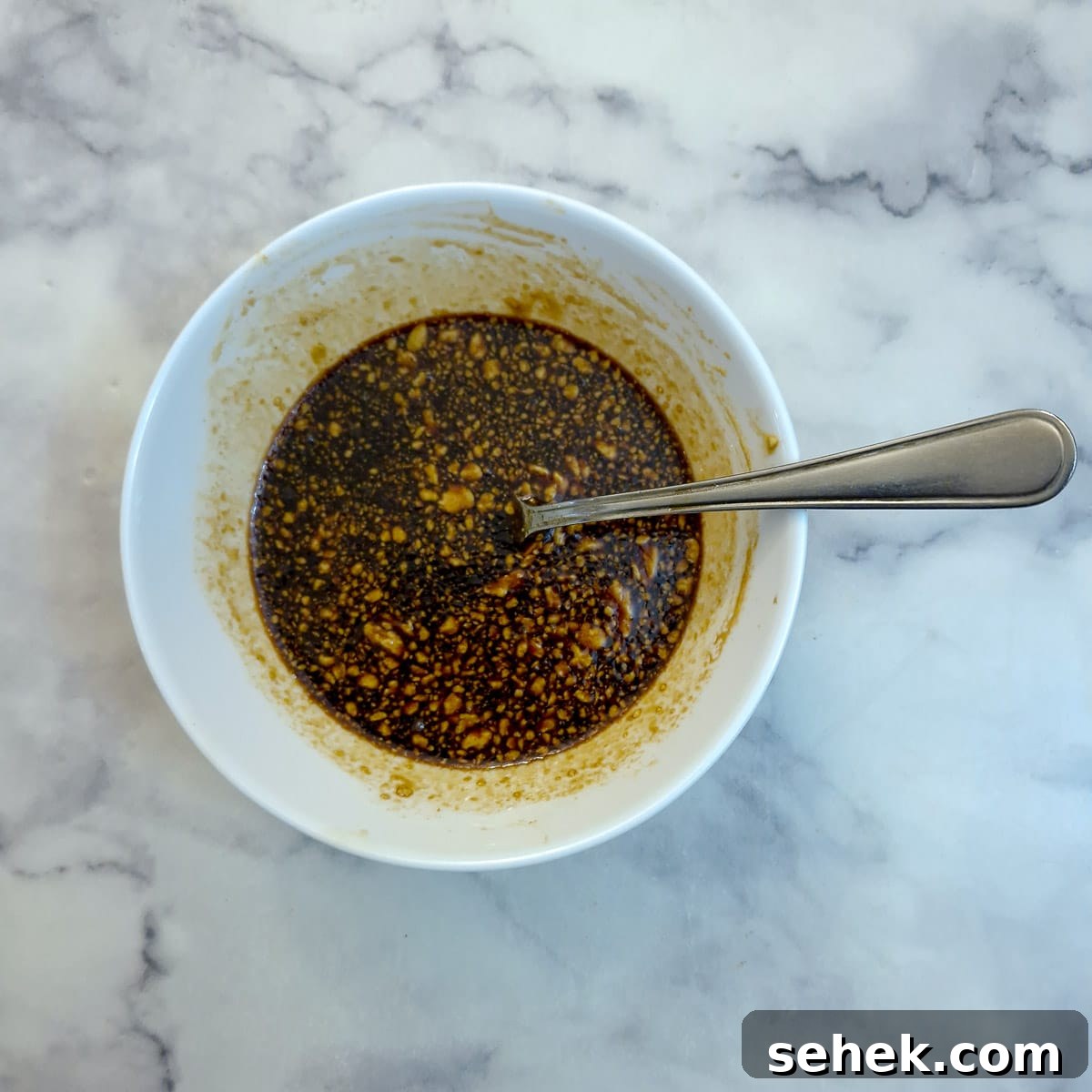
Step 3: Mix the glaze ingredients in a small bowl — maple syrup, Dijon mustard, dark soy sauce and apple cider vinegar. They may not fully combine at room temperature but will come together under heat.
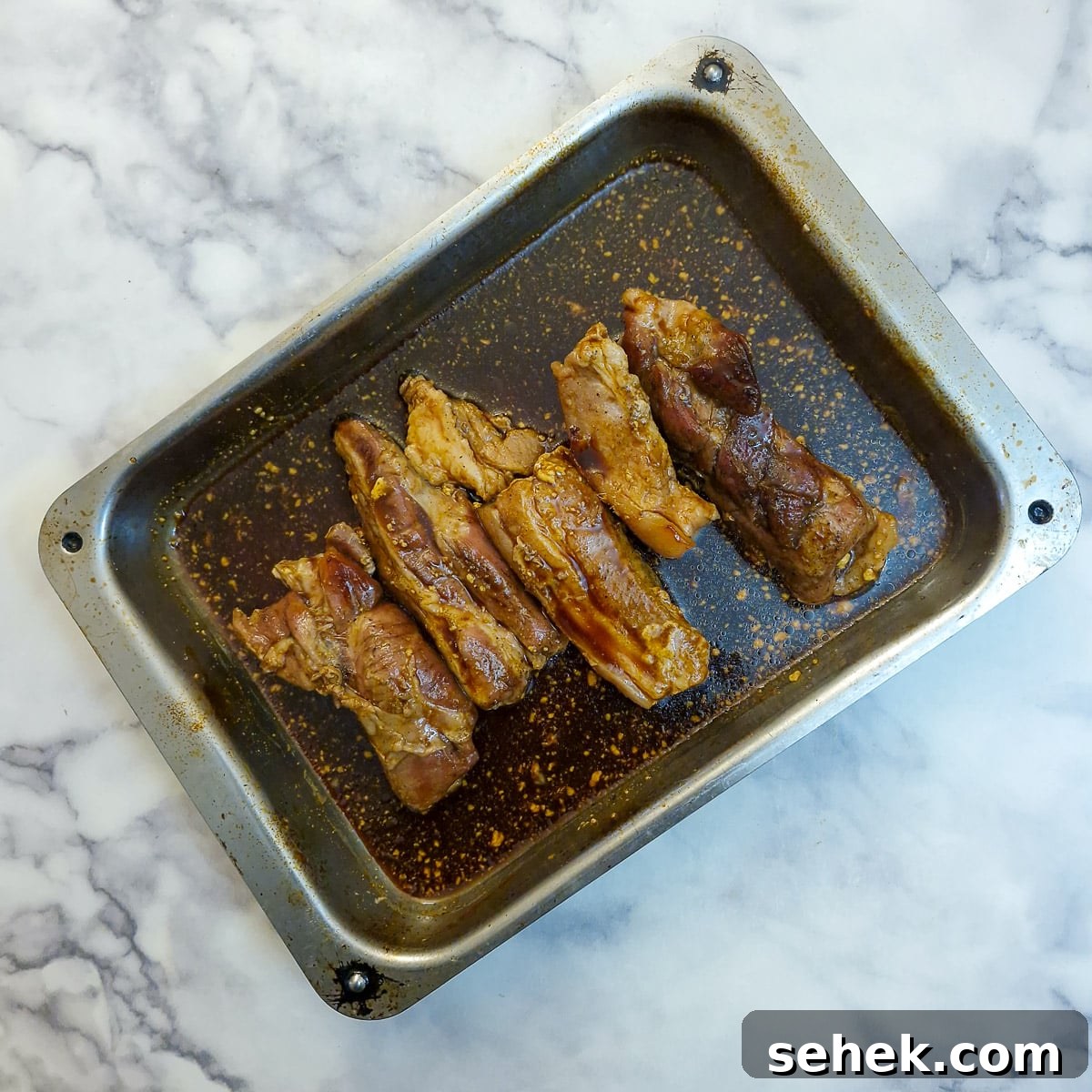
Step 4: Pour the glaze over the drained pork and turn the pieces so they’re fully coated. Increase the oven to 240°C (220°C fan) / 465°F (430°F fan). Remove the foil and roast for about 15 minutes, basting immediately and then every 5 minutes until the glaze is sticky and caramelised.
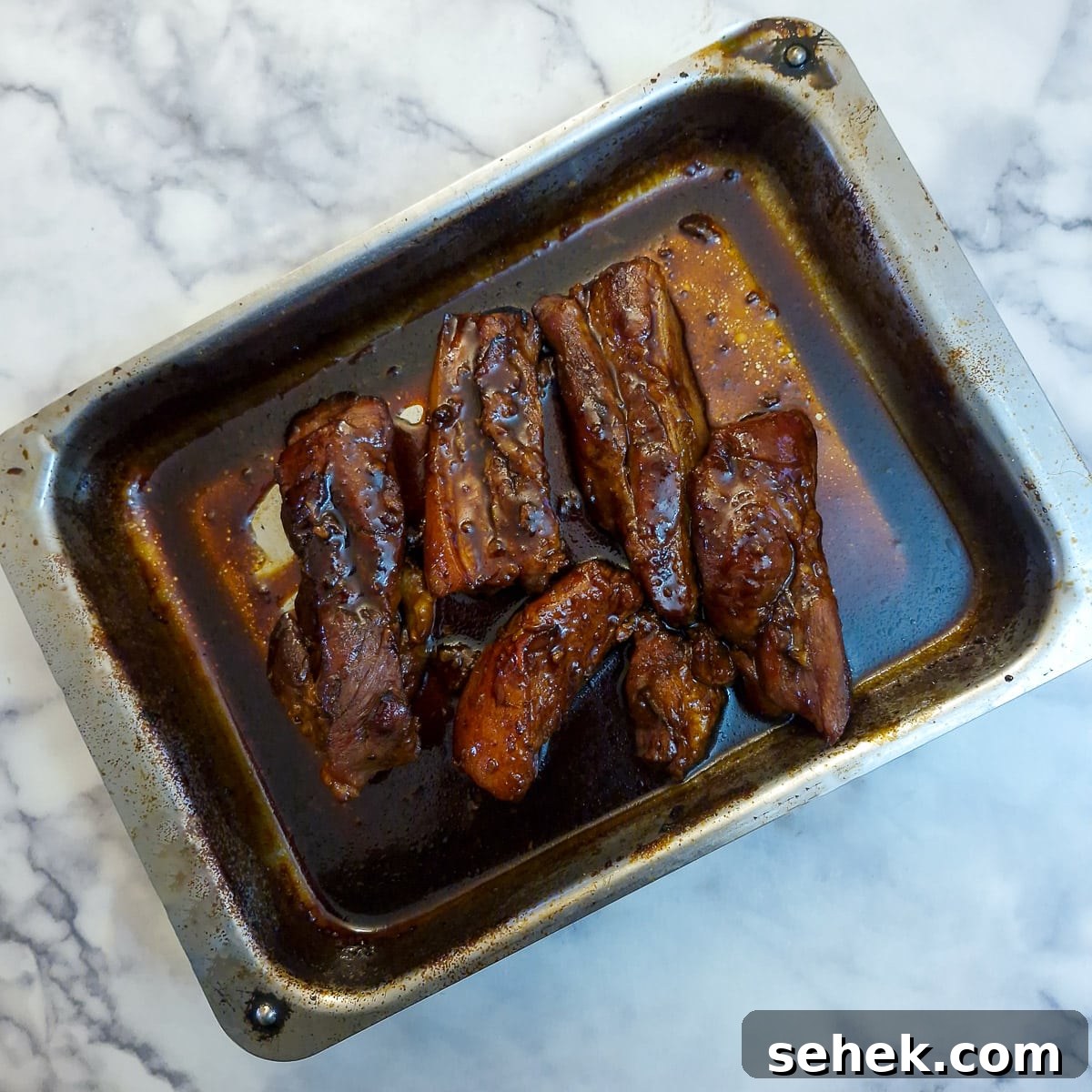
Step 5: Remove from the oven, tent with foil and rest for 10 minutes. The glaze will thicken as the pork rests. Spoon any remaining glaze over the slices when serving.
Tips for perfectly sticky pork belly
Follow these tips to get the best results:
- Season early. Salt the pork before cooking so the seasoning penetrates the meat.
- Use a shallow braise. A thin layer of apple juice braises the meat gently — don’t drown it.
- Low then high heat. Start low and slow so collagen breaks down, then finish at high heat to caramelise the glaze.
- Don’t rush the braise. The slow stage is essential for tender meat; higher heat will dry the pork.
- Drain excess fat before glazing. Remove the apple juice and rendered fat so the glaze can thicken properly.
- Glaze at the end. Apply the glaze for the final 15 minutes, and baste frequently to prevent burning.
- Always rest the meat. Resting lets the juices redistribute so they stay in the meat when you slice it.
Serving suggestions
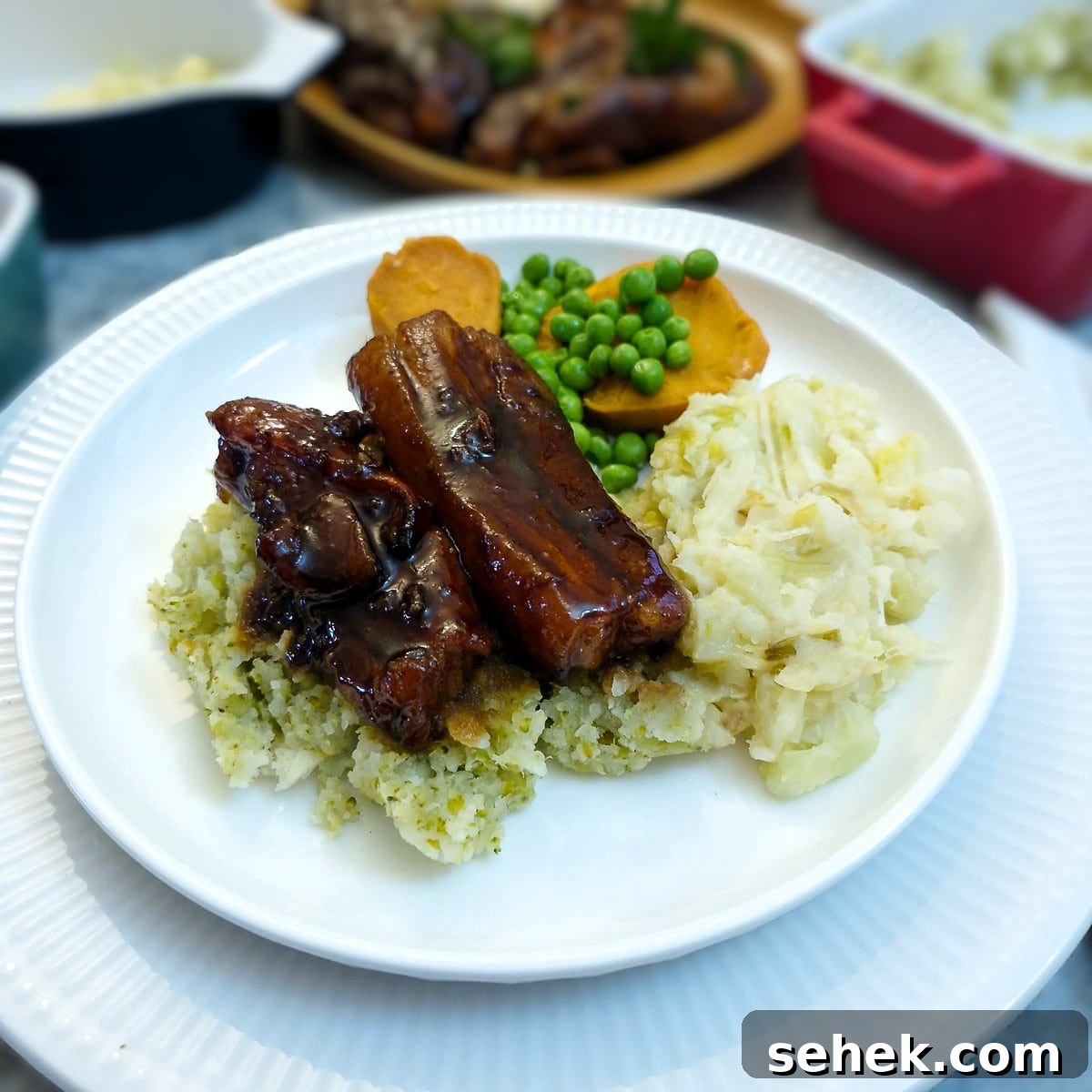
This rich pork is excellent on a bed of creamy mashed potatoes, but it also pairs well with vegetable-based mash or braised greens. Consider these variations:
- Boereboontjies (green beans and onions mashed with potatoes)
- Rumbledethumps (root vegetable mash)
- Spring-green potato mash (potatoes with early cabbage and black pepper)
- Colcannon (potatoes with leeks and cabbage)
Use reserved cooking juices to make a quick gravy: simmer a cup of the juices with any leftover glaze, thicken with a cornflour slurry (1–2 tsp cornflour mixed with a little cold water) and stir until glossy.
Equipment
A deep roasting dish with a rim is ideal so you can seal it tightly with foil. A cast-iron roasting pan with a heavy lid works equally well. Ensure the dish is deep enough to hold the pork rashers and the apple juice; add a splash more liquid if you’re concerned about evaporation.
Storage and freezing
- Refrigerator: Cool completely, store in an airtight container and refrigerate for up to 3 days.
- Freezing: For best texture, freeze before glazing, in a little of the reserved apple-cooking liquid. Thaw in the fridge, discard excess liquid, then glaze and finish in the oven.
- Reheating: Reheat in an ovenproof dish with a splash of reserved liquid at 160°C / 325°F for 20–25 minutes, then remove foil and increase heat to refresh the glaze for the last 5 minutes.
- Microwave: Reheat in short bursts (30 seconds) until piping hot, if preferred.
FAQ
No. The skin softens during the apple-juice braise and becomes slightly gelatinous, adding richness. Trim some or all of it if you prefer a leaner result.
Save them if you can. They make a light pork-and-apple stock that freezes well in ice-cube trays and can be used for gravies, casseroles and soups.
Yes — chicken stock is a good substitute, though it will produce a less fruity finish.
Usually because excess liquid or rendered fat was left in the tray before glazing. Drain well and finish under high heat so the sugars can caramelise.
Yes. Slow-cook the pork in advance, refrigerate, then glaze and finish in the oven when you’re ready to serve.
Related recipes
Here are a few other pork recipes you might enjoy:
-
Caramelised sausage and onion bake with colcannon topping
-
Crumbed pork chops with mushroom mustard sauce
-
Cantonese-style pork and tomato stir-fry
-
Caramelised pineapple pork with onions



📋 The recipe

Sticky slow-roasted pork belly slices with maple glaze
Equipment
- Deep roasting tray OR
- Cast-iron roasting pan with lid
- Tin foil (optional if you don’t have a lid)
- Small bowl for the marinade
Ingredients
- 1¾ pounds / 800 grams pork slices (8–10 thick rashers)
- ½–1 cup / 120–240 ml apple juice (enough for a 1/4-inch depth in the tray)
- 1 teaspoon salt (or to taste)
- 1–2 teaspoons cornflour (optional, for thickening gravy)
- 1–2 tablespoons cold water (optional, mixed with cornflour)
Maple syrup glaze
- ⅓ cup / 80 ml maple syrup
- 1½ tablespoons Dijon mustard
- 2 tablespoons dark soy sauce
- 1 tablespoon apple cider vinegar
Instructions
- Sprinkle the pork belly strips lightly with salt and arrange in a single layer in a roasting pan. Pour apple juice into the pan to a depth of about ¼ inch.
- Cover the pan tightly with foil or a lid and bake at 170°C / 340°F (150°C fan / 300°F fan) for 1½–2 hours, until very tender. Drain and reserve the cooking juices.
- Mix the glaze ingredients in a small bowl.
- Pour the glaze over the drained pork and turn to coat. Increase the oven to 240°C / 465°F (220°C fan / 430°F fan), remove the foil and roast for about 15 minutes, basting immediately and every 5 minutes until sticky and caramelised.
- Remove from the oven, tent with foil and rest for 10 minutes. Spoon remaining glaze over the pork to serve.
- If you want extra gravy, add a cup of reserved cooking juices to the pan glaze and thicken with a slurry of cornflour and cold water. Stir over gentle heat until thickened.
- Serve on plain mashed potatoes or a vegetable mash of your choice.
Notes
- Season early: Salting before cooking improves flavour penetration.
- Shallow braise: Use a small amount of liquid so the pork braises gently rather than boiling.
- Finish hot: Increase temperature at the end to caramelise the glaze.
- Drain fat: Remove excess juices before glazing so the glaze can thicken.
- Rest: Allow the pork to rest so juices redistribute before slicing.
Storage and freezing
- Refrigerate cooled pork in an airtight container for up to 3 days.
- Freeze before glazing in a little reserved cooking liquid for best results; thaw in the fridge and glaze before serving.
- Reheat in an ovenproof dish with a splash of liquid at 160°C / 325°F for 20–25 minutes, then increase heat briefly to refresh the glaze.
Nutrition
| Carbohydrates 26.2 g
| Protein 56.1 g
| Fat 46.6 g
Nutrition info is an estimate and should be used as a guide only.
If you tried this recipe and enjoyed it, I’d love your feedback and a star rating in the comments below.
Enjoy cooking — and remember that a little patience at the slow-cook stage makes all the difference for tender, sticky pork belly.