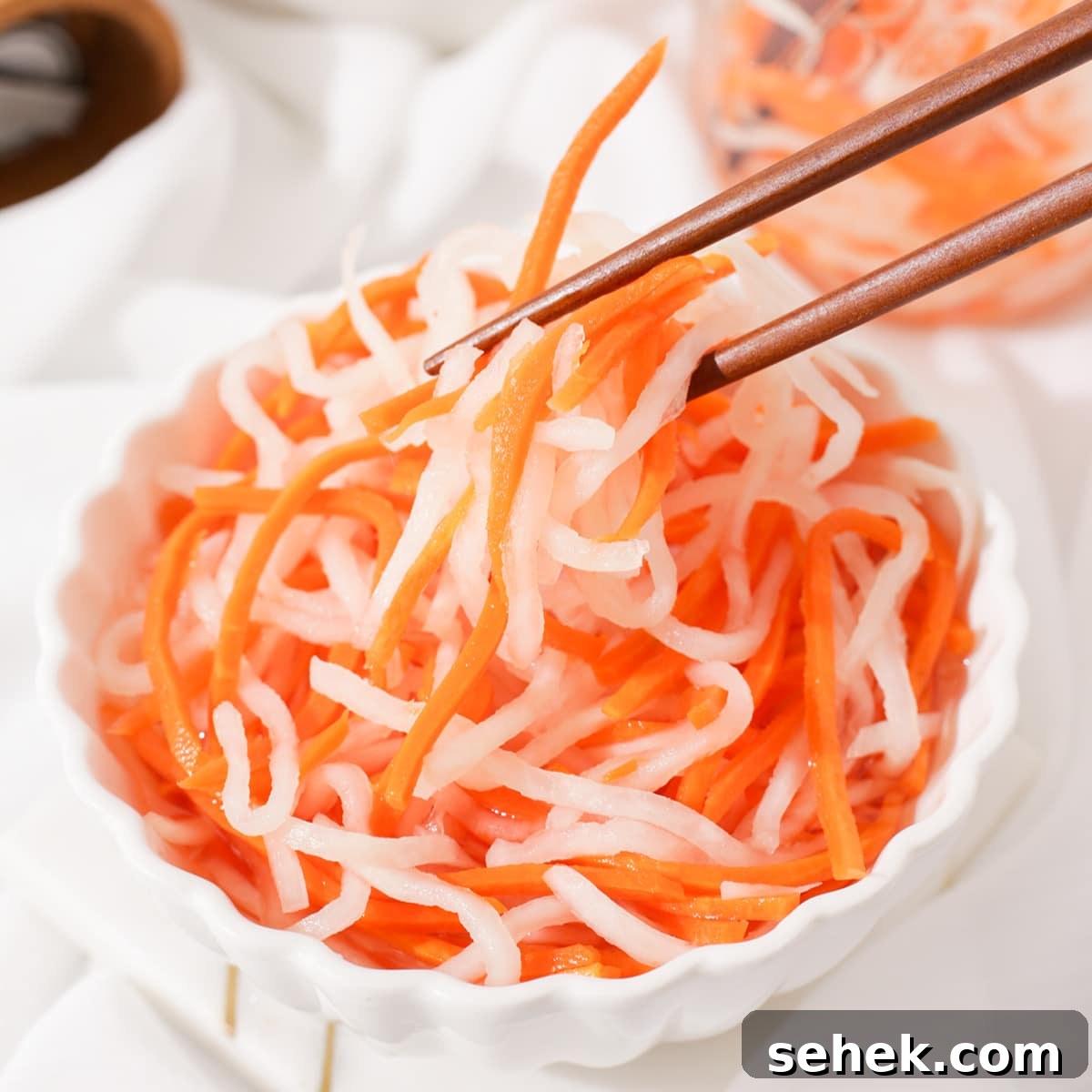
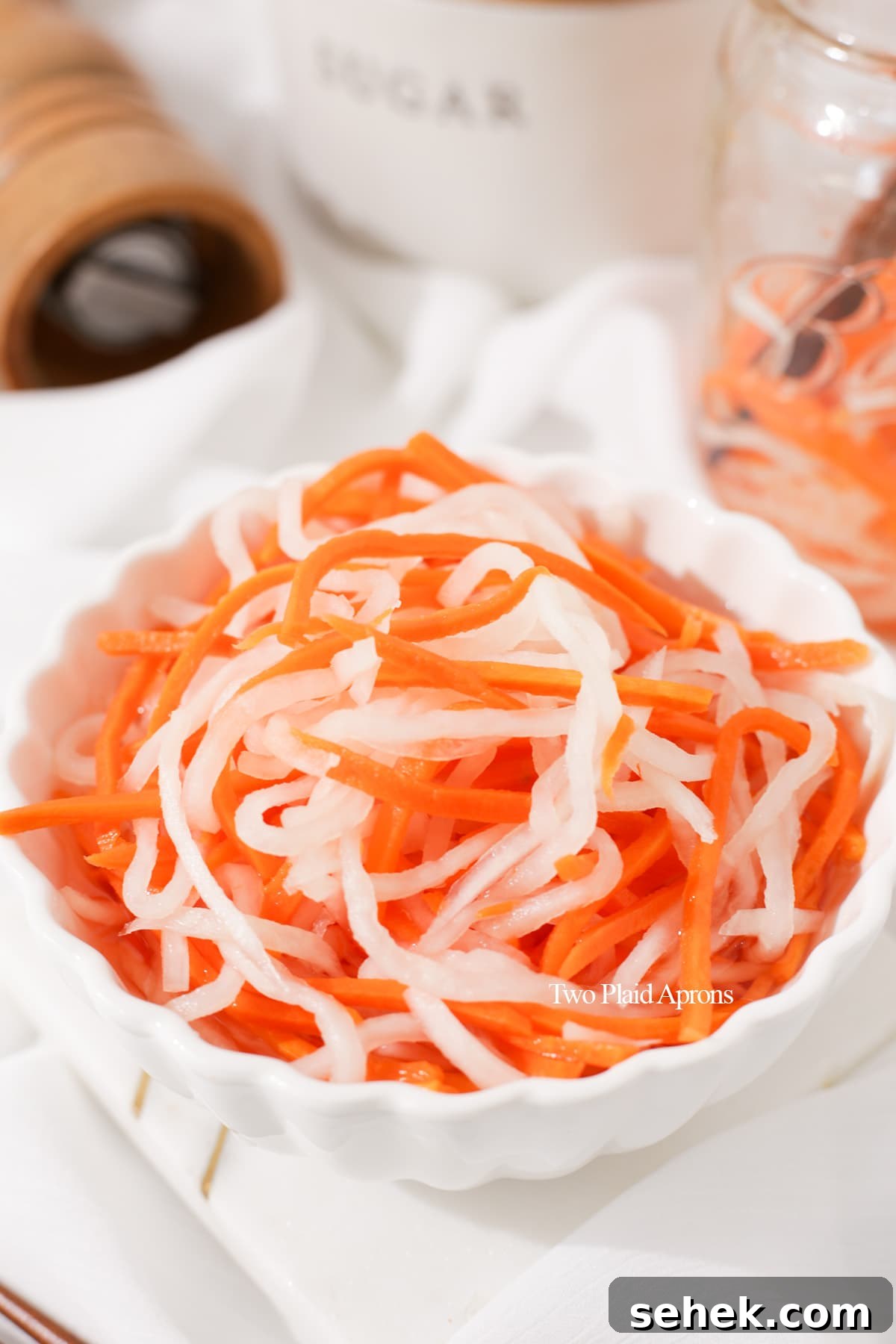
Vietnamese pickled carrots and daikon, known as đồ chua, are an essential bright, crunchy side in Vietnamese cuisine. You’ll often find them inside banh mi or served alongside dishes like bún thịt nướng (grilled pork with vermicelli). They’re simple to prepare and require only about 15 minutes of active work.
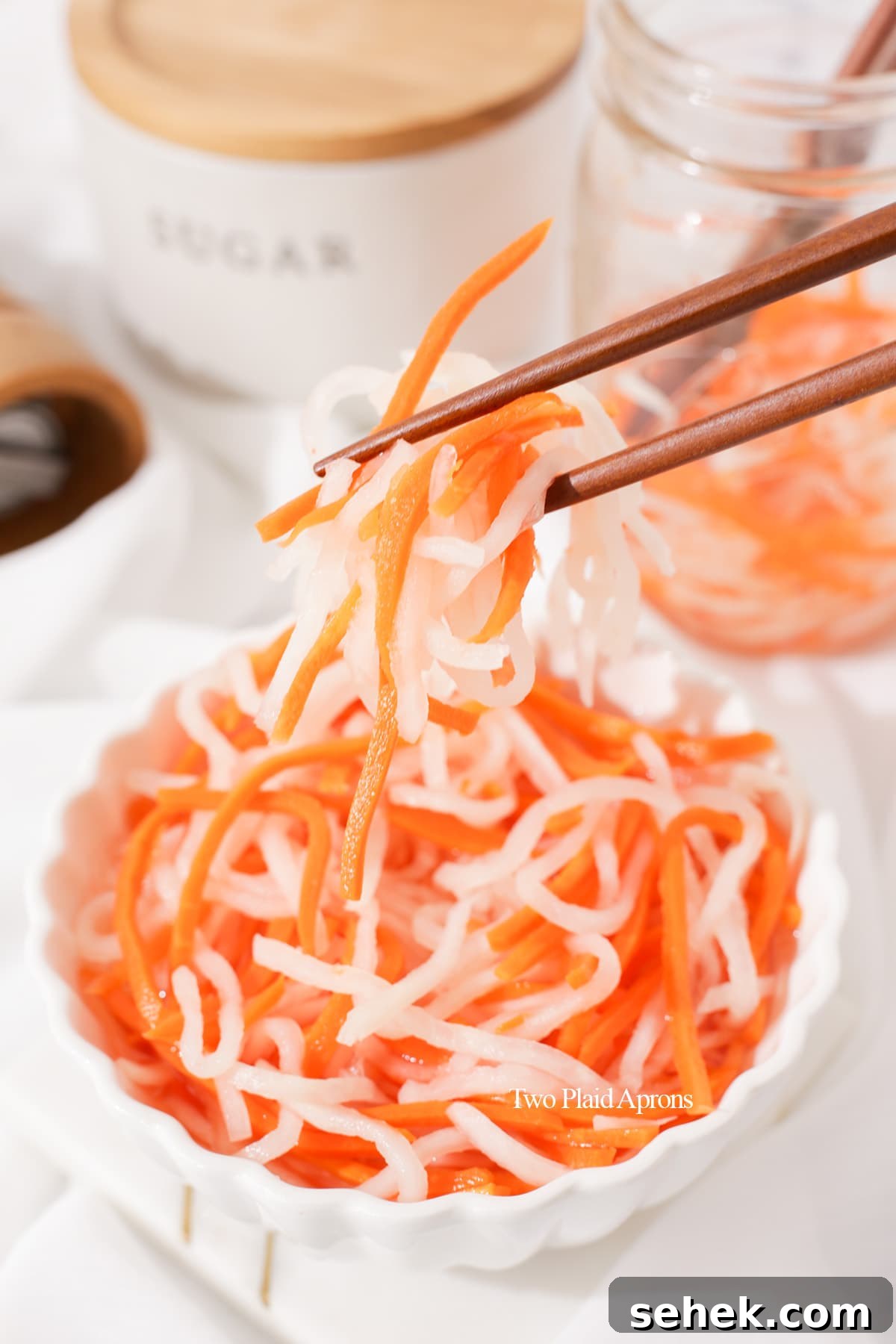
Đồ chua is beloved for its sweet-tangy crunch and versatility. It brightens heavy or savory dishes like fried egg rolls (chả giò), rice bowls, or grilled meats and adds a refreshing contrast to rich flavors.
This recipe is flexible: you can adjust the carrot-to-daikon ratio, change pickling time to suit your taste, and scale the recipe to make larger batches for meal prep.
What is đồ chua?
Đồ chua literally means “pickled things.” In practice it usually refers to the classic Vietnamese pickled daikon radish and carrot. Compared with Western pickles, đồ chua is milder, a bit sweeter, and less acidic. It’s a common side that complements a wide variety of Vietnamese meals.
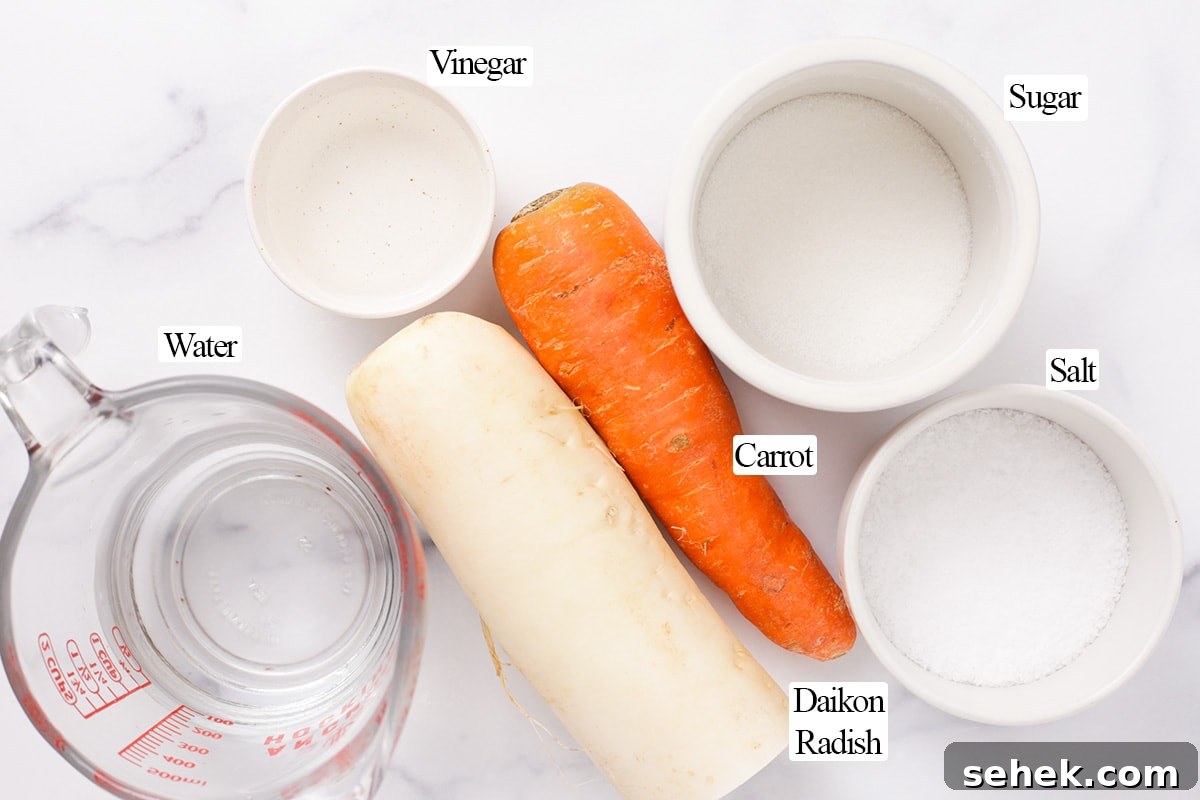
Ingredients
See the recipe card below for exact ingredient amounts.
- Daikon radish – The key ingredient for authentic flavor. Available at most Asian markets.
- Carrot – Adds color and sweetness. Use equal amounts or adjust to preference.
- Salt – Draws out excess moisture from the vegetables and helps retain crunch.
- Water – Dilutes the pickling liquid for balance; filtered, boiled, or distilled water is recommended.
- Sugar – Sweetens the brine; regular granulated sugar works well.
- White distilled vinegar – Provides acidity for the pickling liquid. Rice vinegar can be used as a substitute if desired.
How to make đồ chua
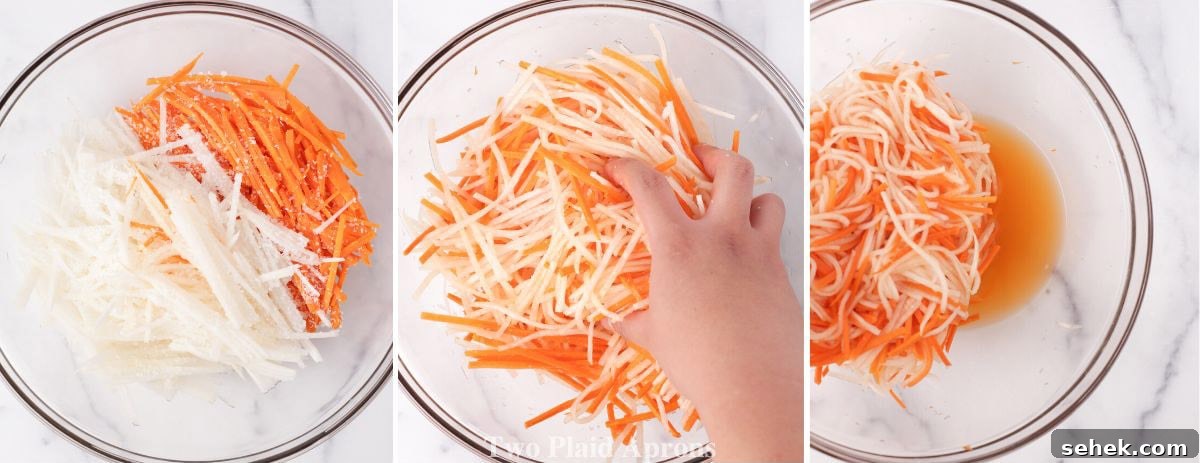
1. Slice the daikon and carrots into thin matchstick strips (julienne). A mandoline makes this quick, but you can cut by hand if preferred.
🚨 Caution: Mandolins are extremely sharp. Use the guard or cut the vegetables into pieces large enough to protect your fingers.
2. Toss the julienned vegetables with salt in a bowl and let them sit 3–5 minutes to release excess moisture.
3. Meanwhile, prepare the pickling liquid: combine water, sugar, and vinegar in a saucepan and heat gently until the sugar is completely dissolved. Remove from heat and let cool slightly.
Pro tip: You can dissolve the sugar using hot tap water or a microwave if you prefer not to heat a saucepan.
4. Rinse the salted vegetables under cold water, drain, and gently squeeze out excess moisture. Fluff them so they aren’t clumped together.
5. Pack the vegetables into sterilized 16-ounce jars, then pour the pickling liquid over them so the veggies are fully submerged.
6. Let jars cool to room temperature before sealing. Allow to sit at room temperature up to 24 hours or until they reach your preferred level of pickling, then store refrigerated. Properly stored, they keep well for 4–6 weeks.
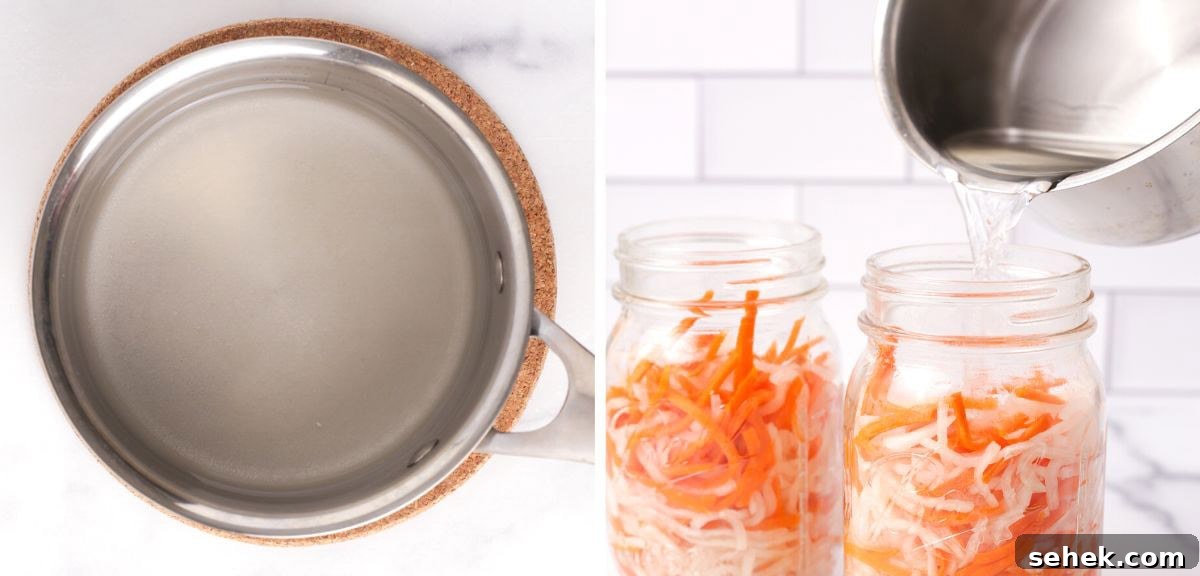
How to sterilize glass jars
The simplest method is boiling: submerge clean jars completely in a pot of boiling water and boil for 10 minutes at altitudes up to 1,000 feet (add 1 minute per additional 1,000 feet). Remove carefully and let cool before filling.
Recipe tips
- Adjust carrot to daikon ratio to suit your taste. The pickling liquid in the recipe is sized for about 1½ pounds of vegetables.
- Vegetable thickness matters: thinner pieces pickle faster; thicker pieces require more time.
- Sterilize jars to prevent spoilage and ensure proper pickling.
Storage
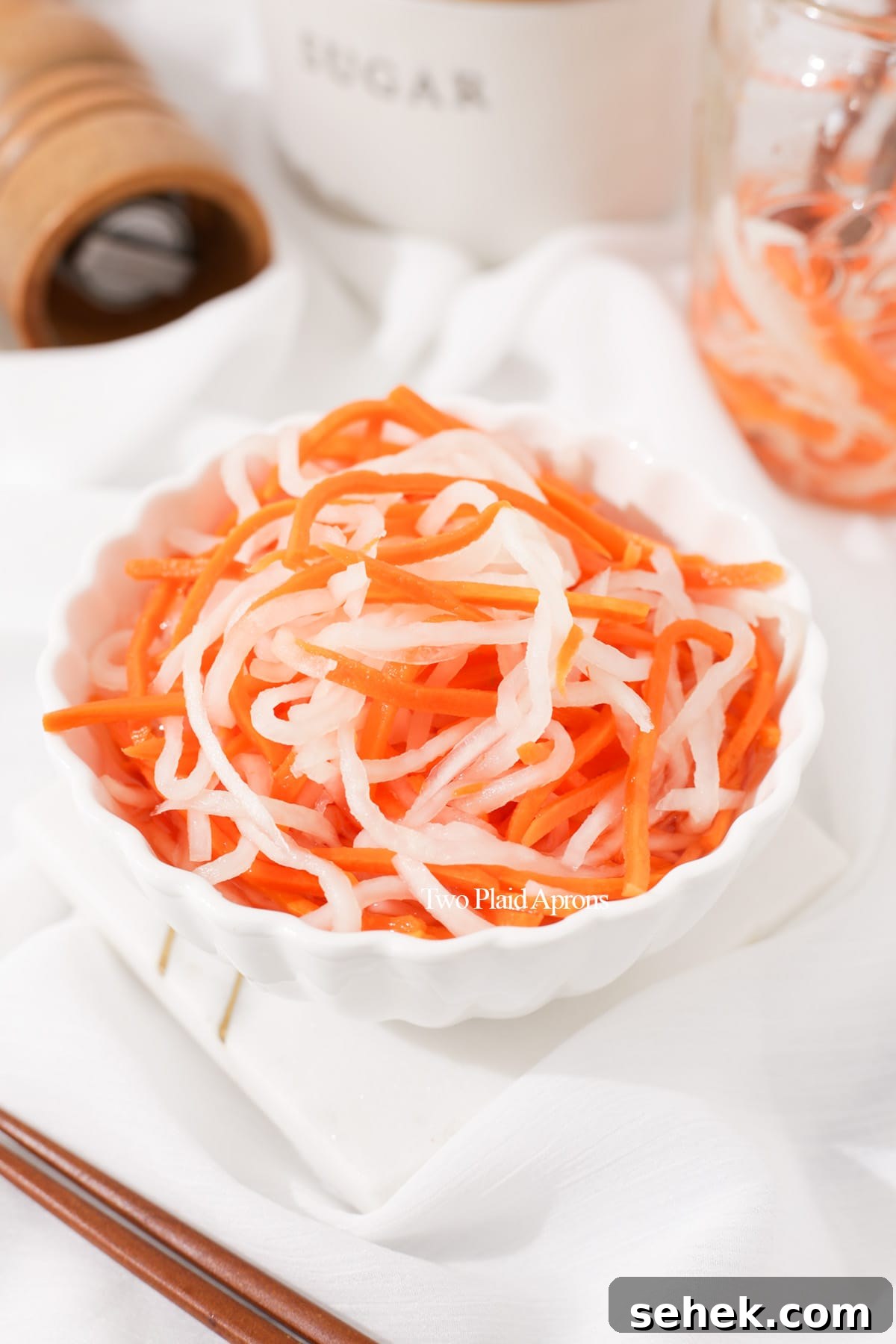
Refrigerated pickled carrots and daikon will keep for 4–6 weeks. Over time the flavor will develop and become more tangy as it continues to mellow in the brine.
FAQ
Sugar balances the acidity and provides the characteristic sweet tang of đồ chua. Reducing it will produce a more acidic result and change the traditional flavor.
White distilled vinegar gives a clean, neutral acidity and is commonly used. Rice vinegar can be substituted for a slightly milder, fruitier note.
Daikon radish has a strong aroma that becomes more noticeable when cooked or fermented. That pungent scent is normal and part of the profile of these pickles.
If you make this recipe, we’d love to see it—share on Instagram with the hashtag #twoplaidaprons or tag @two_plaid_aprons. It’s always a joy to see your creations. 🥰
📖 Recipe

Vietnamese Pickled Carrots and Daikon (Đồ Chua)
15 mins
1 day
1 day 15 mins
2 16 oz jars
Ingredients
- 1 pound daikon radish, peeled (about ½ large)
- ½ pound carrot, peeled (about 1 large)
- 2 teaspoons kosher or fine salt
- 1 cup water
- ⅔ cup granulated sugar
- ½ cup white distilled vinegar (or rice vinegar)
Instructions
- Use a mandoline or knife to julienne the daikon and carrots into thin matchsticks. Take care—mandolines are sharp.
- Toss the vegetables with salt and let sit 3–5 minutes to draw out moisture.
- Make the pickling liquid by heating water, sugar, and vinegar until the sugar dissolves. Remove from heat.
- Rinse the vegetables, drain, and gently squeeze out excess water.
- Pack vegetables into two sterilized 16-ounce jars and pour the pickling liquid over them, ensuring they’re submerged.
- Cool completely before sealing. Let sit at room temperature up to 24 hours or until pickled to taste, then refrigerate. Keeps 4–6 weeks.
Notes
- Multiply the recipe if you want larger batches.
- First-timers may notice a pungent aroma from daikon—that’s normal.
- Adjust daikon-to-carrot ratio to your preference; the brine suits ~1.5 lbs of vegetables.
- Use filtered, boiled, or distilled water for best results.
Equipment Recommended
- Mandoline (optional)
- Glass mixing bowl
- 16 oz mason jars
- Saucepan
Nutrition
Carbohydrates: 86.6 g |
Protein: 2.4 g |
Fat: 0.7 g
pickled vegetable, Vietnamese pickles
Mention @two_plaid_aprons or tag #twoplaidaprons!