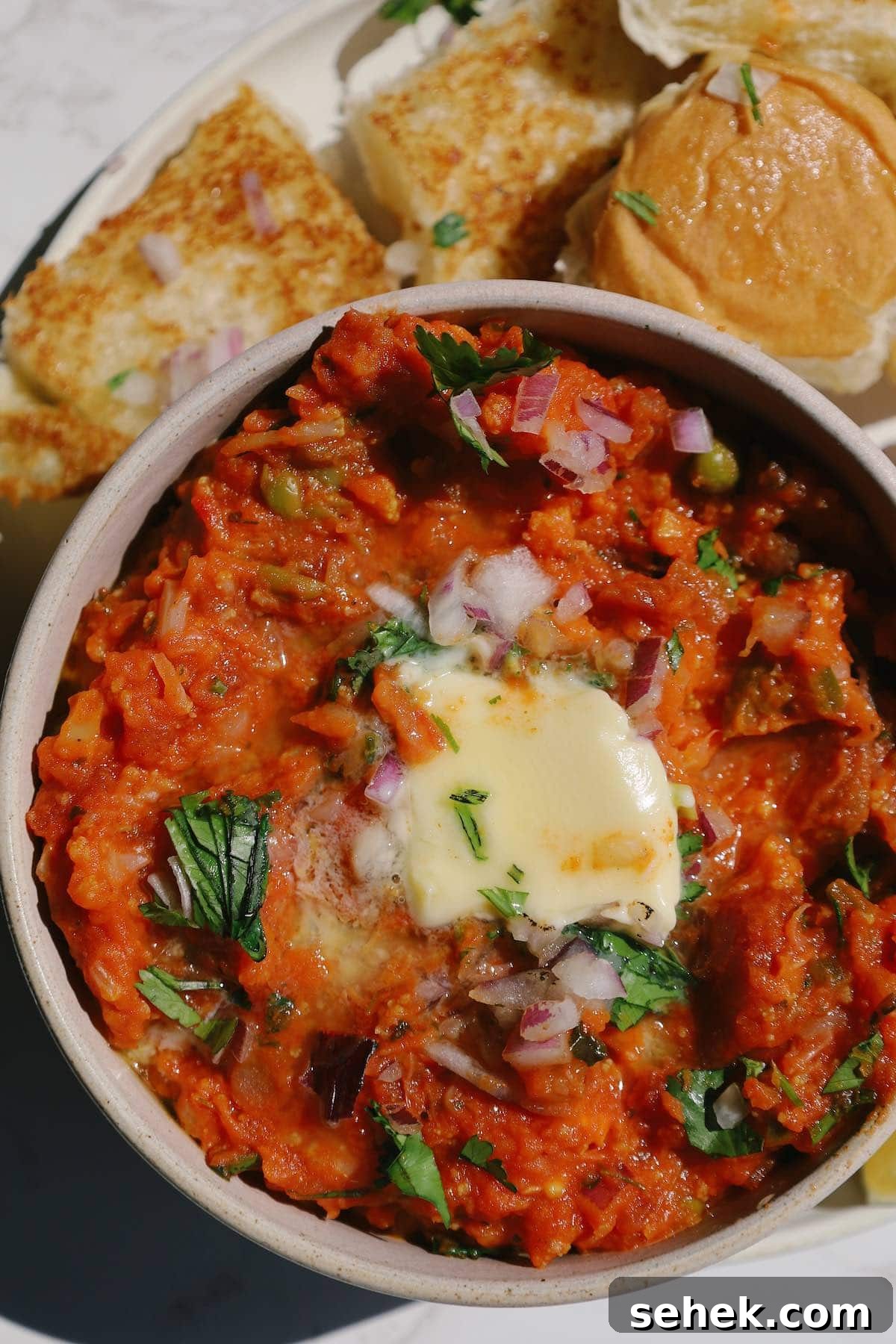
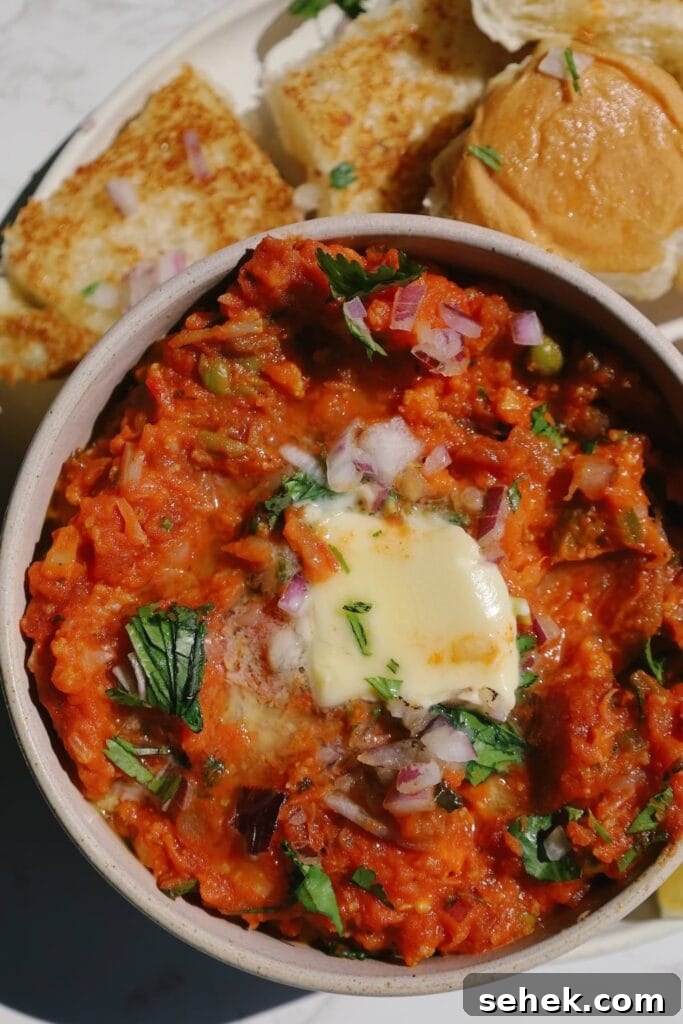
If you know, you know — and if you don’t, let me introduce you to one of Mumbai’s finest culinary gifts: pav bhaji. Spicy, buttery and deliciously messy, this dish tastes like street-food heaven while secretly packing in a lot of vegetables. This is the pav bhaji I turn to when I want bold, comforting flavor with minimal fuss.
After testing and refining the recipe, I’ve landed on a mashy-yet-chunky texture and a deep buttery richness that keeps you coming back for more. Serve it with warm toasted rolls and a squeeze of lime for an authentic experience.
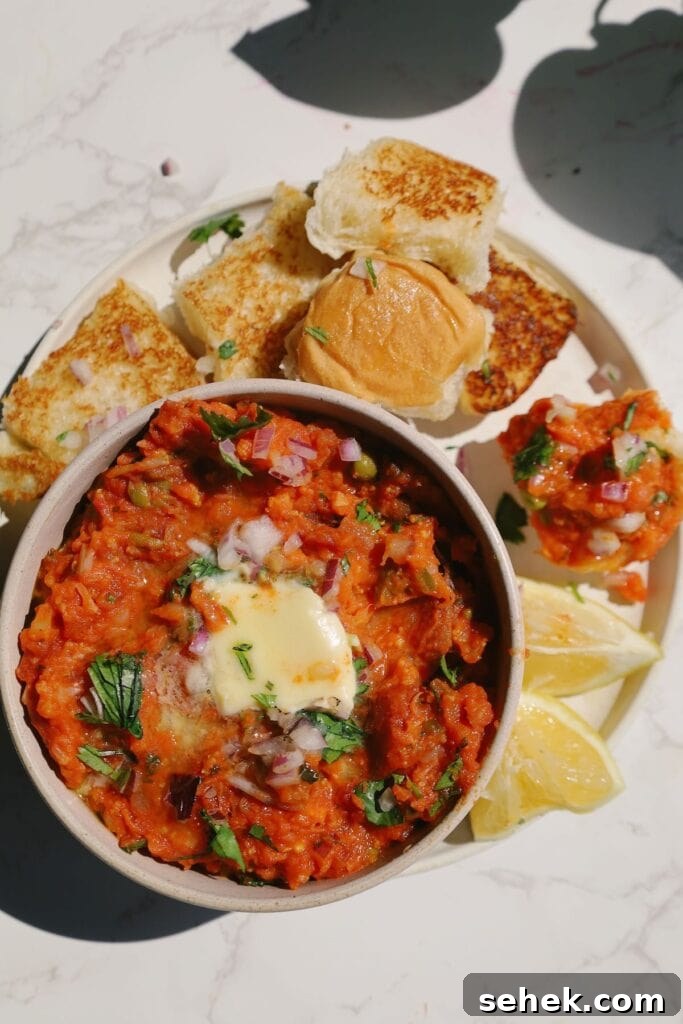
What is Pav Bhaji?
Pav bhaji is a beloved Indian street food made from a spiced vegetable mash (bhaji) served with butter-toasted rolls (pav). The bhaji is rich, savory and slightly tangy, made from potatoes, cauliflower, peas and other vegetables cooked down with tomatoes, onions, garlic and a unique spice blend called pav bhaji masala.
Hearty and flavorful, pav bhaji is meant to be scooped up with fluffy golden rolls — think of it as an intensely savory, vegetable-packed comfort food.
History of Pav Bhaji
Pav bhaji originated in Mumbai during the mid-1800s as a quick, filling meal for mill workers who needed something hot, cheap and easy to eat on the go. Vendors began mashing leftover vegetables with spices and serving the mix alongside buttered bread rolls — and the dish quickly became a city staple.
Over time pav bhaji moved from street stalls into restaurants and home kitchens, becoming comfort food for many. It evokes memories of childhood, late-night cravings and cozy monsoon evenings when a steaming plate of bhaji and extra butter feels just right.
Key Ingredients (and why they matter)
To make a great pav bhaji, these ingredients are essential:
- Vegetables (potatoes, cauliflower, peas): Potatoes add body, cauliflower brings texture and sweetness, and peas round out the flavor.
- Red onion, garlic, ginger, green chili: Aromatics that build depth — garlic and ginger deepen the base, while green chilies add heat.
- Canned crushed tomatoes: Provide a consistent, tangy base and save time.
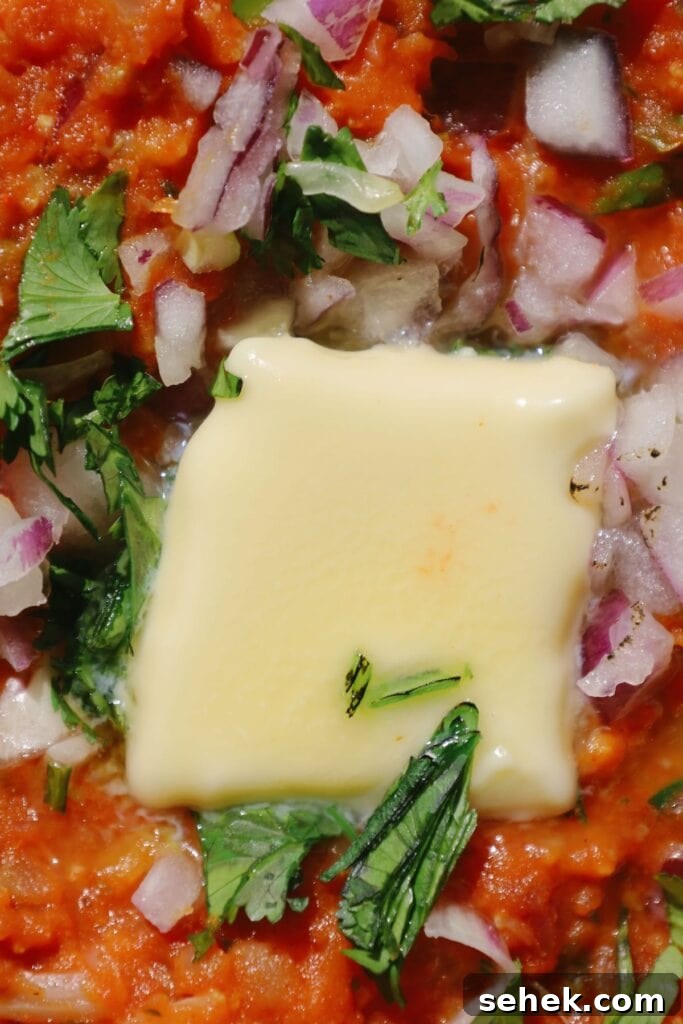
- Butter + oil: Butter gives the classic street-style richness; oil prevents scorching during sautéing.
- Cumin seeds: A toasty opening note that complements the other spices.
- Pav bhaji masala: The defining spice blend; it’s central to the dish’s character.
- Kashmiri mirch: Gives vibrant red color and mild heat without overpowering.
- Turmeric: Adds earthiness and a warm golden hue.
- Water or reserved broth: Adjusts consistency to your preference.
- For serving: Lime juice, chopped red onion, cilantro, extra butter and warm toasted rolls.
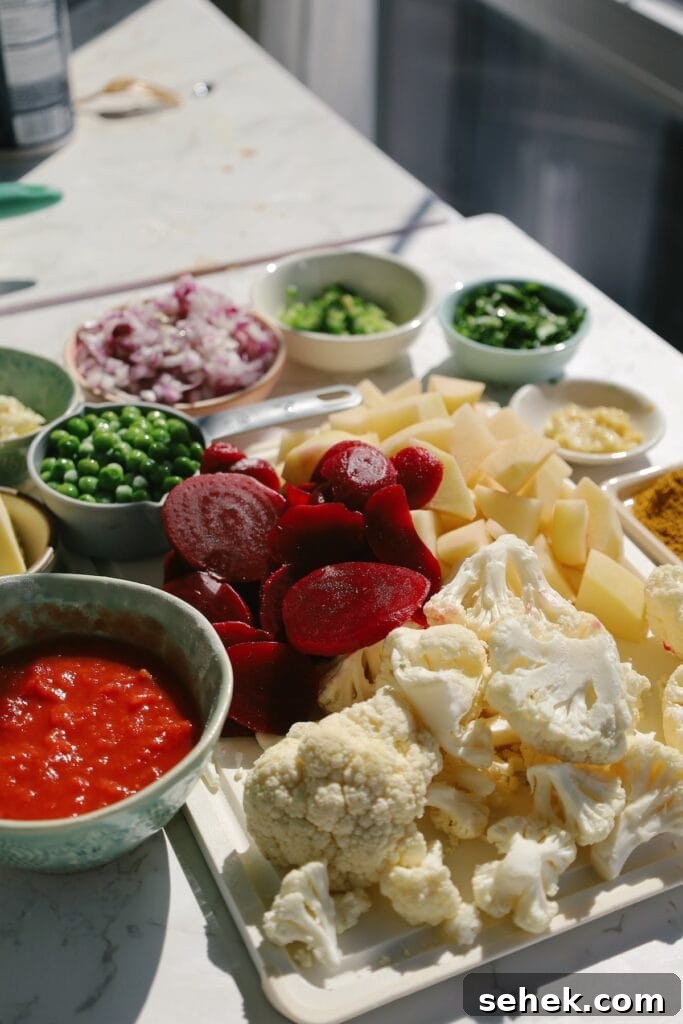
How to Make Pav Bhaji
- Boil potatoes, cauliflower, peas and beets until tender, about 15 minutes.
- Lightly mash the vegetables — keep some texture for a rustic bite.
- Sauté onions, garlic, ginger and green chili in butter and oil until soft and fragrant.
- Add spices and tomatoes, cook until the mixture thickens and the oil separates.
- Mix in the mashed veggies with a little reserved broth or water and simmer until flavors meld.
- Create a butter well in the pan with Kashmiri chili and cilantro, then stir into the bhaji for gloss and richness.
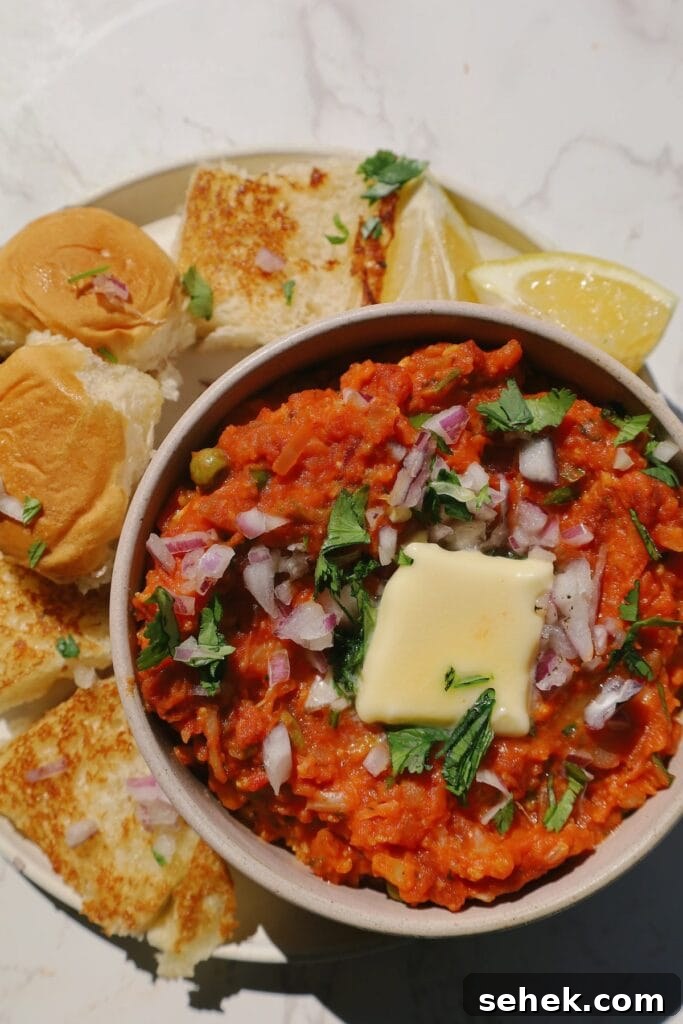
- Toast the pav on a skillet with butter until golden and serve with the bhaji, more butter, chopped onions and lemon wedges.
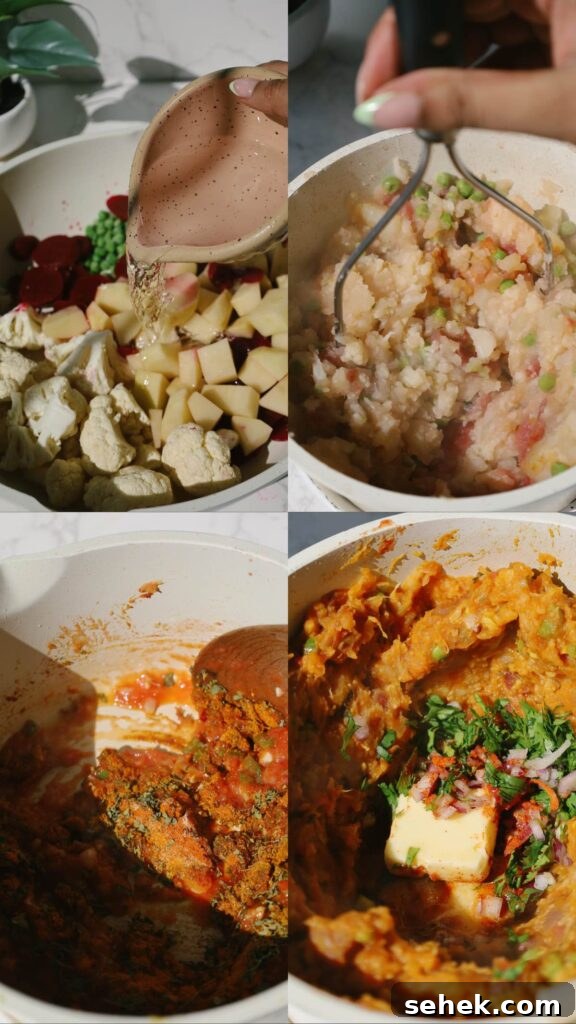
Variations and Substitutions
Pav bhaji is flexible — use whatever vegetables you have. The original dish grew from a need to stretch leftovers into a satisfying meal, and that spirit still applies. Combine starchy vegetables (potatoes) with non-starchy ones (cauliflower, carrots, bell peppers) for best texture. Green beans, beets, zucchini or cabbage can also work; avoid watery or bitter vegetables.
For a vegan version, swap butter for oil or a plant-based butter. Adjust spices to taste — this recipe adapts well to what’s in your fridge.
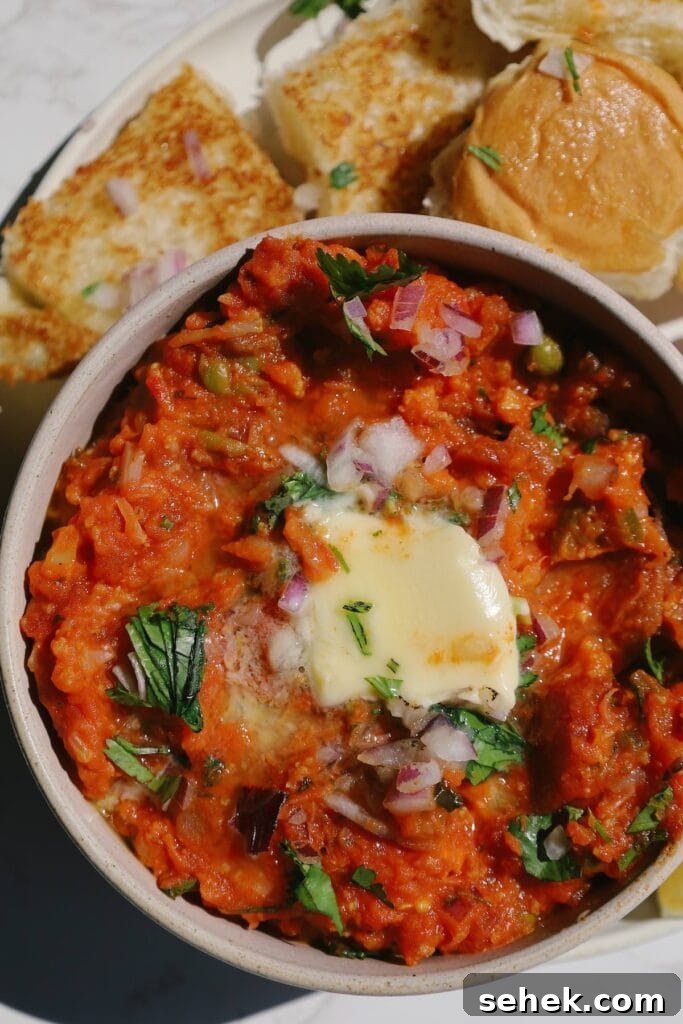
Serving Suggestions
Pav bhaji is a meal on its own, but pairs beautifully with:
- Masala chai for an authentic Mumbai snack vibe.
- Chili paneer if you want an Indo-Chinese spicy kick alongside.
- Pistachio kulfi or another cool dessert to balance the heat.
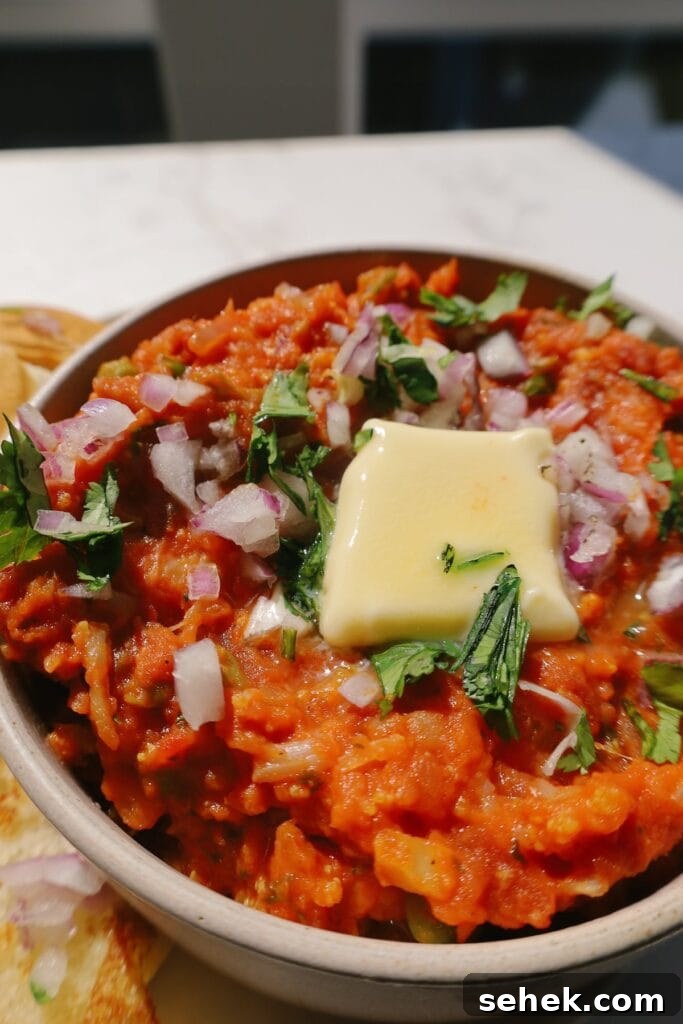
FAQ
Yes. The flavors often develop overnight — reheat gently and add a little water or butter if the bhaji has thickened.
Yes. Leave out garnishes and freeze the bhaji in an airtight container for up to two months.
Pav Bhaji (Authentic Mumbai Street Style!)
Pin
Comment
Ingredients
Vegetable Base
- 2 potatoes, (about 550 grams)
- 10 ounces cauliflower florets
- 1 canned sliced beets
- 1/2 cup green peas
- 1/2 cup peeled crushed canned tomatoes
- 1.5-2 tsp ginger paste
- 1 green chili
- 1/2 cup finely chopped red onion
- 2 tbsp finely chopped garlic
- 2 tbsp butter
- 2 tbsp oil
- 1-2 tsp red chili powder
- 1/4 – 1/2 tsp turmeric
- Salt to taste
- 1 tbsp pav bhaji masala
- 1 tbsp kasoori methi
- 5 drops red food coloring, (optional)
Chili Butter Topping:
- 2 tbsp butter
- 2 tbsp chopped cilantro
- 2 tbsp chopped red onions
- 1 tsp kashmiri chili
Final garnish:
- Lemon
- Cilantro
- Chopped red onions
- Butter
Serve with:
- Hawaiian rolls (or brioche/French rolls)
Instructions
-
Boil the veggies: In a large pot, boil potatoes, cauliflower, green peas and sliced beets in salted water for about 15 minutes or until tender. Save some of the cooking liquid to adjust consistency if needed.
-
Mash lightly: Drain and mash the vegetables gently — aim for a rustic texture with some chunks remaining.
-
Sauté aromatics: Heat butter and oil in a large skillet. Add chopped onions and cook until translucent, then add garlic, ginger paste and green chili and sauté until fragrant.
-
Spice it up: Add pav bhaji masala, red chili powder, turmeric and kasoori methi. Stir for 30–60 seconds to bloom the spices.
-
Add tomatoes: Pour in crushed tomatoes and cook for 5–7 minutes until the mixture thickens and oil separates.
-
Combine and simmer: Add the mashed vegetables, mix well and loosen with reserved broth or water as needed. Simmer for 10–15 minutes, stirring occasionally.
-
Create the butter well: Make a small well, add butter, Kashmiri chili and chopped cilantro, let it sizzle and then fold it into the bhaji for a glossy finish.
-
Toast the pav: Slice rolls and toast them in butter until golden and crisp.
-
Garnish and serve: Spoon the bhaji into bowls, top with extra butter, chopped onions, cilantro and a squeeze of lemon. Serve with warm toasted rolls.
Notes
(2) Spice level: Adjust chili and Kashmiri mirch to taste. Small thin green chilies from Indian stores are ideal; serrano or jalapeño work as substitutes.
(3) Make it vegan: Replace butter with oil or vegan butter.
(4) Texture tip: Mash the vegetables but leave some texture — the bhaji should be rustic, not smooth like a puree.
(5) Storage: Keeps in the fridge for 2–3 days or frozen (without garnishes) for up to 2 months.
(6) Color: Street vendors sometimes add red food coloring for a bright hue; this is optional.
Nutrition
Nutrition information is automatically calculated and should be used as an approximation.