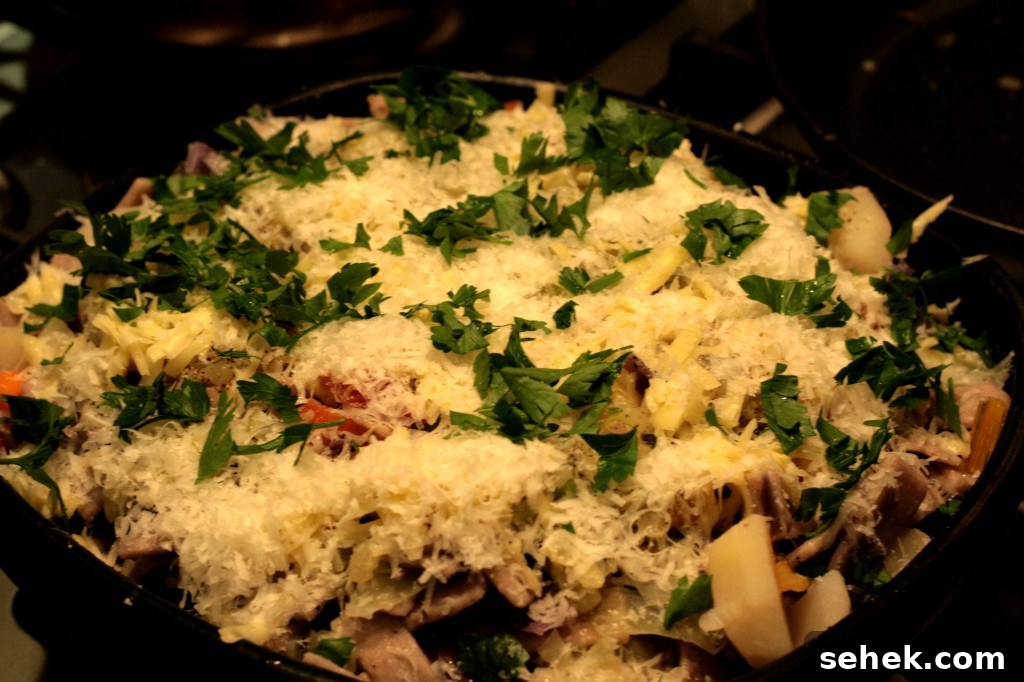
Pizzoccheri is one of those comforting, rustic dishes I never tire of. It’s hearty and earthy — a true peasant meal — built around buckwheat pasta, seasonal vegetables and melted cheese, finished with a fragrant garlic and sage-infused dressing. You can make the pasta from scratch easily, or buy dried buckwheat pasta from specialty suppliers. This version uses a mix of garden vegetables and shows how simple it is to make the buckwheat pasta at home.
The dish comes from the Valtellina region of Lombardy in northern Italy. Traditionally, the buckwheat pasta is layered with chard or savoy cabbage, potatoes and cheese, then dressed with a butter infused with garlic and sage. One of the great things about pizzoccheri is its flexibility — you can adapt it to whatever vegetables are in season or in your fridge, which makes it ideal for using garden produce or veg box leftovers.
If you fancy trying it, read on.
The quantities below made enough to serve three as a main with leftovers for a generous lunch the next day.
Buckwheat pasta recipe
This pasta uses an 80:20 ratio of buckwheat flour to wheat flour to give the characteristic flavour and texture.
Ingredients
400g buckwheat flour
100g pasta flour or plain/all-purpose flour
Water, as needed to bring the dough together
Method
Combine the buckwheat and wheat flours in a bowl. Add just enough water to form a firm dough. Turn the dough onto a lightly floured surface and knead until it becomes smooth and springs back when pressed. Buckwheat dough will not become as silky as an all-wheat dough — that’s normal.
Wrap the dough in cling film and rest it in the refrigerator for at least 30 minutes.
Divide the dough into pieces and roll each piece to about 3mm thick. If you use a pasta machine, roll the dough on the thickest setting to create wide sheets roughly 10cm across. Lay the sheets on a clean tea towel while you continue with the rest of the dough.
When all the sheets are ready, cut them into strips about 0.5–1cm wide and roughly 4cm long — short tagliatelle-like ribbons. Each piece is called a pizzocchero. Lightly dust the cut pasta with flour and keep it in a single layer. Avoid piling floured pasta, as it can stick together and will need to be separated before cooking.
You can leave the prepared pizzoccheri to rest while you prepare the vegetables and assembly.
Pizzoccheri (assembled dish)
There are different ways to cook pizzoccheri. The classic approach cooks potatoes, cabbage and pasta together in one pot, then layers the cooked ingredients with cheese and finishes with a garlic-sage butter. I use a slightly adapted method that reduces the amount of butter while keeping the dish rich and satisfying.
Vegetables and other ingredients
Use whatever vegetables you have available; this recipe used about 1kg of veg in total and combined with the pasta would easily feed around six portions. A traditional version would use just cabbage or chard with potatoes.
Vegetables I used from the garden:
140g chard, shredded
45g French beans, trimmed
150g carrots, sliced into batons or rings
250g potatoes, cut into 2–3cm chunks
130g white cabbage, shredded
150g red cabbage, shredded
Also:
Extra virgin olive oil, a good glug or two
1 onion, peeled and chopped
3 cloves garlic, thinly sliced
A small bunch of fresh thyme, leaves picked
200g cheddar, grated (or a melty cheese such as Fontina)
75g pecorino romano, finely grated (or parmesan/bitto)
Salt and freshly ground black pepper to taste
Flat-leaf parsley, roughly chopped for garnish
Method
You will need a large saucepan (at least 4 litres), a sauté pan and a serving dish.
Fill the large saucepan two-thirds full with salted boiling water.
The fresh pasta and the potatoes will take roughly the same time to cook — around 12 minutes. If you use dried pasta, follow the packet timings and adjust accordingly.
Add the potatoes, carrots and fresh pizzoccheri to the boiling water and bring back to a full boil, stirring occasionally so the pasta does not stick together.
While the pasta and potatoes cook, warm the olive oil in the sauté pan over low–medium heat. Gently soften the chopped onion and sliced garlic, stirring occasionally. Add the thyme leaves near the end so they release their aroma without burning.
After about 6 minutes in the boiling pot, add the remaining vegetables (chards, cabbages, beans) and bring back to a fast simmer. Continue cooking until everything is tender to your liking.
When cooked, assemble the dish in layers. Using a slotted spoon, lift about a third of the pasta-and-vegetable mixture into your serving dish and spread it evenly.
Spoon half of the sautéed onion-and-garlic mixture over that layer, season with salt and pepper, then sprinkle over one-third of both cheeses.
Add another third of the pasta-and-vegetable mix, followed by the remaining onion-and-garlic and another third of the cheeses. Season again.
Finish with the remaining pasta-and-vegetable mixture, scatter over the remaining cheeses and adjust seasoning. Garnish with chopped flat-leaf parsley.
Serve immediately while the cheeses are warm and melted into the layers. Buon appetito.